

If you live in Paraguay, you’ll soon come across cassava, or Mandioca, as it’s called here.
Here in the countryside, we eat it as a side dish at lunch so often that it starts to feel as familiar as bread or potatoes elsewhere.
But Mandioca can also be the main ingredient. Some dishes are part of everyday Paraguayan cooking, while others are familiar from food stands or festivals. And then there are recipe ideas you might not immediately associate with this root.
This collection introduces traditional cassava recipes from Paraguay and shows other ways to prepare it.
What Kind of Cassava Do You Have at Home?#
The type of Mandioca you have at home makes a difference when choosing a recipe.
Fresh or frozen Mandioca: Fresh cassava must be peeled and cooked before eating. It must not be eaten raw. With frozen Mandioca, check whether it is raw or already pre-cooked.
Already cooked Mandioca: A good starting point for skillet dishes, croquettes, and other recipes.
Almidón de mandioca / fécula de mandioca: These are names for pure cassava starch, also known as tapioca starch. It is used for dishes such as Mbejú and Chipa Almidón. It is different from cassava flour (harina de mandioca).
You can learn more about the different forms and their uses in our guide to cassava in Paraguay.
Boiled Cassava as a Side Dish#
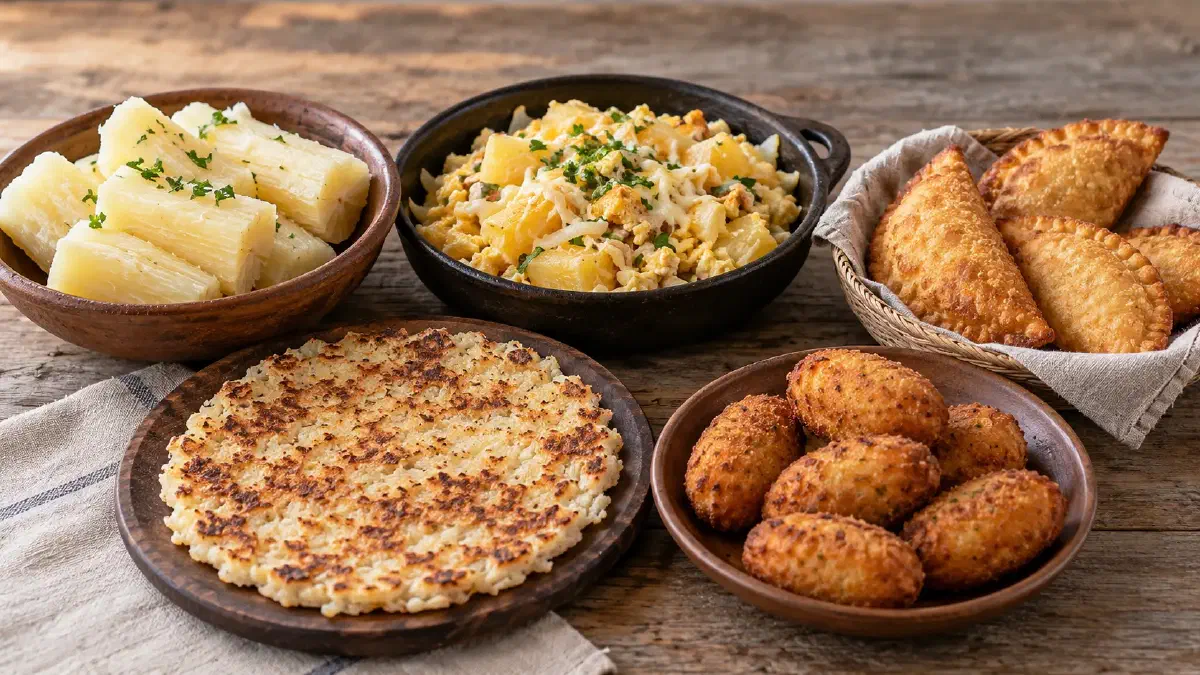
One of the most common ways to enjoy Mandioca in Paraguay is also the simplest: boiled and served plain as a side dish, known in Guaraní as Mandi’o mimói.
At a weekend Asado, it’s served alongside other side dishes. You can also find it with Asaditos (small grilled meat skewers) when grabbing a bite on the go, and sometimes even with Empanadas.
But it’s just as common at an everyday lunch. At home and in simple local eateries (Comedores), Mandioca is served with dishes such as Guiso (stew) or Tallarín con estofado (pasta with braised meat).
That last combination surprised me at first. I could easily imagine Mandioca with a stew, much like a piece of bread. But as an extra side dish when there was already rice or pasta on the plate? That took a little getting used to.
For a bit of variety, you can also prepare boiled Mandioca in other ways:
Mandioca frita is a simple alternative: crispy on the outside, soft inside, and a bit like French fries. It can be a welcome change, especially for children.
For Mandioca a la provenzal, the boiled pieces are pan-fried with garlic and parsley. This gives them more flavor and makes them a great side for meat and grilled dishes.
But Mandioca doesn’t always have to be a side dish. The cooked root is also used in some of Paraguay’s best-known dishes.
Paraguayan Cassava Dishes: Classics and Everyday Cooking#
You may have heard of some traditional Paraguayan dishes made with Mandioca. Although they share the same main ingredient, they can be prepared in very different ways.
Mandi’o Chyryry is a simple skillet dish that always reminds us of pan-fried potatoes. Cooked Mandioca is cut into pieces and fried with onions, eggs, and cheese. You can add sausage or vegetables if you like. For us, it’s a quick way to use up Mandioca left over from lunch.
Pastel Mandi’o are fried turnovers filled with seasoned beef and boiled egg. The dough is made from cooked Mandioca and a little cornmeal. Once fried until golden brown, the pastry is crispy on the outside but softer inside than a regular empanada.
Pajagua Mascada is made with cooked Mandioca, beef, and seasonings. Unlike Pastel Mandi’o, the meat is mixed directly into the cassava mixture. The mixture is then shaped into flat, savory patties and fried until golden brown. Both dishes are among the traditional foods enjoyed during the San Juan season.
Guiso de mandioca con carne is a hearty stew made with meat, thoroughly cooked mandioca, and other ingredients. The root makes the dish especially filling and absorbs the flavors.
Croquetas de mandioca are made from mashed cassava, usually breaded and deep-fried until golden brown. Beneath the crispy coating, you’ll find plain mashed cassava or a mixture with a little cheese. Other versions are filled with carne molida (ground beef) or pollo (chicken), sometimes with extra cheese or chopped boiled egg.
Another similar snack is Villarroel de huevo, which can also be made with Mandioca. A whole boiled egg is wrapped in the cassava mixture, then breaded and deep-fried until golden brown.
Alongside empanadas and hamburgers, Croquetas de mandioca and Villarroel de huevo are often sold at small food stands. You may occasionally find Pastel Mandi’o or Pajagua Mascada there, too.
Ñoquis, Pastelón, and Pizza: More Ideas#
Besides the familiar Paraguayan dishes, Mandioca can also be used in recipes where you might normally expect potatoes or wheat flour.
Ñoquis de mandioca are a variation of gnocchi. Instead of potatoes, mashed cooked Mandioca forms the base for these little dumplings. Other ingredients are added to make a dough that can be shaped. The Ñoquis are then boiled and served with a sauce of your choice.
You can also make Ravioles de mandioca using Mandioca dough. Unlike Pastel Mandi’o, these filled pasta pockets are boiled instead of deep-fried.
For Pastelón de mandioca, the root forms the base of a savory casserole, combined with ingredients such as spinach, Swiss chard, or other vegetables. If you’ve had a potato casserole or Pastel de papa before, you’ll have a rough idea of what to expect.
You can even make a pizza crust from Mandioca. The cooked root is finely mashed, mixed with other ingredients, and shaped into a crust. Depending on the recipe, the crust is either pre-baked or topped straight away and then baked. A nice change, perhaps for a child’s birthday party or a buffet.
Mbejú and Chipa: Recipes with Cassava Starch#
It’s not just the root that matters in Paraguayan cooking. The starch made from it is also an important ingredient. Mbejú and Chipa are two of the best-known examples.
Mbejú is made with cassava starch, cheese, and a few other ingredients. The crumbly mixture comes together in a hot skillet to form a flatbread that’s slightly crispy on the outside and soft and cheesy inside.
Chipa Almidón, also called Chipa aramirõ in Guaraní, is a traditional cheese bread made with cassava starch, cheese, eggs, and fat. Chipa mestiza also includes cornmeal. But not every dish with “Chipa” in its name contains cassava starch. Chipa Guasu, for example, is made with fresh corn.
❓ Frequently Asked Questions About Cassava Recipes#
Which cassava dishes are good for a buffet or as finger food?
Which cassava dishes can be made vegetarian?
There are plenty of meat-free options among savory cassava dishes. Besides Mandioca frita and Mandioca a la provenzal, good choices include Mandi’o Chyryry with eggs and cheese, Mbejú, and Ñoquis de mandioca.
Filled dishes don’t always need meat, either. Croquetas de mandioca, for example, taste great with a cheese filling, while spinach, Swiss chard, or other vegetables work well in Pastelón de mandioca.
It’s still worth checking the ingredients, though. Lard is also used in Paraguayan cooking, but you can replace it with vegetable oil or another suitable fat for vegetarian versions.
Are cassava recipes always gluten-free?
Final Thoughts: Mandioca Is More Than a Side Dish#
Whether served as a simple side, made into a hearty skillet dish, or even used as a pizza crust, Mandioca offers far more possibilities than you might expect.
Paraguay even has a special day dedicated to Mandioca: the Día Nacional de la Mandioca on November 9. It’s another sign of how important this root is in Paraguayan cooking and everyday life. But you don’t need a special occasion to try something new.
If you’d like to start with an easy dish, try Mandi’o Chyryry. You can find more individual cassava recipes in our cassava recipe filter.
Did you discover a way to prepare Mandioca that you hadn’t heard of before? Give this post a like and share it with others who want to explore Paraguayan cooking.