
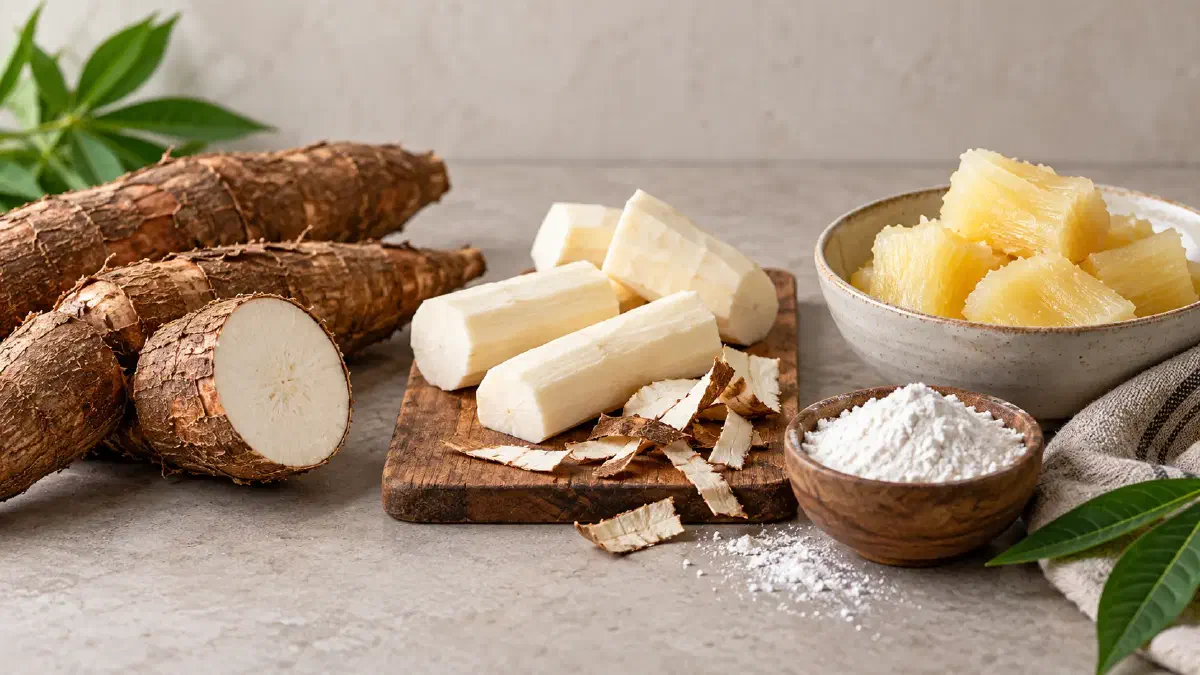

Whether it’s served at an asado, at lunch in a comedor, or simply as a side dish at home, you’ll come across cassava pretty quickly in Paraguay. Here, it’s called mandioca. There’s often a bowl of boiled cassava on the table, sometimes even alongside rice or pasta.
Cassava is an important staple food in Paraguay. But what exactly is this root? Are there different varieties? How do you prepare fresh mandioca? And if a recipe calls for almidón de mandioca, is that the same as cassava flour?
- Cassava is called mandioca in Paraguay, or mandi’o in Guaraní.
- Boiled mandioca is a common side dish, but the root is also used in many other dishes.
- Cassava root, cassava flour, and cassava starch are different products. Pure tapioca starch is cassava starch.
- Don’t eat fresh cassava raw: For the usual side dish, cassava sold for food is peeled and boiled until fully cooked.
🌱 What is cassava, and why is it called mandioca here?#
Cassava (Manihot esculenta) is a tropical plant in the spurge family. It grows as a shrub and develops thick, starchy storage roots underground. These are the roots that end up in the cooking pot or are processed into flour and starch.
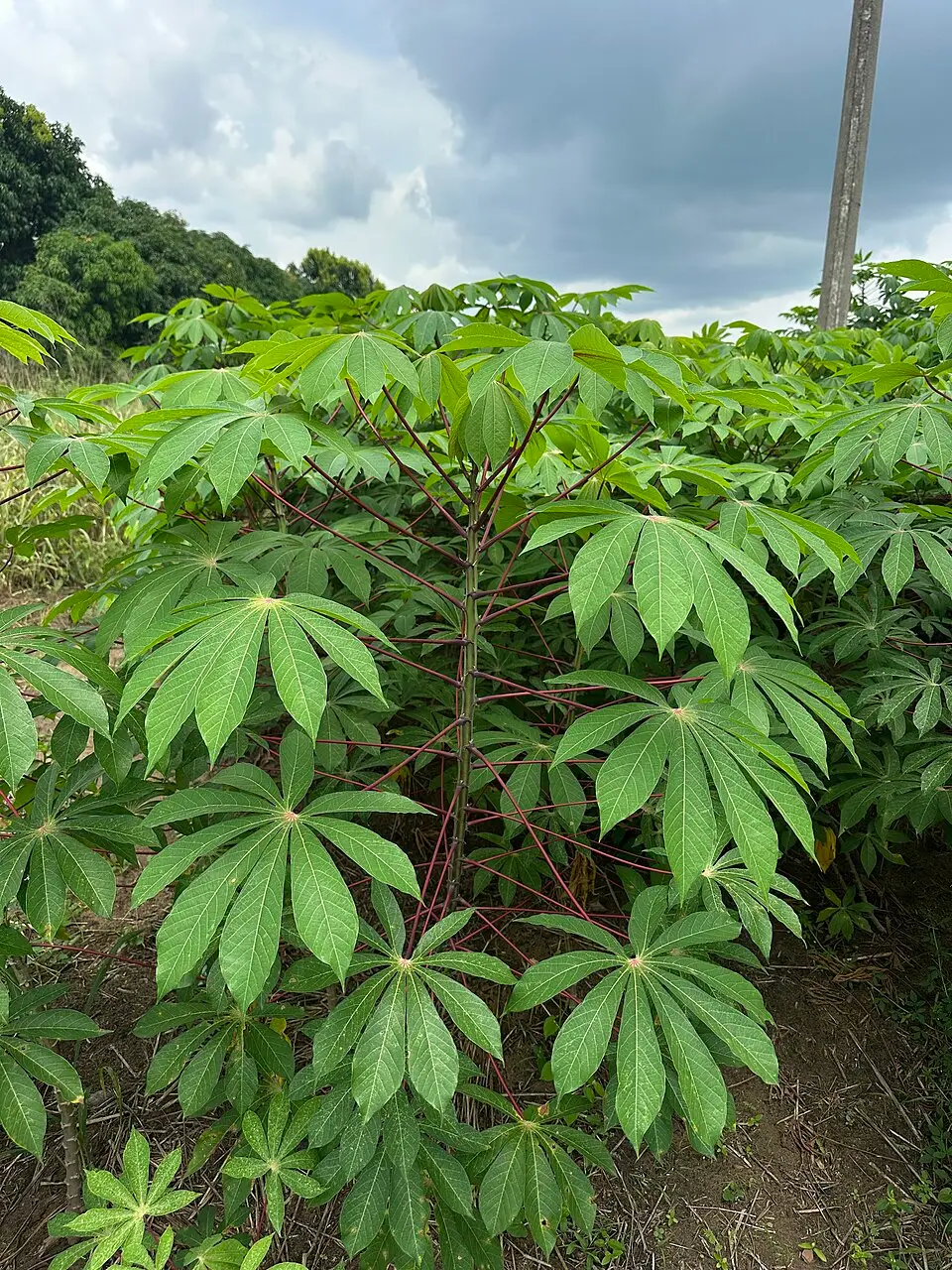
Cassava isn’t botanically related to potatoes. In the kitchen, though, it often plays a similar role: it’s filling, works well as a side dish, and can be made into mash or dough. Boiled cassava has a mild flavor, but its texture varies by variety. Some are firmer, while others are softer.
Different languages use different names:
| Term | What it means |
|---|---|
| Mandioca | The Spanish name commonly used in Paraguay |
| Mandi’o | The Guaraní name for cassava |
| Yuca | Another name for cassava, also found on international food packaging |
Cassava varieties in Paraguay#
Many varieties are grown in Paraguay. They differ in their growing requirements, yields, starch content, and cooking qualities, among other things.
Well-known varieties include Tacuara Sa’yju, valued for its good cooking qualities and relatively short cooking time, and Cano’i, which also has good eating qualities and is known for high yields.
Another interesting variety is Tapojo’a Sa’yju. Under suitable conditions, it can remain in the ground for two years or longer without the roots rotting.
At markets, though, it’s usually just sold as mandioca. You’re more likely to hear variety names when talking to people who grow it themselves.
🍽️ Why mandioca is part of everyday life in Paraguay#
Cassava is one of Paraguay’s important staple foods and one of the everyday essentials in many households. Boiled mandioca, called mandi’o mimói in Guaraní, is a familiar part of everyday meals. It’s served at home and in comedores, simple local eateries, alongside stews, rice or pasta dishes, grilled meat, empanadas, or tortillas.
It doesn’t always replace rice, pasta, or bread. Sometimes it’s simply served in addition to them. If you’re not used to that, it might seem surprising at first.
In Guaraní, the word týra refers to something served alongside a meal. This can be boiled mandioca, but also bread or something else. The term doesn’t refer only to cassava.
The importance of mandioca goes beyond the plate. Out in the campo, it’s also closely tied to families growing their own food.
In our rural area, many families grow mandioca for their own use. In fact, it feels like almost everyone does. Stem cuttings are inexpensive here, the plants are relatively easy to propagate and care for, and the roots are filling. Depending on the household, the harvest is used as food for the family, and some of it is also fed to livestock.
Some families also grow larger quantities on their own or as part of support projects. They sell their harvest to traders or at local markets to earn an income.
Mandioca is so important in Paraguay that it even has its own day: Día Nacional de la Mandioca is observed on November 9.
🛒 Buying and storing cassava#
In rural Paraguay, you can often get fresh mandioca directly from a neighbor. Elsewhere, it’s available in supermarkets, at stalls, and in many grocery stores. It’s usually sold as whole roots or pieces that have already been cut up, often frozen. Outside Paraguay, you’ll also often find frozen cassava labeled yuca.
When buying fresh cassava, check its condition. The root should be firm, without soft or rotten spots. If a cut root has large dark patches inside, it’s best to leave it behind.
Cassava loses quality fairly quickly after harvest, especially if the roots are damaged or kept somewhere warm. Unlike potatoes, it’s best to buy only as much as you plan to prepare within the next day or two. Until then, keep the roots in a cool place.
That’s what our neighbors do, too. They harvest only as much as they need in the near future. The rest stays in the field and is harvested bit by bit, sometimes over a period of up to two years.
Here’s how to store the different products:
- Fresh roots: peel and prepare them as soon as possible; discard any roots showing signs of deterioration or spoilage.
- Frozen mandioca: keep it frozen and check the package to see whether the pieces are raw or precooked.
- Cooked mandioca: let leftovers cool promptly, refrigerate them, and use them within a few days. In hot weather, don’t leave them sitting out for long.
- Cassava flour and starch: keep them dry and tightly sealed; follow the instructions on the packaging.
You can also freeze cooked cassava in portions. This lets you prepare larger quantities ahead of time or save leftovers from lunch for another meal.
🍲 Preparing mandioca: turning the root into a side dish#
The simplest way to prepare mandioca in Paraguay is to boil it. For cassava sold for cooking, the steps are straightforward:
- Peel: Remove the brown skin and the firm layer beneath it.
- Rinse and cut: Rinse the peeled root thoroughly and cut it into manageable pieces.
- Boil: Cook the pieces thoroughly in plenty of water. Depending on the variety and size of the pieces, this often takes about 20 to 40 minutes. The pieces should be soft all the way through.
- Drain: Discard the cooking water and drain the pieces well.
- Remove the central fiber: The firm, fibrous strand in the middle is usually easy to pull out after cooking.
You can then serve the mandioca warm as a side dish or use it in other recipes.
Cassava contains natural compounds that can release hydrogen cyanide. That’s why you should never eat or taste mandioca raw. The cassava typically used for food, whether bought at a market or grown at home, is peeled and boiled thoroughly in water. Discard the cooking water afterward.
🥣 Root, cassava flour, or tapioca starch: what’s the difference?#
The same cassava root can be made into very different food products. Alongside fresh or frozen mandioca, you’ll also find cassava flour and cassava starch in stores. The last two are worth a closer look.
What are the different products?#
| Product | What is it? | What is it used for? |
|---|---|---|
| Fresh mandioca | The whole cassava root, or pieces that have already been peeled and cut. | Boiled as a side dish or used as a base for mash, dough, and other dishes. |
| Frozen mandioca / yuca | Frozen root pieces, either raw or precooked depending on the product. | Used like fresh mandioca; prepare according to the package instructions. |
| Cassava starch (almidón / fécula de mandioca) | Largely pure starch separated from the root. | Used for dishes such as Mbejú and Chipa Almidón. |
| Cassava flour (harina de mandioca) | Flour made from processed cassava root that contains other parts of the root as well as starch. | Used for baked goods and doughs in recipes that specifically call for cassava flour. |
Why cassava flour and cassava starch are not the same#
The main difference is how they’re made. For cassava flour, the prepared root is dried and ground. To make starch, the starch granules are separated from the root.
This also makes a difference when cooking and baking. Cassava flour contains other parts of the root as well as starch and absorbs liquid differently. Pure cassava starch also has different binding and swelling properties. That’s why you can’t always swap one for the other in a recipe.
A good example is Mbejú: cassava starch, rather than regular cassava flour, gives this Paraguayan cheese flatbread its characteristic texture.
In Guaraní, you may also come across the word aramirõ for starch, for example in Chipa aramirõ.
And what about tapioca?#
Pure tapioca starch is the same as cassava starch. International packaging often uses the terms tapioca starch or cassava starch. The name tapioca flour is also often used for pure starch.
That doesn’t mean every product with “tapioca” in its name is the same. Tapioca pearls, for example, are made from starch but can’t be used directly in place of starch in baking.
My tip: If a Paraguayan recipe calls for almidón de mandioca, you need pure cassava starch. If you’re unfamiliar with a product, check the ingredient list.
👩🍳 What can you make with cassava?#
Boiled mandioca is often the first way you encounter cassava in Paraguay. But there’s plenty more you can make from the root.
For Mandi’o Chyryry, cooked mandioca is fried in a pan with eggs and cheese. In Pastel Mandi’o, it forms the base of the dough for filled pastries, while in Pajagua Mascada, it’s mixed with meat and shaped into savory patties.
You’ll also find Croquetas de mandioca at small food stalls. If you enjoy trying new things in the kitchen, you can even use the cooked root to make Ñoquis or a pizza crust.
If you’d like to learn more about these dishes or try Paraguayan cooking for yourself, take a look at our collection of cassava recipes from Paraguay: classics and ideas.
❓ Frequently asked questions about cassava in Paraguay#
Do I need to tell sweet and bitter cassava apart when shopping?
Cassava sold by regular food retailers in Paraguay is intended for cooking and eating. The terms “sweet” and “bitter” refer to different types of cassava that differ mainly in their levels of certain natural plant compounds.
For the usual cassava sold for food, the rule is simple: peel it, cook it thoroughly, and never eat it raw. Other varieties with higher levels of cyanogenic compounds need more extensive processing. If you get cassava from an unfamiliar grower, check whether it’s intended for ordinary home cooking.
Can I cook frozen yuca right away?
Is cassava gluten-free?
Conclusion: an everyday root with many uses#
What makes mandioca special in Paraguay is how naturally it fits into everyday life. It’s grown for household use in the campo, sold at markets, and served at home as a simple side dish.
That mix of a simple everyday side dish, a versatile cooking ingredient, and a crop people grow themselves makes cassava an important part of Paraguayan food culture.
Would you like to try cooking with mandioca? Our cassava recipes offer step-by-step instructions, from Mandi’o Chyryry to Mbejú.
Did you find this short guide to cassava helpful? Then give the article a like and share it with others who want to learn more about cassava in Paraguayan cooking.