
Families remember loved ones who have died throughout the year. In Paraguay, two days in early November bring that remembrance into particular focus: All Saints’ Day on November 1 and All Souls’ Day on November 2.
On Día de los Difuntos, also known as Sánima Ára, families come together to remember people who were important to them. But what is the difference between these two days, and how are they observed in Paraguay?
- November 1: All Saints’ Day (Todos los Santos), a Sunday in 2026.
- November 2: All Souls’ Day (Día de los Difuntos), a Monday in 2026.
- Status: Both observances have fixed dates and are not public holidays in their own right. They are important to many families.
- Meaning: On November 1, the Catholic Church remembers all saints; on November 2, it remembers the faithful who have died.
- Traditions in Paraguay: Visiting and tending graves, bringing flowers, praying, and remembering loved ones together.
✝️ All Saints’ Day and All Souls’ Day: What’s the Difference?#
The two days come one after the other and are closely connected in the Catholic calendar, but they have different meanings.
All Saints’ Day, November 1, is called Todos los Santos or Día de Todos los Santos in Spanish. The Catholic Church remembers all saints, including those who are not known by name or officially canonized. The Guaraní name Imarangatúva ára is also used.
All Souls’ Day, November 2, is known formally as the Conmemoración de Todos los Fieles Difuntos, usually shortened to Día de los Difuntos. The focus is on those who have died and on praying for them. In Catholic belief, prayer can keep the living connected with those who have died.
In Paraguay, the day is also known as Sánima Ára, roughly meaning “day of souls” or “day of remembrance for the dead.” The word ára means “day.” You may also see the spellings La Sánima Ára and Lasánima ára, as well as the name Omanóva ára.
When it comes to cemetery visits, the two days often blend into one another. Some families gather as early as All Saints’ Day, while others come on All Souls’ Day. It also depends on when relatives are available. November 2 is the Catholic day specifically dedicated to remembering the dead.
🕯️ How Do Families in Paraguay Remember Their Loved Ones?#
Día de los Difuntos may first make you think of Mexico’s well-known Día de Muertos. In many parts of Mexico, colorful altars, music, shared celebrations, and elaborate Catrina-style skull makeup are part of the tradition. You may also come across Día de Muertos in Paraguay, for example at events hosted by the Mexican Embassy in Asunción. However, traditional Paraguayan customs for All Souls’ Day are different.
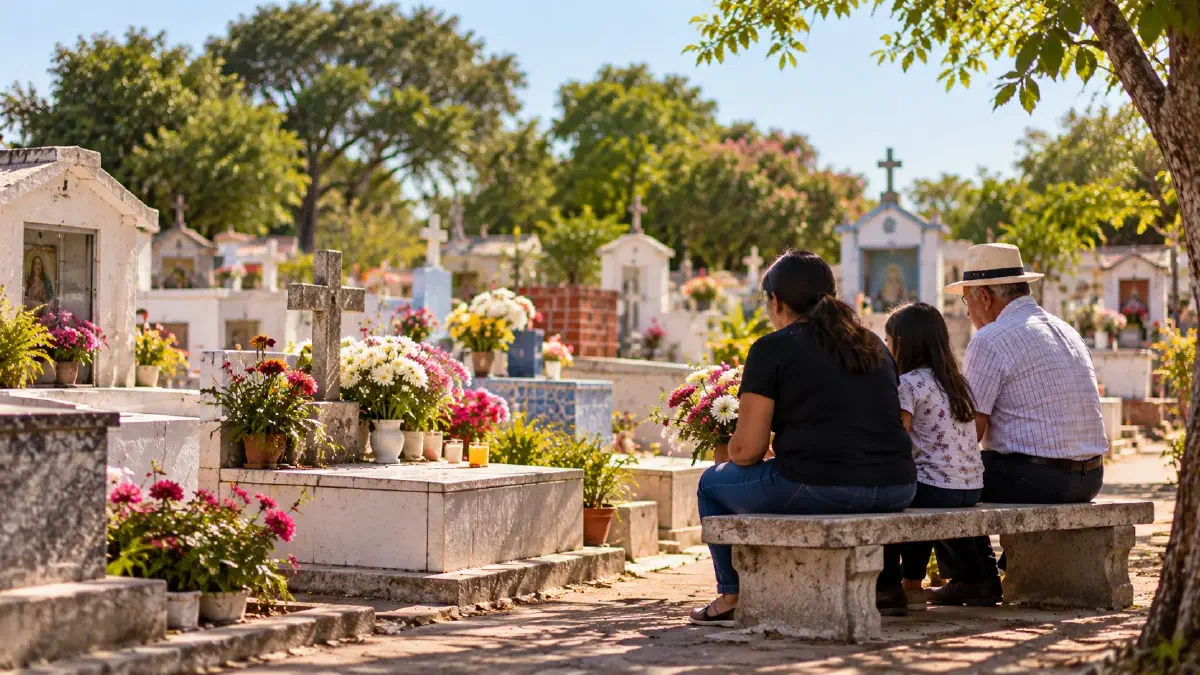
In Paraguay, remembrance is especially visible in cemeteries. Relatives clean graves, bring fresh flowers, light candles, or decorate crosses. In some traditions, crosses are also decorated with kurusu paño, cloths draped over them.
Relatives from different generations often gather to remember family members who have died. Some bring food or drinks to the grave, such as Chipa or the favorite drink of the person they are remembering.
For practicing Catholics, prayers and church services play an important role on these days. Other families spend time together at the grave, share memories, or quietly remember their loved ones. How these days are observed depends on each family’s customs and personal beliefs.
In some communities, traditional customs include giving Chipa and sweets to children at cemeteries.
This custom is still practiced in some regions today. In San Juan Bautista (Misiones), children received sweets at the cemetery as jopói – a gift given in memory of the deceased. Sweets were also reportedly handed out in San Lorenzo.
🧩 What Does This Mean for Everyday Life?#
All Saints’ Day and All Souls’ Day are not public holidays in their own right in Paraguay. They are observed every year on November 1 and 2.
In 2026: All Saints’ Day falls on a Sunday, while All Souls’ Day on Monday, November 2, is generally a normal working day.
Shops, schools, banks, and government offices are therefore usually open on Monday. However, special arrangements, such as an asueto, may affect normal operations. If you are planning a visit to a government office or bank, check current announcements. Our guide to public holidays in Paraguay shows which days are officially designated as days off.
Cemeteries can be much busier on both days. If you plan to visit one, it is best to check visiting hours and access in advance. In some places, services are also held on cemetery grounds on All Souls’ Day. Check with the local parish for times.
The city of Asunción is preparing the municipal cemeteries Recoleta, Cementerio del Sur, and Cementerio del Este for the observances. Cleaning and security measures are being increased. Visitors are also asked to use damp sand instead of water in flower containers. This helps prevent breeding sites for mosquitoes that can transmit dengue.
You can find more information from the City of Asunción.
❓ Frequently Asked Questions About All Saints’ Day and All Souls’ Day in Paraguay#
Is November 2, 2026, a public holiday in Paraguay?
Are there special All Souls’ Day services in Paraguay?
What does Sánima Ára mean?
Conclusion#
A cemetery visit, a shared prayer, or an offering shared with others can express that someone who has died remains part of the family’s story. All Saints’ Day and All Souls’ Day give this remembrance a fixed place in the year. The ways families observe these days are as varied as the memories they share.
Other Paraguayan traditions are also closely connected to family life, faith, and beliefs passed down through generations. You can learn more in our overview of customs and folk beliefs in Paraguay.
Did you know that Paraguay has different names and customs associated with All Souls’ Day? If you found this article helpful, give it a like and share it with others interested in Paraguay.
- Plan your year: Holidays in Paraguay
- Christian traditions in Paraguay: