
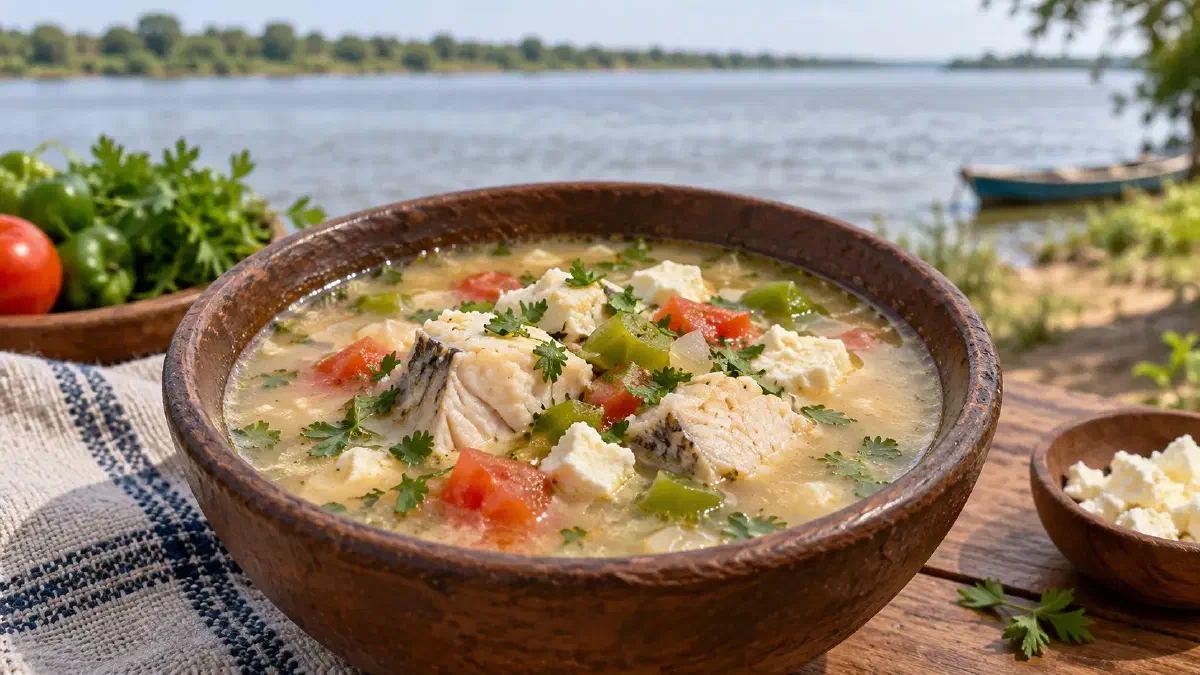

A piece of surubí, some vegetables, and a large pot: that is where Pira Caldo starts. This Paraguayan fish soup is one of the country’s traditional fish dishes, and the recipe can vary. Some versions include milk and Queso Paraguay, while others are made with potatoes or different vegetables.
For our version, we use surubí fillet, milk, and Queso Paraguay. We also show you suitable alternatives and what to keep in mind so the soup turns out well outside Paraguay too.
📝 Pira Caldo Recipe: Step-by-Step Instructions#
At a Glance
- Difficulty: easy to moderate
- Total time: about 45 minutes, including around 15 to 20 minutes of prep
- Servings: 4 as a main course
🛒 Ingredients for Pira Caldo#
The vegetables are straightforward. It is worth taking a closer look at the fish and cheese, since both shape the soup’s flavor and texture.
Main Ingredients#
- 600 g surubí fillet, cleaned
- 1 medium onion
- 1 bell pepper (locote), red or green
- 1 medium carrot
- 3 ripe tomatoes
- 2 garlic cloves
- 2 tbsp vegetable oil
- 500 ml hot water
- 400 ml milk
- 150 g Queso Paraguay
- 1 tsp dried oregano
- 2 tbsp chopped parsley
- salt and black pepper
Optional Ingredients#
- a little fresh cilantro (kuratũ) instead of or in addition to the parsley
- a little ají for mild heat
- 1 bay leaf for the vegetable broth
Which Ingredients Can You Substitute?#
Ingredient Alternatives
Fish in Paraguay:
- For our recipe, we use surubí fillet.
- A traditional alternative is Mandi’i, a native catfish.
Fish outside Paraguay:
- catfish fillet
- zander fillet
- cod fillet
Queso Paraguay: If you cannot find it, mild, soft cheeses such as queso fresco or farmer’s cheese work well. Mild mozzarella also works, although it melts more readily. Feta is much saltier, so use it more sparingly.
Without milk: You can leave out the milk and replace the missing liquid with fish stock or a mild broth. This makes the soup less creamy and a little lighter.
Locote: A regular red or green bell pepper is an easy substitute.
Kitchen Equipment You Will Need#
- large pot
- cutting board and sharp knife
- cooking spoon
- soup ladle
- small bowl for the prepared fish
👩🍳 Step-by-Step Preparation#
Prep#
- Carefully check the fish fillet for any remaining bones with your fingers, then cut it into large bite-sized pieces.
- Finely chop the onion and garlic.
- Dice the locote and tomatoes.
- Finely chop or coarsely grate the carrot.
- Crumble the Queso Paraguay.
- Chop the parsley or cilantro.
Even with store-bought fillets, it is worth checking for bones. Small bones are much harder to spot later among the vegetables and fish in the soup.
Cooking Process#
Heat the oil in a large pot. Sauté the onion, locote, carrot, and garlic over medium heat for a few minutes, until the onion starts to soften.
Add the tomatoes and, if desired, the bay leaf. Cook for another 3 to 5 minutes, until the tomatoes begin to break down.
Pour in the hot water and add the oregano. Let the vegetable base simmer gently for about 8 to 10 minutes.
Carefully add the fish pieces to the soup. Reduce the heat and let the fish cook gently for about 3 to 4 minutes.
Pour in the milk and stir carefully. Heat for another 3 to 4 minutes without letting the soup boil vigorously.
Once the fish is opaque and flakes easily with a fork, add the crumbled Queso Paraguay. Stir gently so the fish pieces stay as whole as possible.
Remove the pot from the heat. Add the parsley or cilantro, then season with salt and black pepper.
Let the Pira Caldo rest for a few minutes, then serve hot.
💡 Practical Tips for Pira Caldo#
For Tender Fish and a Flavorful Soup
- Add the fish near the end: The vegetables take longer to cook than the fillet. This keeps the fish moist and prevents it from falling apart during cooking.
- Simmer gently: High heat and frequent stirring make the fish pieces fall apart more quickly.
- Check for bones first: Even with a fillet, do not assume that every bone has been removed.
- Wait before adding salt: Queso Paraguay and substitute cheeses contain different amounts of salt. It is best to adjust the seasoning at the very end.
- Adjust the consistency: Pira Caldo should remain a soup. If it is too rich or too thick for you, add a little hot water.
Nutrition Information#
The values are for one of four main-course servings, without a side dish.
- Calories: about 445 kcal
- Protein: about 41 g
- Carbohydrates: about 16 g
- Fat: about 25 g
- Fiber: about 3 g
Note: The nutritional values are calculated estimates and may vary depending on the size of the vegetables and the fish, milk, and Queso Paraguay used.
🍽️ What Goes Well with Pira Caldo?#
Pira Caldo is already a complete meal on its own. You do not need much to serve with it.
- Paraguayan: Boiled mandioca goes very well with the soup.
- Simple: A little bread or galleta works well for soaking up the broth.
🔄 Recipe Variations#
Pira Caldo is prepared a little differently depending on the fish and other ingredients. Some versions are lighter, while others are much more filling with potatoes or extra vegetables.
Common Variations#
With Mandi’i: Pira Caldo is also made with Mandi’i instead of surubí. This preparation with vegetables, milk, Queso Paraguay, and herbs is especially well known in Ayolas.
With potatoes and more vegetables: If you prefer a heartier soup, you can cook potatoes in it. Depending on the recipe, carrots, tomatoes, locote, pumpkin, or celery may also go into the pot. This makes the fish soup a more substantial meal.
Extra creamy: Some versions use cream instead of milk, making the soup noticeably creamier.
With fish stock and white wine: Some recipes use fish stock and a splash of white wine. This gives the broth a stronger flavor.
🇵🇾 Pira Caldo in Paraguay#
What Does Pira Caldo Mean?#
The name combines Guaraní and Spanish. Pira means “fish” in Guaraní, while caldo is the Spanish word for broth or soup. The name describes very directly what goes into the pot.
Fish Along the Paraná and Río Paraguay#
Fish is especially common in local cooking where Paraguay’s major rivers are part of everyday life. Ayolas on the Paraná is a good example. There, fish such as surubí, Mandi’i, boga, dorado, and pacú are served in soups, prepared as milanesa, used in empanadas, made as Chupín de Surubí, or grilled.
Fish is also part of the local cuisine along the Río Paraguay. The Remanso area north of Asunción has long had fish stalls and comedores that serve surubí, pacú, dorado, Mandi’i, and other fish.
When Pira Caldo Is Served#
When the cooler days arrive in Paraguay, this fish soup appears on the table more often alongside Vori Vori and Soyo. Hearty, hot, and filling, these dishes are just right for that time of year. Of course, these soups are also prepared outside the winter months.
Fish dishes also have a place during Semana Santa. Meatless dishes play a larger role, especially around Good Friday, and fish is a natural alternative. Pira Caldo fits this time of year just as well as other fish dishes. You can find more examples in our Easter recipe ideas from Paraguay.
Festivals Celebrating Pira Caldo and Fish#
Regional food festivals also show how important fish dishes are in some parts of the country.
The Festival Nacional del Pira Caldo is held in San Antonio in the Central Department. At the sixth edition on August 2, 2026, more than 30 vendors offered a variety of fish dishes. Along with Pira Caldo, the festival also featured other dishes made with river fish.
A larger fish festival takes place in San Cosme y Damián in the Itapúa Department. The 28th edition of the Festival Nacional del Pescado will be held there on September 25, 2026. The festival originally grew out of initiatives by fishers and local groups and focuses on the region’s fish cuisine as a whole. This year’s edition was even recognized by Paraguay’s Chamber of Deputies as an event of national cultural, gastronomic, and tourism interest.
❓ Frequently Asked Questions#
Which fish works well for Pira Caldo?
Can I use frozen fish?
Do milk and cheese always go into Pira Caldo?
How can I avoid bones in the fish soup?
How long does Pira Caldo keep in the refrigerator?
Conclusion#
There is no single way to make Pira Caldo. The fish, vegetables, and liquid can vary without the soup losing its Paraguayan character.
If you can find surubí, you can make the soup with one of Paraguay’s typical river fish and stay especially close to Paraguayan fish cooking. With a suitable substitute fish, the dish also turns out well.
Enjoy making it, and buen provecho!
Would you like to try another Paraguayan fish dish? Take a look at our Chupín de Surubí recipe or browse our fish recipes.
Share & Support
Did you enjoy this Pira Caldo recipe, or do you know someone who likes fish dishes from Paraguay? Give the post a like and share it with other people who love South America. Together, we can help make Paraguayan cuisine more visible.