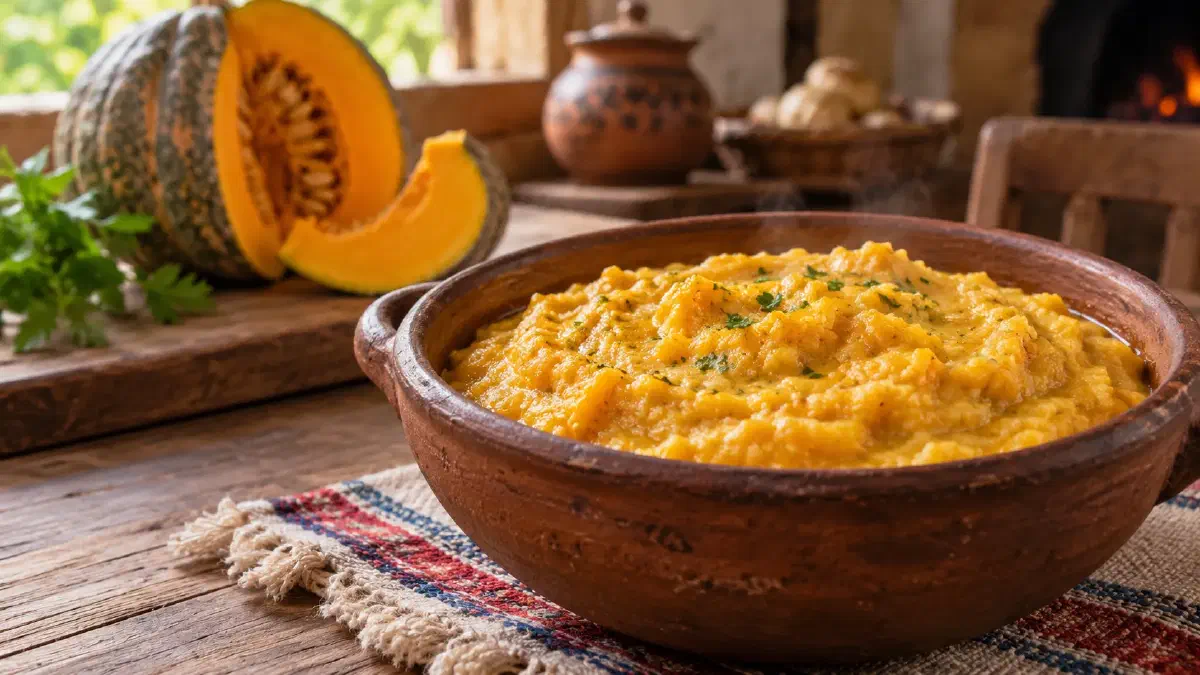

Pumpkin, cornmeal, and cheese may sound like an unusual combination. Together, they make Kivevé, a creamy Paraguayan pumpkin dish with a mild sweetness and a texture somewhere between smooth mashed pumpkin and soft polenta.
Kivevé can lean a little more savory or noticeably sweeter, depending on how it is prepared and served. That range is part of what makes the dish so interesting.
If you are just starting to explore Paraguayan cuisine, this pumpkin classic is a good introduction. The ingredient list is short, the steps are simple, and there are practical substitutes for both Andai squash and Queso Paraguay outside Paraguay.
📝 Kivevé Recipe: Step-by-Step Instructions#
At a Glance
- Difficulty: Easy
- Total time: about 60 minutes
- Servings: about 8 as a side dish or small meal
- Suitable for: vegetarians; gluten-free if made with certified gluten-free cornmeal
🛒 Ingredients for Kivevé#
The basic recipe uses just a few ingredients, with practical substitutes if you live outside Paraguay.
Main Ingredients#
- 1 kg pumpkin flesh (Andai)
- 750 ml water
- 250 ml whole milk
- 280 g finely ground cornmeal
- 200 g Queso Paraguay
- 3 tbsp neutral-flavored oil
- 2 tbsp sugar
- about 1 tsp salt
Optional Ingredients#
- a little more sugar for a much sweeter version
- 1 small onion, finely chopped, for a more savory version
Which Ingredients Can You Replace?#
Ingredient Alternatives
Pumpkin: Butternut squash is a good alternative with a similarly mild, slightly sweet flavor.
Queso Paraguay: Mild fresh cheeses such as queso fresco, farmer cheese, or ricotta work well. Feta is saltier, while mozzarella can make the mixture stringy.
Cornmeal: Use finely ground cornmeal. Cornstarch is not a substitute, and coarse polenta will give the dish a different texture.
Gluten-free: The basic ingredients do not contain gluten. If you have celiac disease, make sure the cornmeal is labeled gluten-free.
Kitchen Equipment#
- large pot
- knife and cutting board
- slotted spoon and bowl
- potato masher or sturdy fork
- wooden spoon
👩🍳 Step-by-Step Preparation#
Preparation#
- Peel the pumpkin, remove the seeds, and cut the flesh into cubes.
- Crumble the cheese or cut it into small pieces.
- Measure the cornmeal, milk, and remaining ingredients and have them ready.
Cooking Instructions#
Cook the pumpkin until soft: Place the pumpkin and water in a large pot. Bring to a boil, then cook over medium heat until the pieces are easy to mash with a fork.
Mash the pumpkin: Lift the pumpkin pieces out of the pot with a slotted spoon and save the cooking water. Mash the pumpkin as finely as possible with a masher or fork, then return it to the pot along with the cooking water.
Stir in the milk and seasonings: Stir the milk, oil, sugar, and salt into the pumpkin puree.
Add the cornmeal: Reduce the heat. Slowly sprinkle in the cornmeal, stirring constantly and vigorously to prevent lumps.
Cook the Kivevé: Continue cooking over low heat for about 10 to 15 minutes, stirring constantly, until the mixture is thick and creamy with the consistency of soft polenta.
Stir in the cheese: Remove the pot from the heat and stir in the Queso Paraguay. Taste and add a little more salt if needed.
💡 Tips for Making Kivevé#
How to Get the Right Texture
Reduce the heat: Once the cornmeal is in the pot, keep the heat low. The thick mixture can otherwise stick easily to the bottom of the pot.
Do not thicken it too soon: Kivevé thickens as it cools, so do not add extra cornmeal too soon.
If it gets too thick: If the mixture is too firm, gradually stir in about 60 to 120 ml of hot water or warm milk until it reaches the texture you want. You may need less depending on the pumpkin.
Nutrition Information#
The values below are for one of eight servings of the basic recipe.
- Calories: about 335 kcal
- Protein: about 10 g
- Carbohydrates: about 47 g
- Fat: about 13 to 14 g
- Fiber: about 5 g
- Sugar: about 8 g
Note: These values are estimates and may vary depending on the ingredients and serving size.
🍽️ How to Serve Kivevé#
Kivevé can be served in several ways, depending on how you prepare it.
- Classic: As a creamy side dish alongside Bife or Asado.
- For everyday meals: On its own as a light, warm meal.
- Merienda: Prepared a little sweeter or served with some milk.
- With a sweeter version: Unsweetened coffee or Cocido, a hot drink made with Yerba Mate, makes a pleasant contrast.
- For merienda: A glass of milk also goes well with it, especially if the Kivevé is only lightly sweetened.
🔄 Recipe Variations#
Recipes vary from household to household. The main difference is how sweet or savory the dish is.
Common Variations#
Semi-sweet: With a little sugar and mild cheese, the basic version falls somewhere between sweet and savory. It works both on its own and as a side dish.
More savory with onion: For a more savory version, finely chopped onion is sautéed in oil and less sugar is used. This version goes especially well with meat.
Sweeter: With a little more sugar, the dish becomes noticeably sweeter and works well as a dessert or for merienda. A little milk can soften the texture or be added when serving.
🇵🇾 Background on Kivevé#
Name and Spellings#
In Spanish, both Kivevé and Quibebé are used; in Guaraní, the name appears as kiveve. In English texts, the accent is often left out, and the name is written as Kiveve.
One common interpretation links the name to a reddish color, perhaps referring to the pumpkin’s hue. The exact origin of the word, however, is unclear.
Similar pumpkin dishes are also found in Argentina and Brazil, where they are often called Quibebé or Quibebe. Recipes can vary considerably. In Brazil, for example, Quibebe is often prepared as a more savory dish and is sometimes cooked with meat.
What Makes Kivevé Special?#
The basic ingredients are simple and common in Paraguay: pumpkin, cornmeal, and fresh cheese. The pumpkin adds natural sweetness and color, while the cornmeal thickens the puree and gives it a creamy texture similar to soft polenta.
Queso Paraguay adds a mild, slightly tangy flavor. That sweet-savory balance is typical of Kivevé, which is why the dish does not fit neatly into either the side-dish or dessert category.
Kivevé in Paraguayan Food Culture#
Kivevé is one of Paraguay’s traditional dishes and has been included since 2018 on an official list of the country’s gastronomic and culinary heritage. The DINAPI Resolution No. 05/2018 ↗ declares this list to be of national interest.
During the cooler months, Kivevé is especially comforting when served warm, which is why we also include it in our roundup of Paraguayan winter dishes. Depending on how it is prepared, it can be served on its own, as a side dish with Bife or Asado, or a little sweeter for merienda (a small afternoon meal or snack).
At traditional celebrations, Kivevé is sometimes offered among the typical foods served around San Juan.
During Semana Santa, the dish also has its place alongside Chipa, Sopa Paraguaya, and Mbaipy as part of traditional Holy Week cuisine. On Good Friday in particular, it offers a meat-free option made with pumpkin, cornmeal, and cheese.
Kivevé, Dulce de Calabaza, and Andai Kamby: Three Traditional Pumpkin Dishes#
Kivevé, Dulce de Calabaza, and Andai Kamby represent three sweet or semi-sweet ways of preparing pumpkin in Paraguayan cuisine.
For Dulce de Calabaza, pumpkin is simmered with much more sugar and spices. The result is sweet and syrupy.
Kivevé, in contrast, is mashed and thickened with cornmeal. Fresh cheese adds a slightly savory contrast to the sweetness of the pumpkin.
Andai Kamby is a sweet dish made with pumpkin, milk, and sugar. Unlike Kivevé, it is not thickened with cornmeal.
If You Prefer Something Savory
When the pumpkin harvest is plentiful, I do not use it only for sweet or semi-sweet dishes. I like to add pumpkin to Caldo de poroto (bean stew) or cook Guisos (stews) with plenty of pumpkin, ground meat, tomato, and sometimes other vegetables or rice. The pumpkin adds a little sweetness and helps thicken the stews.
For more ideas, browse our pumpkin recipes.
❓ Frequently Asked Questions#
What is Kivevé?
Is Kivevé a dessert or a side dish?
Which pumpkin is best for Kivevé?
What kind of cornmeal should I use for Kivevé?
What can I use instead of Queso Paraguay?
How thick should Kivevé be?
How long does Kivevé keep?
Conclusion#
With its simple combination of pumpkin, cornmeal, and cheese, Kivevé is a good introduction to Paraguayan cuisine. Depending on your taste, you can prepare it as a more savory side dish or make it a little sweeter for merienda.
Enjoy cooking, and buen provecho!
Have some pumpkin left over? Try Dulce de Calabaza next as a much sweeter option. Browse more traditional dishes and everyday favorites in our Paraguayan recipes.
Share & Support
Know someone who would like to try something different with pumpkin?
Share the Kivevé recipe, or leave a like if you enjoyed the post.