
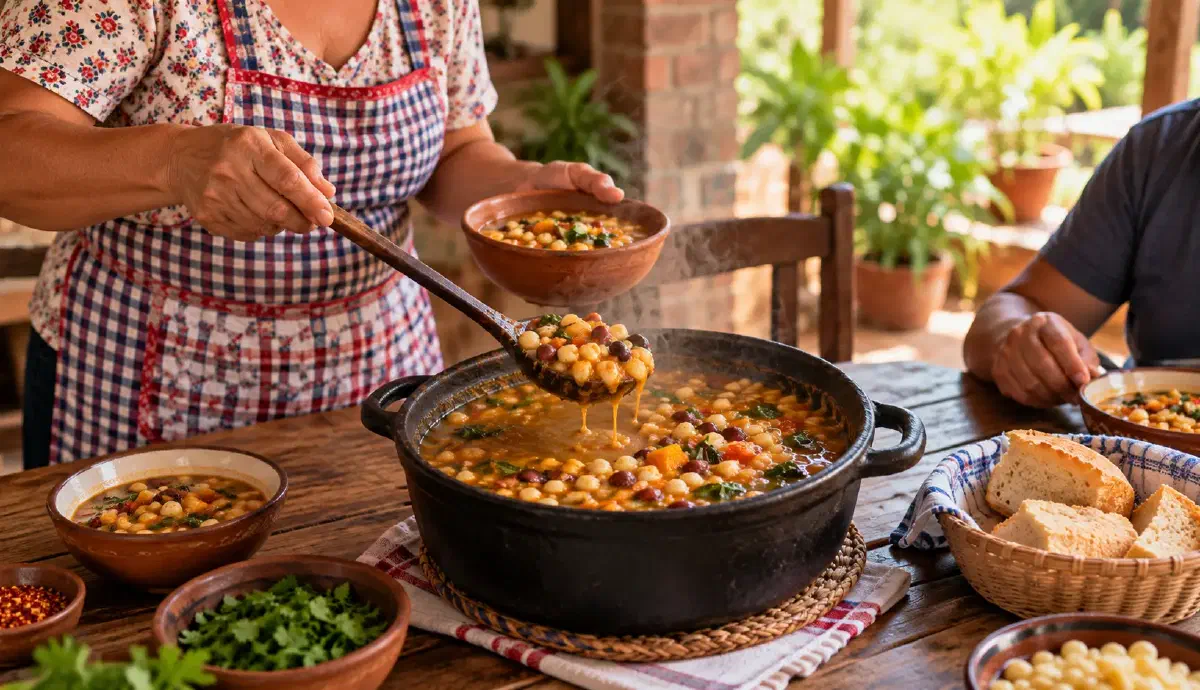

On October 1, Jopara is traditionally served in Paraguay. This corn-and-bean stew is closely connected with Karai Octubre on that day, a figure from folklore associated with scarcity and empty pantries.
There is more to this simple stew than you might expect: folk belief, the changing seasons, and keeping food in reserve.
A traditional explanation, still passed down today, helps explain why Jopara has this special role on October 1. And there is no single fixed version of the dish either – depending on the recipe, Jopara can look quite different.
Key points at a glance
- Date: Jopara is especially associated with October 1.
- Dish: Locro and beans form the base of this hearty Paraguayan corn-and-bean stew.
- Tradition: According to tradition, eating it is meant to keep Karai Octubre and the scarcity associated with him away.
- Context: The tradition is well documented. Exactly when and how it began cannot be clearly established.
What is Jopara?#
In Paraguay, the word Jopara can refer to two different things. The word can be roughly understood as “mixture” – and that meaning shows up in both food and language.
In cooking, Jopara – also written Jopará or Yopará – is a traditional dish made with beans and locro (white corn). What ends up in the pot varies from recipe to recipe. The combination of corn and beans remains at its core.
The word jopara is also used for the mixing of Guaraní and Spanish in everyday speech. This article focuses on the dish and the tradition associated with it on October 1.
Jopara’s cultural importance is also reflected in its national recognition: In 2017, the Secretaría Nacional de Cultura (SNC) recognized the traditional preparation, recipes, knowledge, and practices associated with Jopara – together with Locro, Sopa Paraguaya and Vori Vori – as part of Paraguay’s intangible cultural heritage.
Why is Jopara eaten on October 1?#
Because October 1 is traditionally associated with Karai Octubre.
According to tradition, people cook and eat Jopara that day to keep scarcity out of the home. A well-filled pot takes on a symbolic meaning: There is food in the house, and the family has prepared ahead.
That does not mean everyone who eats Jopara on October 1 today literally believes in Karai Octubre. For some, the figure is part of folk belief. For others, the meal is mainly a familiar tradition or simply a reason to share Jopara together.
This is where Karai Octubre comes in.
Who is Karai Octubre?#
Karai Octubre – also written Karaí Octubre, roughly meaning “Mr. October” – is a figure from Paraguayan folklore, often associated with Guaraní mythology. He is linked to scarcity and hardship. In the stories, he wanders around at the beginning of October and checks how well stocked the households are.
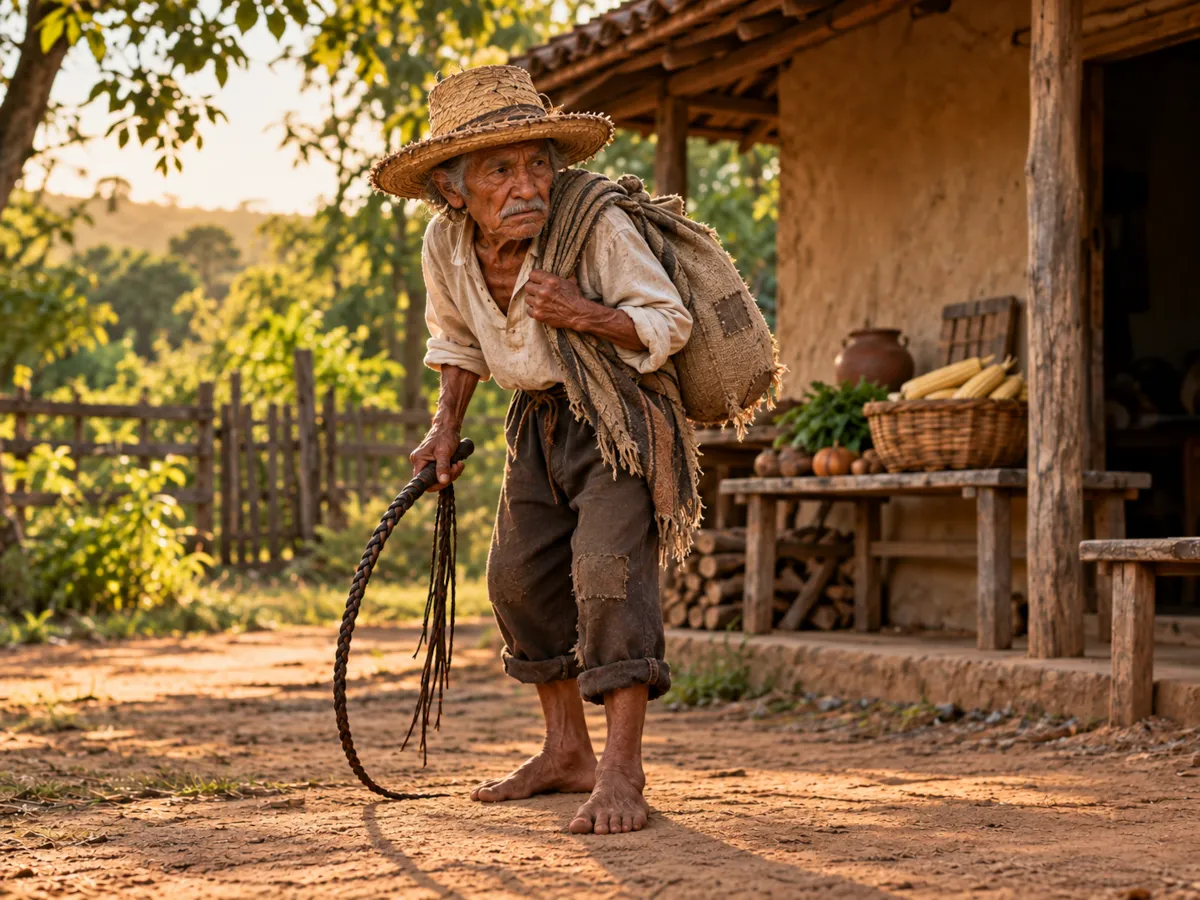
Where there is enough food, the household has prepared ahead. Plenty of food in reserve stands for abundance and having enough, while empty supplies stand for scarcity and need. The stew is meant to symbolically drive Karai Octubre away and show: There is enough here.
In this story, a very everyday concern takes shape as a figure: Will the food supplies last?
Spring, food supplies, and the traditional explanation#
The tradition is often explained in connection with the agricultural cycle and a time when food supplies could be running low. October falls at a particular point in Paraguay’s seasons: Winter is over, and spring has just begun. The weather and nature are changing, plants are putting out new growth, and a new growing season is beginning in the fields.
Food stored from the previous harvest may already be running low, while new harvests are not yet sufficient everywhere.
This context also helps explain why Jopara fits the tradition so well: Corn and beans can be stored. Other ingredients in the dish are also among the staples kept in many Paraguayan households and are used in many ways in Paraguayan cooking. This makes it easier to understand why this particular dish is so closely connected with the idea of preparing ahead and having enough food in reserve.
Exactly how the tradition began remains unclear. There are different explanations and stories about its origins, but no fully documented history that firmly traces today’s tradition to a particular point in time or a single person.
How the tradition is practiced today#
Karai Octubre is not only a figure from old stories.
Around October 1, the tradition is still observed in different ways. For some people, the day has little significance. Other families cook Jopara at home, while elsewhere the tradition is visible at markets and public events – especially where people cook, sell food, and celebrate together.
In this context, you may also come across the Guaraní expression karu guasu, roughly meaning a large shared meal. It is less about one specific dish and more about eating together and the idea of having enough – in other words, abundance rather than scarcity.
One well-documented example is Mercado 4 in Asunción. A Festival del Jopará took place there on October 1, 2023. Women who work as cooks at the market served Jopara, folk groups performed, and an actor appeared as Karai Octubre.
The Festival Nacional del Jopara is another public celebration of the tradition. Its ninth edition was held in 2024 at Plaza Uruguaya in Asunción.
Events like these show how several parts of the tradition come together: the dish itself, the story of Karai Octubre, and the shared celebration.
How Jopara is prepared#
How Jopara tastes and looks depends on the recipe. Locro and beans form the base. Depending on the version, ingredients such as onions, locote, tomatoes, or squash may be added. Some recipes include Queso Paraguay (Jopara kesu), while others include meat (Jopara so’o).
Depending on the type of locro and beans used, they may first need to be soaked and partially cooked. They then cook with the vegetables until everything is tender and a hearty stew forms. You can add other ingredients to the stew to suit your taste. The amount of liquid needed and the cooking time depend mainly on the type of corn and beans used.
If you would like to make Jopara yourself, our Jopara recipe gives you a meatless base version with step-by-step instructions and well-known variations with cheese or meat.
Locro is not only used in savory dishes in Paraguay. In Mazamorra, the same white corn is used for a sweet dish – with a completely different result.
❓ Frequently asked questions#
Can you only eat Jopara on October 1?
Is October 1 a public holiday in Paraguay?
Conclusion#
On October 1, Jopara in Paraguay is more than a hearty corn-and-bean stew. Karai Octubre is tied to the traditional idea of preparing ahead and keeping scarcity out of the home.
Some people may still take the figure literally, while others mainly serve Jopara out of tradition. Either way, a full pot makes the old story about food supplies easy to understand: There is enough food to keep scarcity away.
If you are interested in traditions like this and the stories behind them, you can find more special days, traditions, and stories from Paraguay under Festivals & Traditions.
Share & support
Did you know about the tradition surrounding Jopara and Karai Octubre?
Feel free to give this article a like and share it with others interested in Paraguay. This helps make some of Paraguay’s lesser-known traditions and everyday culture more visible.
- Another day that brings food and tradition together: Día Nacional de la Chipa: Chipa Day in Paraguay
- Sharing a drink and experiencing everyday culture: Día Nacional del Tereré: Customs and Everyday Life
- Traditional foods at a folk festival: San Juan Foods from Paraguay: Classics and Menu Ideas
- More on language, folk belief, and everyday life: A to Z of Paraguay: Everyday Life and Culture