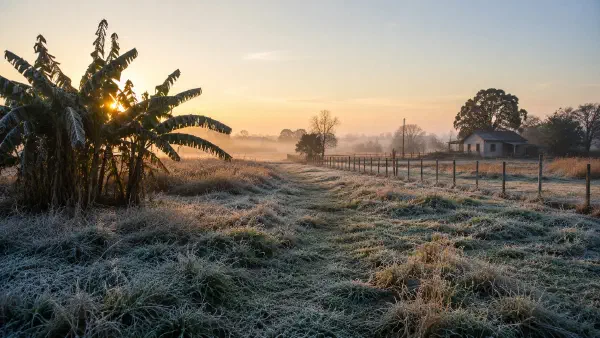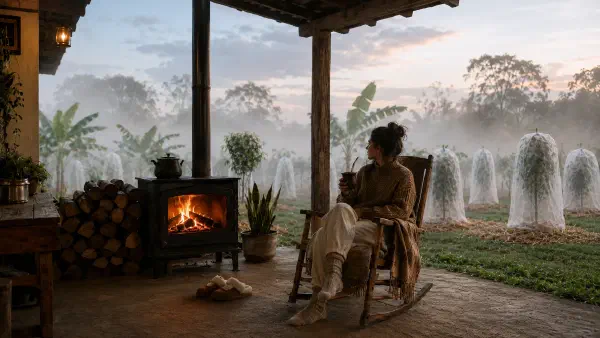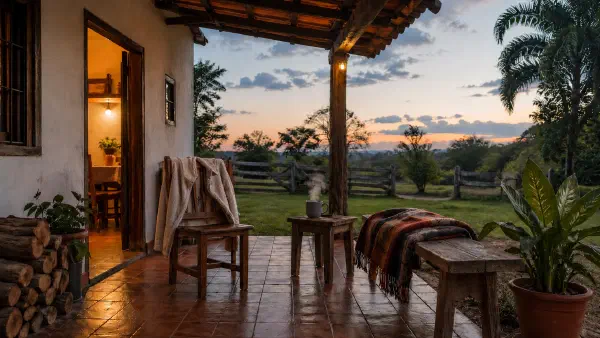
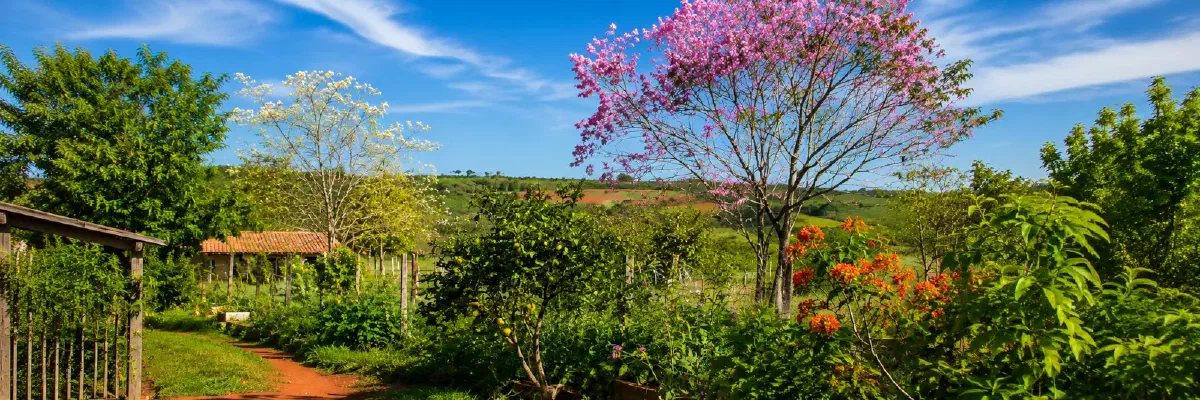

In late August and early September, you may still need a jacket in the morning in Paraguay, then find yourself looking for shade by afternoon. At the same time, trees start putting out new growth, the first fruit trees begin to bloom, and some lapachos are already full of color.
These contrasts are exactly what define spring in Paraguay. Rather than a long stretch of consistently mild weather, it is a fairly quick shift from winter toward warmer and, in many places, more humid days. In daily life, you can see nature changing around you, the days become warmer and longer, but cool nights, thunderstorms, and heavy rain are still possible.
The most important points at a glance
Spring runs from September to November: On the meteorological calendar, September, October, and November are spring in Paraguay.
Changeable rather than consistently mild: Cool mornings and cold fronts are still possible in September. October gets warmer, and November often already feels like summer.
Clear regional differences: The Región Oriental is wetter and greener, while the Chaco is drier and often hotter.
You can see nature changing: Lapachos may already bloom during winter. As temperatures rise, new shoots appear, more plants flower, fruit begins to set, and growth speeds up.
Rain plays a bigger role in daily life again: Thunderstorms, muddy roads, and standing water become more relevant. After rain, it is also worth checking for possible mosquito breeding sites.
When does spring begin in Paraguay?#
Paraguay is in the Southern Hemisphere, so its seasons are the opposite of those in Europe. On the meteorological calendar, spring begins on September 1 and includes September, October, and November.
Astronomical spring starts a little later at the equinox. In 2026, it falls on September 22 at around 9:05 p.m. in Asunción. The exact date and time shift slightly from year to year.
In everyday life in Paraguay, spring has another date firmly marked on the calendar: September 21. On that day, Paraguay celebrates Día de la Primavera y de la Juventud, or Spring and Youth Day, with a variety of activities. This cultural observance should not be confused with the astronomical start of spring.
The weather in Paraguay does not follow any of these dates anyway. A warm August day can already feel like spring, while a cold air mass from the south can still bring noticeably cooler temperatures in September.
🌤️ How the weather changes from September to November#
A single temperature range does not tell you much about spring in Paraguay. What matters more is how conditions change over the course of the three months.
| Month | Typical conditions | What matters in daily life |
|---|---|---|
| September | Transition month with warm days, cool mornings, and possible cold spells | Keep a light jacket handy and watch for sudden weather changes |
| October | Noticeably warmer and more humid, with thunderstorms becoming more frequent | Plan outdoor work for the morning and keep rain and mosquitoes in mind |
| November | Already summery to hot in many areas, with warmer nights as well | Shade, water, and midday heat become more important |
September: Between a winter jacket and a T-shirt#
September in Paraguay shows especially well why averages only tell part of the story. A morning can be cool and the middle of the day pleasantly warm. A few days later, a north wind may bring much higher temperatures before another cold front moves through and leaves a few chilly mornings behind.
In our experience, frost is usually no longer an issue around this time where we live in rural Guairá. Temperatures can still drop below 10°C, though. Winter in Paraguay does not end overnight.
October: Heat and humidity increase#
By October, the weather already feels noticeably different. Warm to hot days become more common. At the same time, humidity rises in many parts of the Región Oriental, and thunderstorms become more frequent again.
With warmth and rain, vegetation often takes off quickly. Around gardens and properties, this is the time when it can feel hard to keep up with all the growth.
November: Summer is already in the air#
Meteorologically, November is still part of spring. In daily life, however, it can already feel very much like summer.
The midday sun gets stronger, hot days become more frequent, and nights stay warmer. At this point, I prefer to plan gardening or longer outdoor activities for the morning or later in the afternoon.
That is an important difference between the calendar and how the season actually feels: meteorological summer does not begin until December, but the hot season can make itself felt much earlier in Paraguay.
Spring varies across Paraguay: Eastern Region, south, and Chaco#
There is no single version of “spring weather in Paraguay.”
In the Región Oriental, or Eastern Region, the climate is generally wetter. After rain, the landscape often turns green quickly, and thunderstorms become more common as temperatures rise. This includes departments such as Central, Guairá, Caazapá, and Alto Paraná, as well as large parts of the south and southeast. Asunción is also in this wetter part of the country.
In the south and southeast, nights and mornings can stay somewhat cooler during the transition. Especially in September, it is worth looking at more than just the daytime high.
The Chaco is generally drier and often hotter than the Eastern Region. High temperatures can already occur there in spring, while rainfall tends to be distributed more unevenly. If you travel to the Chaco in September or October, do not assume conditions will be the same as in Asunción or the greener east.
Even within the same region, the exact location makes a difference. An open pasture, a low-lying area, a densely built neighborhood, or a property with many large trees can feel very different on the same day, even at similar temperatures. Wind, humidity, sun, and shade all play a part.
🌸 When Paraguay turns green again#
The most visible side of spring does not necessarily begin on September 1. Some plants are well ahead of the calendar.
Among the most noticeable are the lapachos, also called Tajy in Guaraní. Pink lapachos can bloom between July and September, while yellow species often flower somewhat later, into October. The blossoms frequently appear before the tree has fully leafed out again, making the colorful crowns stand out even more.
Around lapacho season, you will also hear people say that winter is now over, or at least that there will be no more frost. The bloom is a beautiful sign that the seasons are changing, but it is not a reliable weather rule. A cool spell or late cold front can still follow.
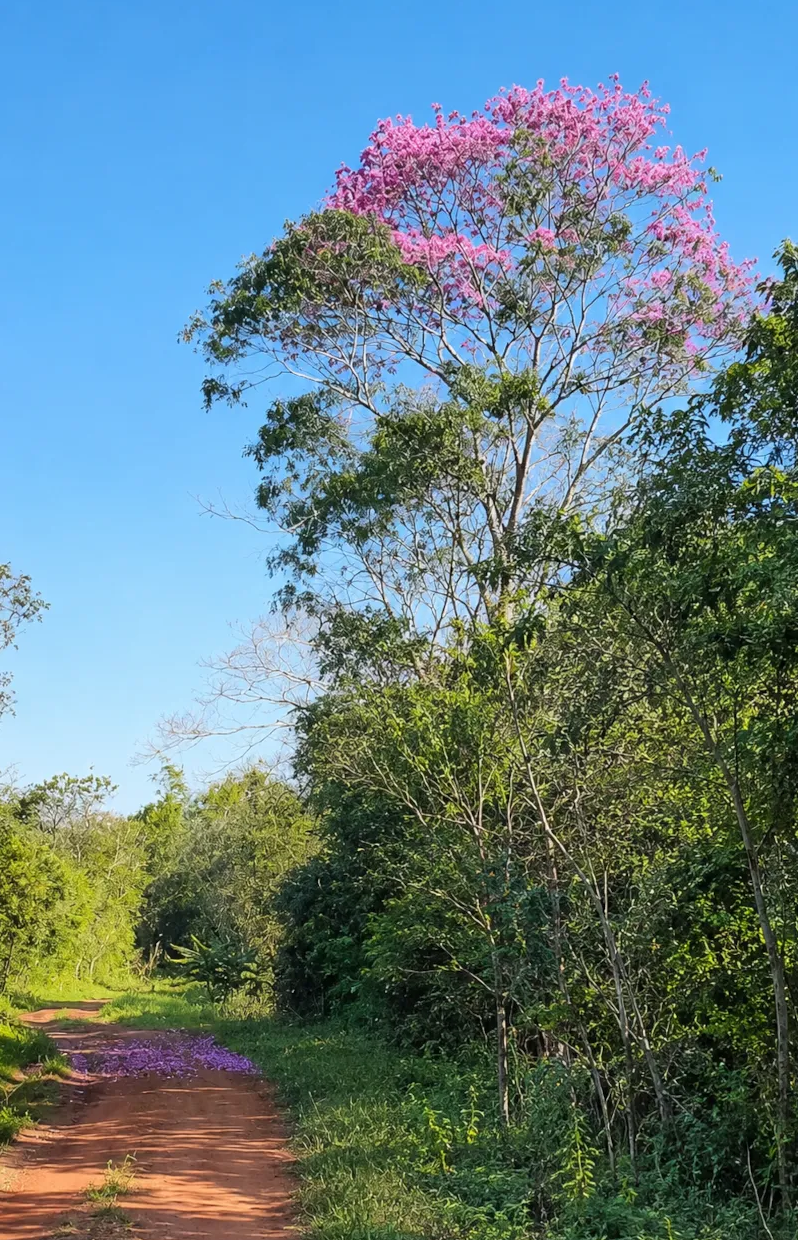
Here in rural Guairá, this is one of the times when I notice the change of seasons most clearly. After the quieter winter weeks, warmer weather brings new shoots and blossoms to many other plants as well. Citrus and mango trees begin to flower and set their first small fruit, while the mulberry already has fruit hanging from its branches. Depending on the temperatures, rainfall, and plant species, the property can become much greener and more colorful within a short time.
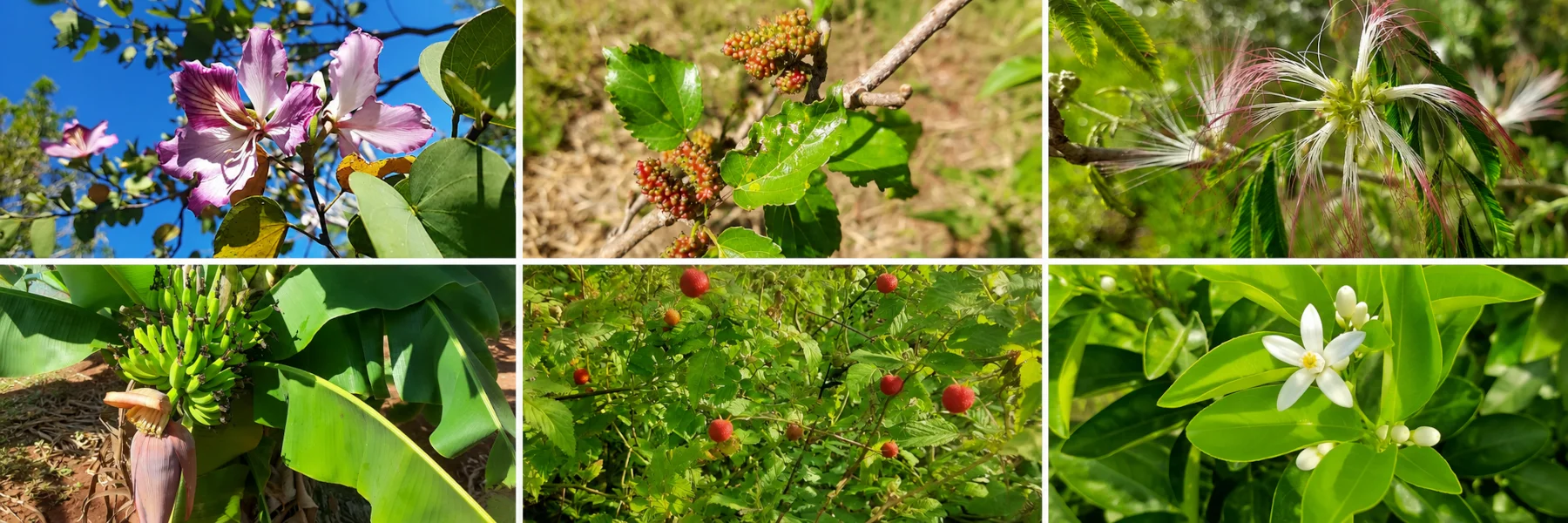
Our region stays relatively green even in winter. Still, the shift into spring is easy to notice. When driving through other parts of Paraguay at this time of year, you also see blooming lapachos and large mango trees with their striking flower clusters.
🌱 Garden and property in spring#
Spring is a busy time around the garden and property. Many plants begin growing more vigorously again, and there is plenty to take care of after winter. Many trees and shrubs are also pruned during winter or toward its end, before new growth really gets going. When and how much to prune depends on the individual plant.
You can plant year-round in Paraguay if the species and current weather are suitable. Around here, new trees and shrubs are often planted in spring, especially in September and October. We also prefer planting at this time. Young plants can establish their roots before the intense summer heat and still have more time before the next winter. Planting in fall is possible too, but sensitive plants then have less time before the first cold spells of winter.
A few things have worked especially well for us:
- Keep an eye on cool nights and wind: Protect sensitive and newly planted plants during late cold fronts, and stake them if needed.
- Use mulch: It helps the soil retain moisture as sunshine and temperatures increase.
- Expect fast growth: With warmth and rain, grass and weeds grow quickly too. Beds and planting areas need more attention again.
- Pick favorable planting weather: Mild days with moderate rain are useful. During intense heat, heavy rain, or a cold front, it is better to wait a little.
⛈️ Thunderstorms, rain, and mosquitoes#
As temperatures rise, the weather also becomes more unsettled. Especially in the Eastern Region, warm and humid days can alternate with thunderstorms and heavy rain.
For daily life, the monthly rainfall total often matters less than how quickly the rain falls and how concentrated it is in one area.
In rural areas, unpaved roads can become much harder to drive after heavy rain. A road that was dry in the morning may look completely different after an afternoon thunderstorm. Heavy rainfall can also cause local problems in cities.
Spring 2026 update: El Niño
At the start of spring, the latest published seasonal outlook from Paraguay’s meteorological service points to more rainfall than usual across large parts of the Región Oriental.
At the same time, El Niño is strengthening in the Pacific. NOAA currently sees a high likelihood of a very strong event later in 2026 and into early 2027.
That does not tell us exactly what will happen in a particular place or on a particular day in Paraguay. El Niño is a large-scale climate pattern, not a forecast for nonstop rain throughout the Paraguayan spring.
Authorities are also preparing for possible effects. In Asunción, prevention and emergency planning have been strengthened for heavy rain and a possible rise in the Río Paraguay.
As of August 31, 2026
Sources: Dirección de Meteorología e Hidrología · NOAA Climate Prediction Center · Municipalidad de Asunción
With rain and rising temperatures, mosquitoes also become more noticeable again. After rainfall, it is worth taking a quick look around the property. Water can collect in buckets, plant saucers, old containers, tires, or gutters and become a mosquito breeding site.
☀️ Is spring the best time to visit Paraguay?#
Whether spring is the best time to visit Paraguay depends on what you want to do and how well you handle heat. For many people, however, spring and winter are among the more comfortable times to get to know the country. Especially in September and during part of October, outings and longer drives are often more pleasant than in the intense summer heat.
The landscape is another reason this time of year stands out. Paraguay stays green year-round in many regions, but spring brings fresh growth, and blooming lapachos and other plants add even more color.
Conditions are not the same everywhere, though. The Chaco can already be considerably hotter. In the wetter Eastern Region, rain, humidity, and thunderstorms become more noticeable as spring progresses.
The season also matters for things to do in Paraguay. Spring is often a comfortable time for outings, sports, or an afternoon outdoors with friends.
❓ Frequently asked questions about spring in Paraguay#
When does spring begin and end in Paraguay?
How warm is Paraguay in spring?
Does it rain a lot during spring in Paraguay?
When do lapachos bloom in Paraguay?
Is September 21 a public holiday in Paraguay?
What should you wear in Paraguay in spring?
Conclusion: Spring in Paraguay is all about change#
Spring in Paraguay brings together things that may seem hard to reconcile at first: cool mornings and hot afternoons, blooming trees and late cold fronts, dry days and strong thunderstorms.
From September to November, it steadily gets warmer and, in many places, more humid. At the same time, vegetation starts growing vigorously again and daily life shifts outdoors.
To see where spring fits into the full year, take a look at our climate overview for Paraguay. We collect more articles about spring, summer, fall, and winter under seasons in Paraguay.
Share & support
Know someone who would find this article useful? Feel free to share it with them. It helps more people get a realistic picture of everyday life in Paraguay.
More about climate & seasons:
- Climate in Paraguay: Seasons, Weather & Daily Life
- Winter in Paraguay: How Cold Does It Really Get?
- Fall in Paraguay: when it starts and when you feel it
Explore Paraguay further:
Reply by Email