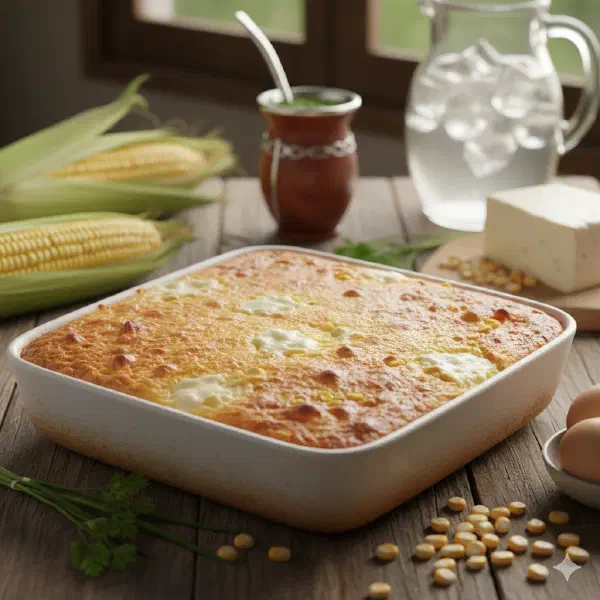
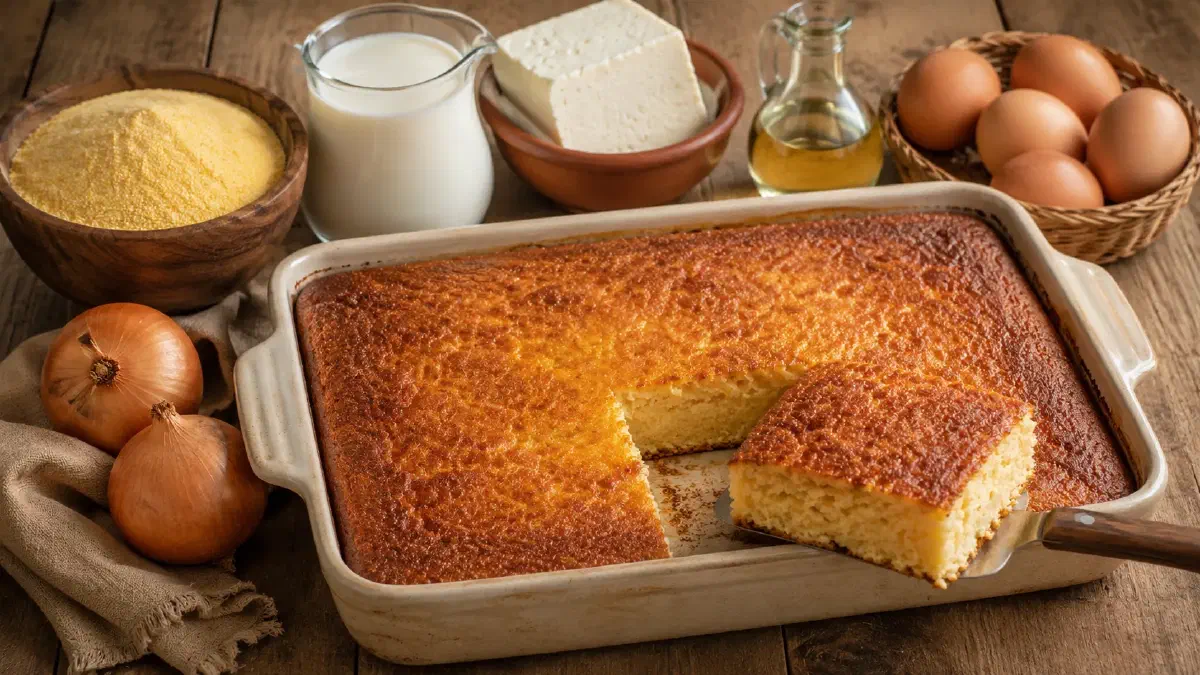

A golden-brown crust, moist corn batter, and small pieces of cheese and soft-cooked onions throughout: this is Sopa Paraguaya. It is a classic in Paraguay, but its name can be misleading at first. Despite the name, there is no soup involved. Instead, this savory corn cake is cut into pieces and served as a side dish. It is a staple at family meals and celebrations.
You only need a few ingredients to make Sopa Paraguaya. Fine cornmeal, cheese, onions, eggs, and milk form the base. The recipe is easy to prepare, and if you get the batter consistency and baking time right, the corn cake stays moist inside while still being firm enough to slice.
📝 Sopa Paraguaya Recipe: Step by Step#
At a Glance
- Difficulty: Easy
- Preparation time: About 20 minutes prep + 40 to 45 minutes baking
- Servings: About 10 to 12 pieces as a side dish, depending on how large you cut them
- Baking pan: About 30 × 20 cm (12 × 8 inches)
- Oven temperature: 180°C (350°F), conventional oven
🛒 Ingredients for Sopa Paraguaya#
Here is what you need to make a classic Sopa Paraguaya.
Main Ingredients#
- 500 g fine cornmeal (harina de maíz / avati ku’i)
- 500 ml milk
- 3 eggs
- 250 g Queso Paraguay
- 2 medium onions, about 300 g
- 150 ml neutral-flavored vegetable oil
- About 10 g salt, depending on the cheese you use
- A little oil for greasing the pan
- Optional: a little black pepper for extra flavor
What Ingredients Can You Substitute?#
Ingredient Substitutes
The basic recipe is gluten-free and vegetarian.
Cornmeal: In Paraguay, use finely ground harina de maíz or avati ku’i. Cornstarch is not a substitute. Fine polenta can work, but it gives the Sopa a slightly coarser texture. Precooked cornmeal used for arepas behaves differently and is not a direct 1:1 substitute.
Queso Paraguay: Outside Paraguay, you can use queso fresco, mild farmer cheese, or feta that is not too salty. A mixture of mild feta and mozzarella gives you a good balance of saltiness and a soft texture.
Milk: You can use lactose-free milk in the same amount. Plant-based milk also works, but it changes the flavor slightly.
Fat: Instead of vegetable oil, you can use butter or, traditionally, lard. Sopa made with lard is no longer vegetarian.
Kitchen Equipment#
- Large bowl
- Skillet
- Cutting board and knife
- Whisk or wooden spoon
- Rectangular baking dish or baking pan, about 30 × 20 cm (12 × 8 inches)
- Kitchen scale and measuring cup
👩🍳 Step-by-Step Instructions#
Preparation#
- Preheat the oven to 180°C (350°F), conventional setting, and lightly grease the pan.
- Peel and finely dice the onions.
- Crumble the Queso Paraguay or cut it into small pieces.
- Set out the eggs, milk, and remaining ingredients.
Cooking#
Add some of the 150 ml of oil to the skillet and cook the onions over medium heat until soft and translucent. Do not let them brown too much.
Whisk the eggs in a large bowl. Stir in the milk and the remaining oil.
Add the cornmeal in batches and mix everything into a smooth, thick batter. Then add the cooled onions and cheese.
Season with salt. Use less if your substitute cheese is already salty.
Pour the batter into the prepared pan and smooth the top.
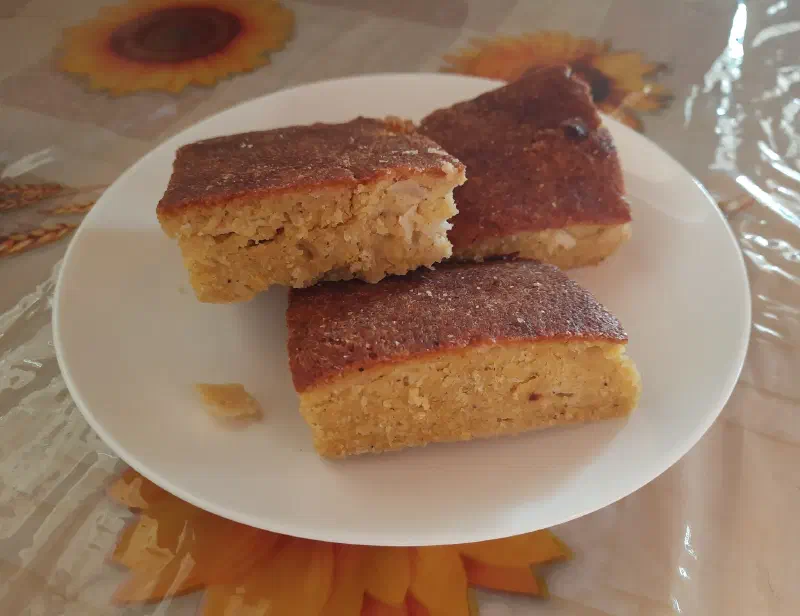
Bake the Sopa for about 40 to 45 minutes, until the top is lightly golden brown and the center is firm. It should still be moist inside, but there should be no visible liquid batter.
Let it rest for about 10 minutes after baking. This makes it easier to cut into neat pieces.
Here is the finished Sopa:
💡 Practical Tips for Sopa Paraguaya#
For a Moist, Sliceable Sopa
- Check the consistency: The batter should be thick and creamy and spread easily in the pan. If your cornmeal absorbs a lot of liquid and the batter is very firm, gradually add a little more milk.
- Use the right pan: In a very large pan, the Sopa will be flatter and dry out faster. Muffin tins or other small oven-safe dishes work well for buffets or finger food. Since the Sopa cooks faster in smaller dishes, start checking it earlier.
- Do not rely only on the clock: The top should be golden brown and the center firm, but not dry.
- Adjust the salt to the cheese: The saltier the cheese, the less additional salt you need.
Nutrition Information#
The values are based on the amounts listed above, using vegetable oil, and calculated per piece when the Sopa is cut into 12 pieces.
- Calories: About 360 kcal
- Protein: About 10 g
- Carbohydrates: About 37 g
- Fat: About 20 g
- Fiber: About 3.5 g
The nutrition information is approximate and may vary depending on the cornmeal, cheese, fat, and serving size.
🍽️ What Goes Well with Sopa Paraguaya?#
It is usually served as a side dish, but it works with many different foods depending on the occasion.
- Classic: With Asado or other grilled meats
- Fresh: With tomato, cabbage, or green salad
- Hearty: On cooler days, with soups or stews such as Caldo de Poroto
- For larger gatherings: With cassava, salads, and other small dishes on a buffet
- On the go: Sopa Paraguaya also tastes good cold. Cut into pieces, it is easy to pack for a picnic, work, or a school snack.
- Paraguayan classic: Tereré, the cold yerba mate infusion, on warm days
- Simple: Water with lemon
- Fruity: Homemade lemonade or fruit juice
- For cooler days: Mate cocido, a hot yerba mate drink, or coffee
🔄 Recipe Variations#
Besides the classic version, there is also Sopa so’o, a well-known and more filling variation layered with seasoned meat.
🥩 Sopa So’o: Sopa Paraguaya with Meat Filling#
Sopa so’o is one of the best-known variations. So’o means “meat” in Guaraní. For this version, a seasoned meat filling is placed between two layers of Sopa batter. This makes it much more filling and suitable as a main dish.
Additional ingredients for the meat filling:
- 500 g ground beef
- 1 medium onion
- 1 Locote (bell pepper)
- 2 garlic cloves
- 1 green onion
- A little fresh parsley
- Salt, black pepper, and cumin to taste
- A little oil for cooking
Optional: Some family recipes also add chopped hard-boiled eggs to the meat filling.
Quick preparation:
Finely chop the onion, Locote, and garlic and cook them in a little oil until soft. Add the ground beef and cook until browned and crumbly. Season with salt, pepper, and cumin. Finally, stir in the green onion and parsley. The filling should stay moist but not be runny. Let the meat filling cool for a few minutes before assembling the layers.
Pour about half of the prepared Sopa batter into the greased pan.
If you want clearly separated layers, you can pre-bake this first layer for about 5 minutes. However, this extra step is not necessary.
Spread the meat filling evenly over the first layer and add the chopped eggs if desired. Cover with the remaining Sopa batter and bake as described in the basic recipe, until the top is golden brown and the Sopa is fully baked.
🇵🇾 Background Information about the Recipe#
Why Is It Called Sopa Paraguaya?#
The name Sopa Paraguaya literally means “Paraguayan soup,” which does not seem to fit a solid baked corn dish at all.
The best-known explanation is a legend from the time of Carlos Antonio López. According to the story, a corn dish at the home of then-president Carlos Antonio López accidentally became too thick and was then baked. There is no historical evidence that it happened this way, but the story is still often told today.
What Makes Sopa Paraguaya Special?#
The texture of the finished Sopa is somewhere between a savory corn cake and moist cornbread. It is firm enough to slice but stays soft and slightly moist inside. The cornmeal gives it its compact, bread-like texture. Queso Paraguay adds moisture and a mild saltiness, while the soft-cooked onions add flavor and a light sweetness. The result is more savory than many American-style cornbreads.
It tastes good warm, at room temperature, or cold, and its firm texture makes it easy to take with you.
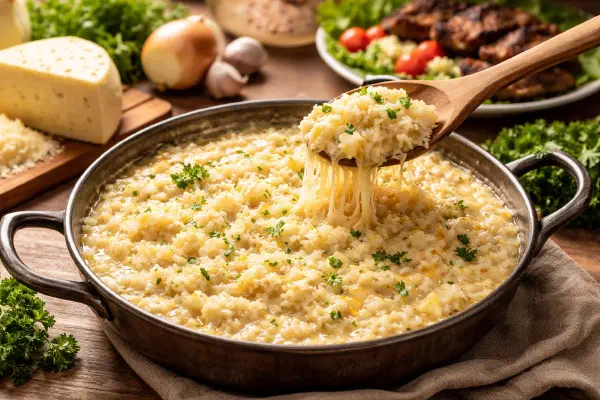
Sopa Paraguaya is often confused with Chipa Guasu. Both dishes combine corn, cheese, eggs, and onions, but there are two clear differences.
| Sopa Paraguaya | Chipa Guasu | |
|---|---|---|
| Corn base | Fine cornmeal | Fresh, chopped or blended corn (choclo) |
| Texture | Firmer and easy to slice | Moister and more like a casserole |
What Role Does Sopa Paraguaya Play in Paraguay?#
This corn and cheese classic works just as well for everyday meals as it does for larger family gatherings. At the asados we attend here in the countryside, Sopa is almost always part of the meal. Like Chipa Guasu, it can be prepared ahead of time and easily served with meat, salads, and other dishes.
It also regularly appears at traditional celebrations. Around San Juan, it is one of the typical San Juan dishes in Paraguay. It is also a traditional part of Easter cooking during Semana Santa.
Traditionally, Sopa Paraguaya can also be baked in a Tatakua, Paraguay’s wood-fired clay oven. When families bake Chipa, Sopa Paraguaya, or Chipa Guasu there for a large gathering, the preparation itself often becomes a shared activity. Of course, you do not need a Tatakua for this recipe at home. A regular oven works just as well.
Since 2017, the traditional preparation of Sopa Paraguaya and the related recipes, practices, and knowledge have been recognized as part of Paraguay’s intangible cultural heritage. The recognition is based on SNC Resolution No. 592/2017 issued by the Secretaría Nacional de Cultura ↗. The recognition also includes Vori Vori, Locro, and Jopará. However, this is not a UNESCO designation.
❓ Frequently Asked Questions#
Is Sopa Paraguaya really a soup?
Why is Sopa Paraguaya called a soup?
What kind of cornmeal should I use for Sopa Paraguaya?
What can I use instead of Queso Paraguay?
Is Sopa Paraguaya gluten-free and vegetarian?
How long does Sopa Paraguaya keep, and can I reheat it?
What is the difference between Sopa Paraguaya and Chipa Guasu?
Final Thoughts#
For me, this combination of a few ingredients, hearty flavor, and simple preparation is exactly what makes Sopa Paraguaya a classic of everyday Paraguayan cooking. Served warm, it goes naturally with Asado or a big family meal. Cold, it is easy to take along for a picnic or when you are on the go. It is also a good example of how simple and versatile Paraguayan cuisine can be.
Have fun cooking and buen provecho!
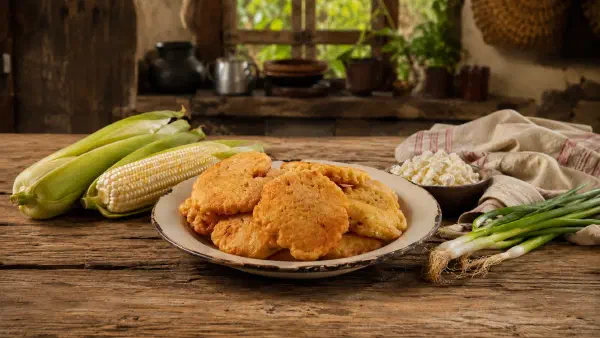
If you would like to try more recipes with corn, try our Paraguayan corn tortillas. Or browse our collection of Paraguayan recipes.
Share & Support
Do you enjoy Sopa Paraguaya as much as I do, or do you know someone who should definitely try it? Give this post a like and share it with others interested in South America. Together, we can help more people discover Paraguayan cuisine.