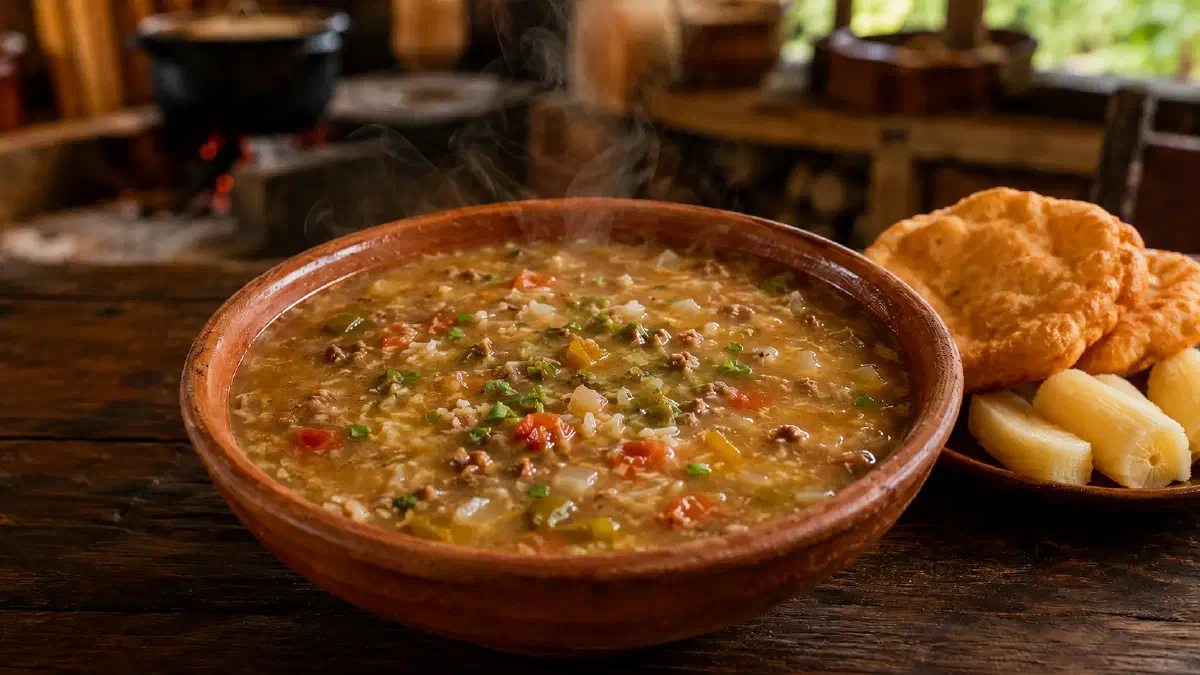

Soyo, called So’o Josopy in Guaraní, is a thick beef soup made with finely ground beef, a little rice, and vegetables. This traditional Paraguayan soup is a firm part of the country’s local cuisine and is often served hot on cool days, usually with Paraguayan tortilla or boiled cassava.
When I tried my first bowl, I immediately noticed its unusually fine texture. Unlike a typical ground beef soup, the meat does not stay crumbly but spreads evenly throughout the broth.
In this recipe, you will learn step by step how to achieve this fine texture. You will also find practical cooking tips, simple ingredient substitutions, and several variations.
📝 Soyo Recipe: Step-by-Step Instructions#
At a Glance
- Difficulty: medium
- Total time: about 60 minutes
including 20 minutes of preparation and 40 minutes of cooking - Servings: 6 servings as a main dish or 8 smaller servings
🛒 Ingredients for So’o Josopy#
You probably already have most of the ingredients at home. Here is what you need for the basic recipe and how you can add more flavor.
Main Ingredients#
- 500 g carnaza negra (roughly top round), finely ground twice; alternatively, use another lean cut from the beef round or lean ground beef
- 2 liters cold water
- 2 tbsp rice
- 1 large onion
- 1 red or green bell pepper (locote)
- 1 large tomato
- 2 garlic cloves
- 3 green onions
- 2 tbsp vegetable oil (or pork lard / grasa de cerdo)
- 1 tsp dried oregano
- Salt and black pepper
- 2 tbsp chopped parsley
Optional Ingredients#
- 1 level tbsp all-purpose flour (for additional thickening)
- ½ tsp ground cumin (comino)
- A little fresh cilantro (kuratũ) for serving
Ingredient Substitutions and Dietary Options
Locote: Outside South America, simply use a regular green or red bell pepper.
Fresh tomato: Two to three tablespoons of canned diced tomatoes are a practical substitute when tomatoes are out of season.
Gluten-free: Without the optional flour, the basic recipe is gluten-free. The rice and finely distributed meat already provide light thickening.
Kuratũ: If you do not like fresh cilantro or cannot find it, use flat-leaf parsley instead.
Milder flavor: Vegetable oil has a more neutral flavor than pork lard. For a lower-fat version, you can also reduce the amount slightly.
Kitchen Equipment#
- Large pot
- Large bowl for the cold mixture
- Cutting board and sharp knife
- Wooden spoon or wooden spatula (patulá)
- Whisk
- Meat grinder, blender, or food processor
👩🍳 Step-by-Step Preparation#
Preparation#
- Dice the onion, bell pepper, tomato, and garlic as finely as possible.
- Cut the green onions into thin rings and chop the parsley or cilantro.
- Rinse the rice briefly and let it drain.
- Working in batches, pulse the meat and rice with a little cold water in a blender until both are very finely chopped. Do not blend for too long, or the meat may turn into a tough paste.
If the meat has already been finely ground twice, you can blend only the rice with a little water and then mix it into the meat.
Cooking Process#
Prepare the cold mixture: Mix the meat and rice with 500 ml of the cold water in a large bowl. Gradually whisk in the remaining cold water until the meat is evenly distributed without large lumps. The mixture will look cloudy and milky.
Cook the vegetable base: Heat the oil or pork fat in the pot. Cook the diced onion over medium heat until translucent, then add the garlic and bell pepper and cook for another three minutes.
Build the flavor: Stir in the diced tomato and half of the green onions. Cook for a few minutes until the vegetables soften and the tomato releases its juices. For more thickening, add the optional flour now and cook it for one minute.
Add the meat mixture: Slowly pour the cold meat and rice mixture into the pot in a steady stream. Important: From this point on, stir continuously with a wooden spoon while slowly bringing the Soyo to a boil. This keeps the meat evenly distributed and prevents it from sticking to the bottom.
Simmer: Once the soup begins to boil, reduce the heat. Let the Soyo simmer gently without a lid for about 25 to 30 minutes, stirring regularly.
Season: Season with salt, pepper, oregano, and optional cumin. Remove the pot from the heat and stir in the remaining green onions and fresh parsley.
💡 Practical Tips for Soyo#
How to Get the Beef Soup Right
Make Soyo without a mortar: Ask your butcher to grind the beef twice, or briefly blend regular ground beef with a little cold water.
Prevent lumps: Distribute the meat and rice completely in cold water. Stir continuously while heating until the soup begins to boil.
Use the right amount of rice: Two tablespoons are enough. Too much rice absorbs the liquid and makes the Soyo much thicker.
Adjust the consistency: If the soup is too thin, let it simmer uncovered for a few more minutes. If it becomes too thick, add a small amount of hot water.
Storage and reheating: Cool leftovers quickly and store them covered in the coldest part of the refrigerator. Try to eat the Soyo within two to three days. The soup usually thickens when reheated, so add a little water if needed.
Nutrition Information#
The values are based on one of six main-dish servings without any side dishes.
- Calories: about 230 kcal
- Protein: about 18 g
- Carbohydrates: about 10 g
- Fat: about 13 g
- Fiber: about 1.5 g
Note: These nutrition values are estimates and may vary depending on the meat, fat, and serving size used.
🍽️ What Goes Well with Soyo?#
Locally, this Paraguayan beef soup is usually eaten as a filling meal rather than a light appetizer. These sides go especially well with it:
Paraguayan tortillas: Soyo with freshly fried tortilla is the classic combination. Crisp on the outside and soft inside, it is perfect for dipping.
Boiled cassava: In Paraguay, it is often served with savory dishes instead of bread.
Baguette or bread: Both are also simple everyday options to serve with the soup.
Lime water: Its fresh acidity provides a pleasant contrast to the rich soup.
Tereré: This cold yerba mate drink is part of everyday life for many people, even on sunny winter days.
Mate Cocido: This hot mate tea goes especially well with the soup on cold mornings or evenings.
🔄 Recipe Variations#
As with many Paraguayan everyday dishes, this recipe varies from family to family. Herbs, amounts of vegetables, and thickening methods can all differ. However, the cold mixture made with finely ground meat remains its defining feature.
Traditional Variations#
Soyo con Huevo: In one traditional rural variation, eggs are poached directly in the gently simmering soup at the end. One egg per person makes the dish even more filling. Cook until the egg white is completely set.
With thin soup noodles: One traditional version uses thin soup noodles (fideíto fino) instead of rice. They are also mixed with the meat in cold water.
Modern Everyday Variations#
Soyo de Pollo: For this modern variation, very finely chopped chicken is mixed with cold water using the same basic method. The flavor is milder, and the result feels a little lighter than the beef version.
With more vegetables: Carrot or squash gives the soup a light sweetness and makes it a little thicker, but it also changes its meat-focused character.
Quick ground beef version: In this version, the vegetables and ground beef are browned directly in the pot and then covered with water or broth. It is easy to prepare, but the result is closer to a regular ground beef soup than the finely textured So’o Josopy.
You can find more side dishes and other savory classics in our collection of Paraguayan recipes.
🇵🇾 So’o Josopy in Paraguay: Name, Meaning, and Tradition#
What Does So’o Josopy Mean?#
The name comes from Guaraní:
- So’o means meat,
- josopy (from joso) means pounded or crushed.
So, So’o Josopy roughly means “pounded meat.”
You may also see spellings such as So’o Josopy, So’o Yosopy, or the shortened form Sojo.
The name refers directly to its traditional preparation: Beef and rice were pounded together in an angu’a, a large wooden mortar, until they formed a fine mixture.
The Secret of the Cold Mixture#
Why is raw meat stirred into cold water?
Cold water allows the finely chopped meat to spread evenly. In hot liquid, it would immediately set and form larger lumps. Slowly heating and stirring the mixture creates its typical fine, thick texture.
Cultural Role in Paraguay#
Soyo belongs to traditional Paraguayan home cooking and is a popular Paraguayan winter dish.
When nights become cold during winter in Paraguay and unheated homes feel uncomfortable in the morning, a hot bowl of Soyo is a welcome meal. The soup is usually eaten at lunchtime, but sometimes also in the late morning as a media mañana.
Since living here, I have noticed how naturally soups and stews are served as complete meals during the colder season. Classics such as Vori Vori, Puchero, and Sopa de Locro also appear on the menu more often.
The dish also received official recognition in 2025: The Paraguayan Senate declared So’o Josopy a national food. Its traditional preparation in the angu’a was also recognized as culturally important. Declaration No. 294 ↗ also calls for steps toward recognizing the preparation process as part of Paraguay’s intangible cultural heritage.
The Defining Ingredients#
Lean beef forms the base of the dish. Traditional recipes call for carnaza negra, also known as nalga in Paraguay. This cut comes from the beef round and is roughly equivalent to top round in the United States. Outside Paraguay, another lean cut from the beef round works well, while lean ground beef is the easiest alternative.
The remaining ingredients are intentionally simple and are mostly part of the basic food supplies found in many Paraguayan households. The small amount of rice is not used like a regular soup filling. Instead, it is ground together with the meat and helps provide light thickening. The refrito made with onion, locote, tomato, and garlic adds flavor. Oregano, parsley, and cilantro (kuratũ) are added near the end so their fresh flavor remains.
❓ Frequently Asked Questions#
Why does my Soyo become lumpy, and how can I prevent it?
Can I freeze Soyo?
Is Soyo gluten-free?
Can I make Soyo with regular ground beef?
Does traditional Soyo always contain rice?
Is So’o Josopy recognized as UNESCO Intangible Cultural Heritage?
Conclusion#
Soyo is a simple but distinctive dish for cold days. The cold mixture needs a little attention, but it rewards you with a finely textured, thick soup that tastes rich and warms you up.
For me, Soyo clearly shows what makes many traditional recipes from Paraguay special: A few everyday ingredients create a dish with a character of its own. Served with tortilla or boiled cassava, it becomes a filling meal that also works well outside Paraguay.
Have fun cooking and buen provecho!
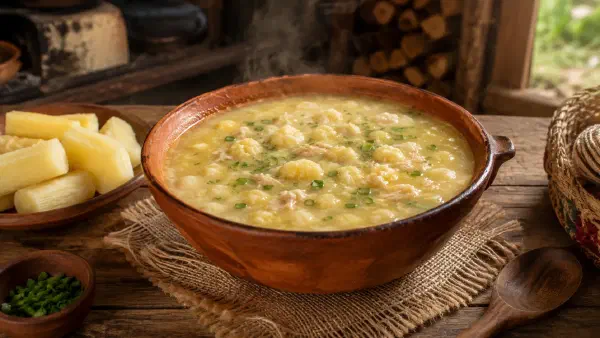
Want to try a very different Paraguayan soup? Vori Vori, with its corn-and-cheese dumplings, is one of the country’s best-known classics. You’ll find more in our collection of Paraguayan soups and stews.
Share & Support
Did this traditional So’o Josopy recipe inspire you and make you curious about Paraguay?
Give this post a like and share it with others interested in Paraguay and South America. Together, we can help make Paraguayan cuisine better known.