
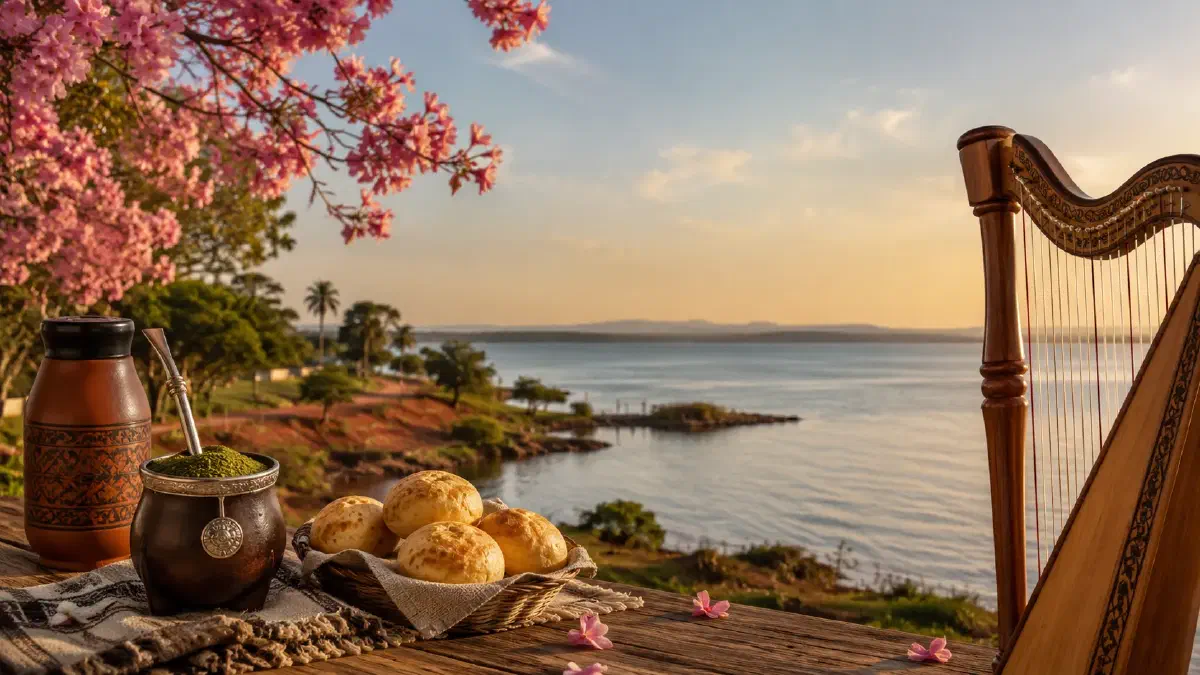

What do a cheese bread, a melancholic music style, a hydroelectric power plant, and a figure from folk beliefs have in common? Each one tells part of Paraguay’s story.
From A for Asunción to Z for zebu cattle, this Paraguay alphabet takes you through daily life and culture, language and history, as well as a few features that do not appear in every country guide.
And because Paraguay cannot really be explained without Ñ, this alphabet includes one extra letter.
🏙️ A for Asunción, Asado, and Ao po’i#
Asunción is the capital, economic center, and the first contact many travelers have with Paraguay. Paraguay commemorates the founding of Asunción in 1537 every year on August 15. Historic buildings, modern office towers, green squares, simple residential neighborhoods, and the Río Paraguay are often surprisingly close together here.
An Asado is about more than grilled meat and sausages. On Sundays with family, at birthdays, around a football match, or together in the park, the grill quickly becomes a meeting place.
Ao po’i shows another side of the country. This fine cotton fabric is traditionally embroidered and is especially connected with Yataity in the Departamento Guairá.
🏞️ B for Balnearios and Being Landlocked#
When the summer heat becomes intense, a weekend trip often leads to an arroyo, river, or one of the many balnearios. Some are simple swimming spots, while others offer barbecue areas, small restaurants, sports facilities, or places to stay. They are as much a part of free time in Paraguay as football, dancing, Tereré, and spontaneous trips into nature.
Paraguay is also landlocked, so a beach holiday by the ocean is not possible. That does not mean the country is cut off. The Río Paraguay and the Paraná provide navigable waterways all the way to the Atlantic.
🧀 C for Caacupé, Chaco, and Chipa#
On December 8, the country’s attention turns to Caacupé. Around the celebration of the Virgen de los Milagros, many pilgrims travel to the basilica on foot, by bicycle, bus, or car.
The Chaco covers more than half of Paraguay’s land area but is only sparsely populated. Dry thorn scrub, large estancias, wetlands, indigenous communities, and Mennonite colonies shape the west of Paraguay.
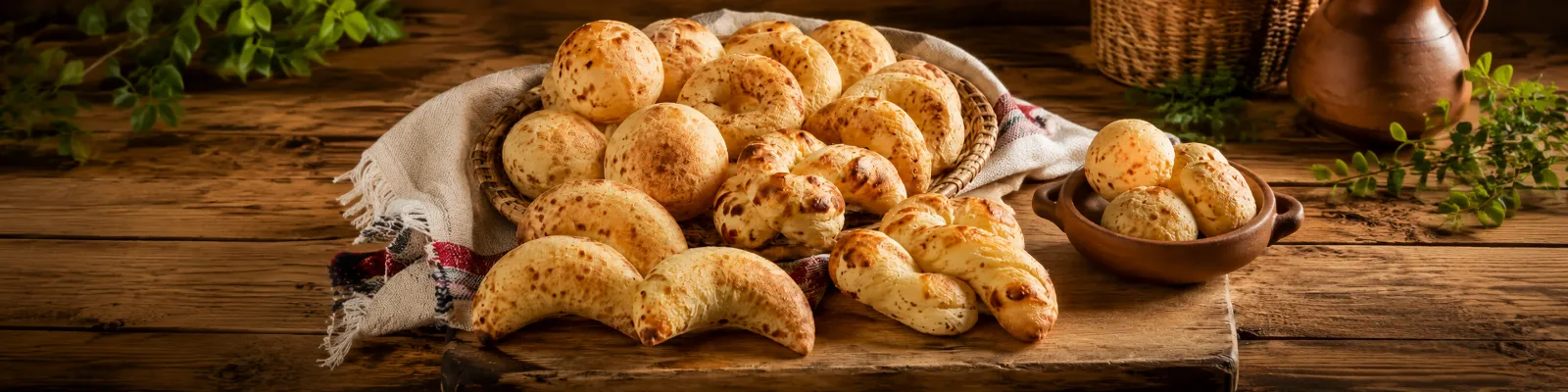
And then there is Chipa. This bread made from cassava starch, cheese, and eggs is sold at gas stations, bus terminals, street stalls, in chiperías, and family kitchens. Especially during Semana Santa in Paraguay, larger amounts are baked in many different shapes.
Chipa even has its own national day: Día Nacional de la Chipa is observed on the second Friday in August.
🤝 D for Día de la Amistad and Danza paraguaya#
Día de la Amistad, celebrated on July 30, is more than just another date on the calendar in Paraguay. The initiative for an International Day of Friendship began in Paraguay in 1958 and came before its later recognition by the United Nations.
Danza paraguaya brings together music, movement, and traditional clothing. Well-known examples include the Galopera and performances in which dancers balance bottles or other containers on their heads.
🎭 E for Encarnación#
On the Paraná River, Paraguay shows a particularly lively side in summer. In Encarnación, the Costanera and beaches are as much a part of the city as trade, border traffic, and views across the river to Argentina.
Things become especially festive during Carnival, when the Sambadrom, music, and colorful costumes shape the city. At the same time, Encarnación is a good starting point for trips to the Jesuit sites of Trinidad and Jesús de Tavarangue.
⚽ F for Fiestas and Football#
There are many reasons for fiestas: official and cultural holidays in Paraguay, patron saint celebrations and memorial days, weddings, birthdays, public festivals, or local anniversaries. Music, shared meals, and time with family, friends, or neighbors are often part of them.
Whether in the town square, at the stadium, or in front of the television, football in Paraguay is sport, leisure, and a topic of conversation all at once. In North American English, of course, it is usually called soccer. Those who do not play themselves follow La Albirroja, support a favorite club, or at least have an opinion about the last match.
📜 G for Guaraní and Guarania#
Guaraní refers both to one of the country’s two official languages and to Paraguay’s currency. The language is not a remnant of the past but remains alive in many families, regions, and everyday situations.
The similarly named Guarania, on the other hand, is a Paraguayan music style. Its calm, often melancholic melodies tell of love, home, and longing. Polca paraguaya has a much livelier sound.
🎶 H for History and Harp#
Paraguay’s history has been shaped by deep breaks. After independence in 1811 came, among other events, the War of the Triple Alliance, the Chaco War, and Alfredo Stroessner’s dictatorship from 1954 to 1989. These and other periods still shape the history of Paraguay today.
The Paraguayan harp, the arpa paraguaya, is one of the country’s best-known instruments. Together with the guitar, it shapes Guarania, Polca paraguaya, and many folk music pieces.
Its bright, flowing sound can be heard at concerts, celebrations, and dance performances: sometimes calm and gentle, sometimes so fast that it is hard to follow the musician’s fingers.
⚡ I for Independence, Indigenous Peoples, and Itaipú#
Paraguay’s independence prevailed during the night of May 14 to 15, 1811. Today, both days are celebrated together with flags, events, and historical remembrance.
May 15 is also Mother’s Day in Paraguay. This makes the connection between national history and family celebrations especially visible during the long holiday weekend.
Alongside the Spanish- and Guaraní-speaking majority, Paraguay is home to many indigenous peoples and communities with their own languages and cultural traditions. They are not one single group and do not live only in the Chaco.
Itaipú is much more than a large dam on the border with Brazil. This binational hydroelectric power plant stands for Paraguay’s energy production, international cooperation, and a major technical project that has changed the entire region. Paraguay also has another large binational power plant: Yacyretá.
🏛️ J for Jopará, Jesuits, and Jasy Jateré#
In everyday life, Spanish and Guaraní do not always remain clearly separate. Jopará refers to the common mixture or switching between the two languages, sometimes even in the middle of a sentence.
The Jesuit reductions tell the story of another period. The ruins of Trinidad and Jesús de Tavarangue are now UNESCO World Heritage Sites and among the country’s most impressive historic places.
Jasy Jateré comes from Guaraní folk stories. This small guardian of the siesta is said to wander around especially at midday, luring children away with his whistling or a magical staff.
🍲 K for Karai Octubre#
On October 1, many kitchens prepare Jopará. This time, it does not mean the language mixture, but a hearty dish made from corn and beans.
Behind it is the story of Karai Octubre, who checks whether a household has prepared for the traditionally lean month. The custom recalls times when an empty food store was a serious problem.
August also begins with a special custom: On August 1, some people drink Carrulim, a mixture of caña, rue, and lemon that, according to folk belief, is meant to keep bad luck and illness away.
But customs and folk beliefs in Paraguay are not limited to these two dates. They are also part of family life, shape how people connect, and appear in small everyday habits. You can find more examples and the stories behind them in our overview.
🌸 L for Lapacho and Lomito árabe#
When the Lapacho rosado blooms, its pink flowers can be seen from far away. The Lapacho, called Tajy in Guaraní, is legally recognized as Paraguay’s national tree. The pink variety is one of the most striking splashes of color during the drier season and often blooms as spring in Paraguay begins.
Late in the evening, a Lomito árabe from a lomitería is an easy meal: thinly sliced meat, vegetables, and sauce wrapped in soft flatbread. Its form is reminiscent of dishes from the Middle East. In Paraguay, it has long become a street food classic of its own.
🌱 M for Mandi’o and Mercado 4#
Mandi’o is called mandioca in Spanish and cassava in English. This cooked root naturally appears on the plate alongside Asado, meat dishes, soups, and stews—and you hardly miss bread or potatoes.
Mercado 4 in Asunción is a market, shopping district, and everyday experience all at once. Between fruit, meat, clothing, household goods, electronics, food stalls, and heavy traffic, you can find almost anything—just rarely in peace and quiet.
🌳 N for National Parks#
Paraguay’s national parks show how different the country’s landscapes can be. Ybycuí stands for forests, streams, and waterfalls, while Cerro Corá combines nature with an important setting in Paraguayan history.
In Defensores del Chaco National Park, however, a dry, vast, and much harder-to-reach world begins. Anyone planning to visit such protected areas should check access, weather, and road conditions in advance.
🧵 Ñ – A Paraguayan Extra: Ñandutí and Ñai’ũpo#
Ñandutí means roughly “spider web” in Guaraní. This delicate lace is especially associated with Itauguá and can be found on clothing, tablecloths, jewelry, and decorations.
Ñai’ũpo refers to a traditional ceramic craft in which containers and figures are shaped by hand. In 2025, this technique was added to UNESCO’s List of Intangible Cultural Heritage in Need of Urgent Safeguarding.
Together with Ao po’i, both traditions represent Paraguay’s diverse handicrafts, which also include woodwork, leatherwork, and other ceramic crafts.
🎻 O for Orquesta de Cateura#
What is waste for others becomes a musical instrument for the Orquesta de Cateura. Violins, guitars, cellos, and other instruments are made from reused materials.
The orchestra connects music with the everyday lives of children and young people from Cateura and nearby communities. That is why its story is more than an unusual recycling idea.
🌿 P for Pohã ñana and Pombero#
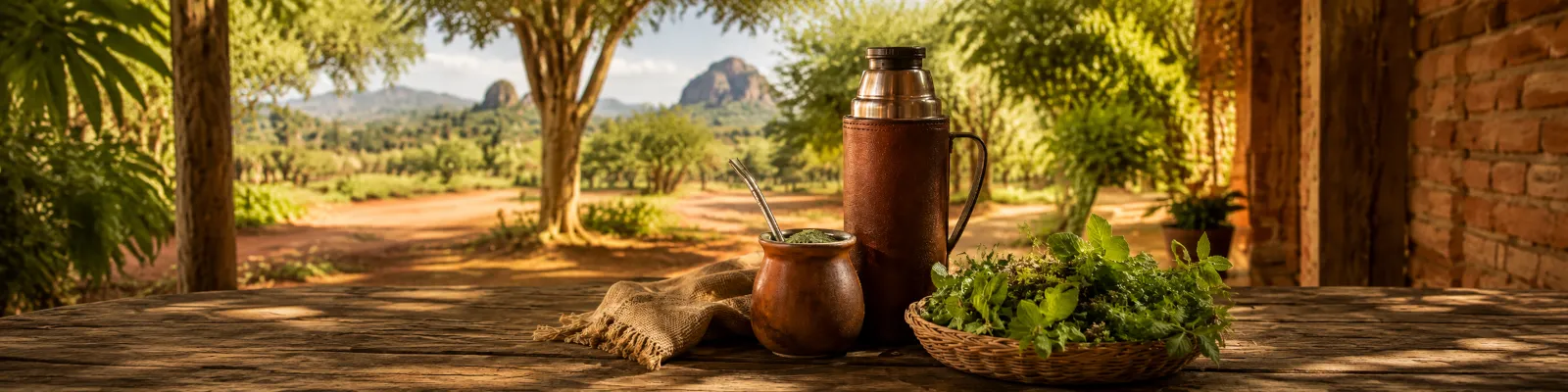
Pohã ñana are plants and herbs traditionally used in daily life. Many are known as yuyos, freshly crushed or cut and added to the cold water for Tereré. Knowing which plant is used for what is knowledge passed down over generations.
The Pombero is one of the best-known figures in Paraguayan folk beliefs. He is said to roam through gardens and forests at night, making himself known through whistling or unusual sounds. The stories also include Jasy Jateré, Luisón, and Ao Ao.
🪵 Q for Quebracho and Queso Paraguay#
Several quebracho trees grow in the Chaco. Their name is often derived from quiebra hacha, meaning “axe breaker.” Their especially hard wood played an important economic role for a long time.
Queso Paraguay is a mild, fresh cheese and a key ingredient in many kitchen classics. It is used in Chipa, Sopa Paraguaya, Mbejú, and the small cornmeal dumplings in Vori Vori soup. These classics are just a few examples from the diverse world of Paraguayan recipes.
🌊 R for Radicación, Railways, and Río Paraguay#
Anyone who wants to live in Paraguay for a longer period will sooner or later come across the word Radicación. It refers to residency status or the related process. Requirements and documents can change, so the latest information should always be checked.
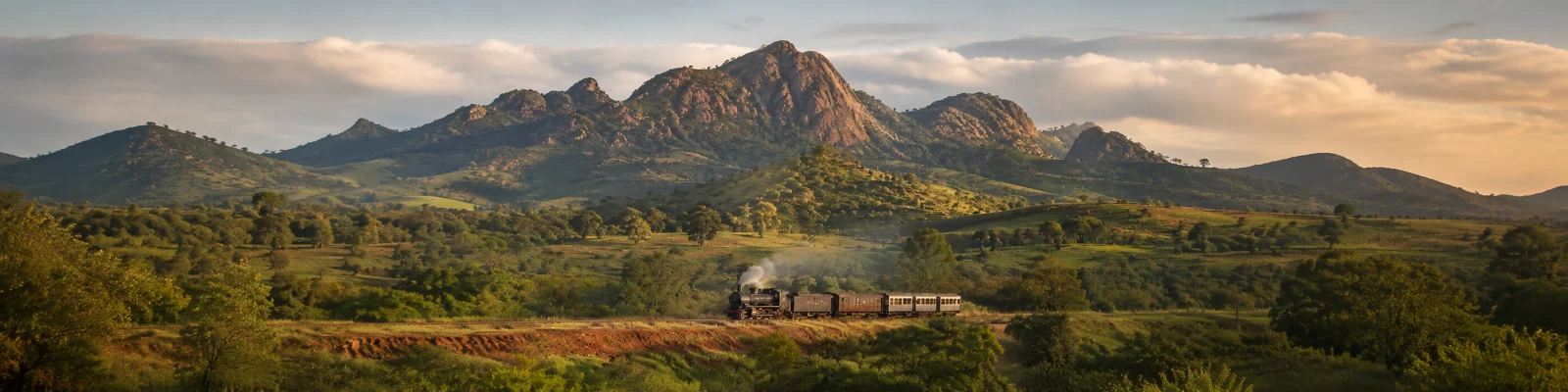
In 1861, the first train ran on a newly opened section of Paraguay’s railway. Later, the rail network connected Asunción with many towns inland and eventually with Encarnación. Today, old stations, workshops, and historic locomotives in places such as Sapucái and Pirayú recall this period.
Passenger rail service has not disappeared completely: a cross-border train still runs between Encarnación and Posadas in Argentina. Other railway projects, however, are still in different planning stages.
The Río Paraguay divides the country into the more densely populated eastern region and the vast Chaco. At the same time, it is a transport route, habitat, economic factor, and an important part of the country’s history.
🔥 S for San Juan Ára, Sopa Paraguaya, and Spanish#
During San Juan Ára in June, things become loud, hot, and sometimes a little chaotic. Fire, traditional games, music, and foods such as Pastel Mandi’o or Pajagua Mascada are part of many celebrations around Saint John’s Day.
Despite its name, Sopa Paraguaya is not a soup. This moist corn casserole with cheese and onions is a classic side dish for Asado and festive meals. Chipa Guasu, made with fresh corn, is also often served.
Spanish is an official language alongside Guaraní and plays an important role especially in administration, media, education, and trade. In daily life, however, it often meets Guaraní and quickly becomes Jopará.
🧉 T for Tereré and Tranquilo#
Tereré is not an iced tea that everyone drinks on their own. The guampa is filled, passed around, and belongs to conversations, breaks, family visits, leisure time, and long car trips.
The traditional practice surrounding Tereré and Pohã ñana is on UNESCO’s Intangible Cultural Heritage List. The Día Nacional del Tereré is also celebrated on the last Saturday in February.
Depending on the situation, tranquilo can mean “everything is fine,” “stay calm,” or “don’t stress about it.” You also often hear a friendly tranquilo pa in everyday life: sometimes as reassurance, sometimes as a reminder to take something a little more calmly.
🏅 U for UNESCO Heritage#
Paraguay’s UNESCO-recognized heritage ranges from historic ruins to living traditions. The Jesuit Missions of Trinidad and Jesús de Tavarangue are World Heritage Sites.
Guarania and the traditional practices surrounding Tereré and Pohã ñana are included on the Representative List of the Intangible Cultural Heritage of Humanity. Ñai’ũpo appears on the List of Intangible Cultural Heritage in Need of Urgent Safeguarding.
🍲 V for Vori Vori#
Vori Vori is one of Paraguay’s best-known and most popular soups. This hearty broth is usually cooked with chicken and sometimes with beef.
It gets its name from the small balls made of cornmeal and Queso Paraguay. Especially on cooler days, Vori Vori is one of those dishes that fits naturally into Paraguayan home cooking.
📱 W for WhatsApp & Co. and Winter#
An appointment, an order, or a question for a repair worker in Paraguay often first arrives through WhatsApp. Voice messages are practical when explaining an address, sending a photo, or arranging something at short notice. Facebook, Instagram, and TikTok are also part of everyday digital life.
When cold air arrives from the south with a Surazo, temperatures can drop noticeably within a short time. Damp weather and homes built mainly for summer often make winter in Paraguay feel colder than the thermometer suggests. It is usually short, but local frost (escarcha) and even freezing temperatures (helada) are possible on clear nights.
🎪 X for eXpo Paraguay#
For X, a little creative spelling is allowed. Agriculture, cattle ranching, trade, food, concerts, and a fairground come together at the eXpo Paraguay.
The large exhibition in Mariano Roque Alonso is especially well known. Other expos are also held in different regions, with a stronger focus on agriculture, cattle ranching, or the regional economy.
⛰️ Y for Ypacaraí and Ybytyruzú#
Lake Ypacaraí is known far beyond Paraguay through the song “Recuerdos de Ypacaraí.” San Bernardino and Areguá make it a popular destination for a short break. However, the long-standing environmental and water-quality problems are also part of the full picture.
The Cordillera del Ybytyruzú shows a more mountainous side of Paraguay. This area in the Departamento Guairá is home to Cerro Tres Kandú, the country’s highest elevation. Hiking trails, rocks, forests, and wide views make the region an interesting nature and excursion destination.
🐂 Z for Zebu Cattle#
Zebu cattle are easy to recognize by the hump above their shoulders. Breeds such as Brahman and Nelore cope well with hot conditions and play an important role in Paraguay’s cattle ranching.
Together with crossbreeds such as Brangus and Braford, they can be found on large estancias as well as smaller agricultural farms. Cattle ranching shapes rural landscapes, regional expos, and an important part of the country’s economy.
🧭 The Journey Continues After Z#
Of course, Paraguay does not end at Z. Behind many of these terms, the real story is only beginning: at the next Tereré, in a language that can change in the middle of a sentence, or in a place that classic travel guides barely mention.
Maybe one letter made you especially curious. Maybe it was H for History. Then you can dive deeper into the history of Paraguay and learn more about the background that still shapes the country today – whether you are just discovering Paraguay, are new to the country, or have lived here for a while.
Share & support
Which letter surprised you or made you curious?
Then feel free to give this article a like and share it with other people interested in Paraguay and South America. This helps make Paraguay’s many sides more visible.