
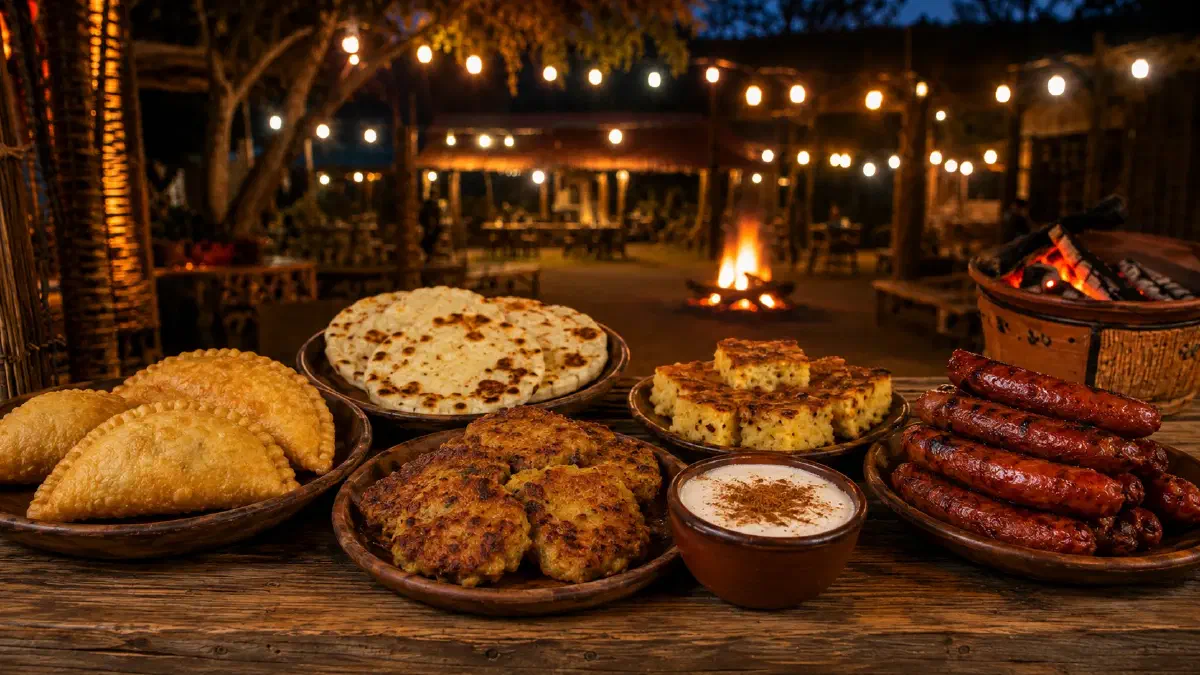

When the first Fiestas de San Juan are announced in June in Paraguay, it is rarely about just one single party. As soon as the nights get cooler, people meet outside around the fire for a season full of music, traditional games, and community spirit.
The official San Juan Ára falls on June 24, but celebrations usually last all month long. Along with the games, the absolute highlight is the comidas típicas: hearty, hot Paraguayan dishes perfect for the cooler weather.
In this article, you will find an overview of typical San Juan dishes from Paraguay. We also included simple menu combinations so you can recreate these classics at home and enjoy a cozy Paraguayan evening with friends.
San Juan in Paraguay Explained: Meaning and Traditions#
To experience Paraguay authentically, you cannot miss the San Juan season. San Juan Ára (Saint John’s Day) falls on June 24. Ára means “day” in Guaraní. Even though it is not an official public holiday, schools, local chapels, and neighborhood clubs organize their own fiestas all month long—even out in the countryside (campo). For expats, residents, and Paraguay enthusiasts, it’s the perfect chance to experience local everyday culture.
Along with the food, traditional games (juegos tradicionales) and fiery challenges are part of the fun:
- Toro Candil: A dummy bull with burning horns charging through the crowd.
- Pelota Tatá: A burning cloth soccer ball kicked around by the spectators.
- Carrera Vosa: The classic potato sack race.
- Kambuchi Jejoka: Piñata-style pot smashing while blindfolded.
- Paila Jeheréi: Licking a coin off a soot-covered pan without using hands.
This mix of community, great food, and old traditions makes the festival incredibly lively.
National Intangible Cultural Heritage Since 2026
Through Resolution No. 370/2026 of June 23, 2026, Paraguay’s Secretaría Nacional de Cultura recognized the traditional Fiesta de San Juan – San Juan Ára and its associated cultural expressions as national intangible cultural heritage.
The resolution specifically names the games yvyrasyi, kambuchi jejoka, paila jeheréi, carrera vosa, toro candil, pelota tata, and Judas kái. The listed culinary expressions are Mbeju, Pastel Mandi’o, Pajagua Mascada, Chicharõ trenzado, and Chicharõ huitĩ.
What Do People Eat for San Juan in Paraguay?#
San Juan is mostly about traditional comidas típicas (typical Paraguayan food). Many are savory snacks or small portions sold at street stalls to be eaten on the go (al paso).
- Pastel Mandi’o: Maniok empanadas with a meat filling
- Pajagua Mascada: Pan-fried manioc and meat patties
- Mbejú: Pan-baked starch and cheese flatbread
- Sopa Paraguaya: Hearty corn and cheese cake
- Chipa Guasu: Juicy corn casserole
- Chipa Asador / Chipa Kavuré: Chipa baked on a stick over an open fire
- Chipa So’o: Chipa rounds stuffed with savory meat
- Chicharõ trenzado: Braided pork fried until crispy
- Chicharõ huitĩ: Fried pork with toasted cornmeal
- Lambreado / Marinera: Thin meat cutlets fried in egg-and-flour batter
- Butifarra / Chorizo: Grilled local sausages
- Kivevé / Arroz con Leche / Budín de Pan: Sweet classics
This street-food vibe is why San Juan food is so popular: you grab a Pastel Mandi’o, a piece of Chipa Guasu, or a cup of Arroz con Leche and walk over to the next stall or bonfire.
Since San Juan happens during winter in Paraguay, the food is warm, filling, and rich. While Europe or North America think of summer for St. John’s Day, the Paraguayan festival centers around fried, baked, or freshly grilled foods.
Tip: Many of these dishes are also popular winter dishes in Paraguay: freshly made comfort food for cool days, not just for San Juan.
Since many food names come from Guaraní, spellings vary (for example, Mbejú/Mbeyú/Mbeju/Mbeyu, Pajagua/Payaguá, or Chicharõ/Chicharrón).
🌽 The Core Classics: Everything Made from Manioc and Corn#
These dishes are the absolute heart of any San Juan party, based on manioc (mandioca) or corn.
Pastel Mandi’o, Pajagua Mascada, Mbejú: The Best of Manioc Root#
Pastel Mandi’o (Empanadas de mandioca): Manioc empanadas made with a dough of boiled manioc (Guaraní: Mandi’o) instead of wheat flour. Stuffed with ground beef, hard-boiled egg, and spices, then fried until golden.
Pajagua Mascada: Patties made of boiled mandioca mashed with ground beef, seasoned with cumin, garlic, and onions, then pan-fried.
Mbejú: A starch flatbread made from manioc starch, traditional Queso Paraguay (Paraguayan cheese), fat, and milk. The crumbly mixture is baked in a hot pan until crispy outside and cheesy inside.
Sopa, Chipa Guasu, and Chipa Variations: Baked Goods from the Oven and Fire#
These dishes are traditionally baked in a Paraguayan brick or clay oven called a Tatakua.
Sopa Paraguaya (Sopa paraguái): A dense corn-and-cheese savory cake and the national dish of Paraguay. It is easy to cut into squares and tastes great hot or warm.
Chipa Guasu: A very juicy corn casserole made with fresh corn, cheese, onions, milk, and eggs. It is much creamier than Sopa Paraguaya.
Chipa Asador (or Chipa Kavuré): Classic chipa dough wrapped around wooden sticks and baked directly over hot barbecue embers.
Chipa So’o: A savory chipa dough ball filled with a flavorful ground meat stuffing. So’o means meat in Guaraní.
Note: These dishes are traditionally made in a Tatakua, but they turn out just as good in a regular home oven.
🥩 Asadito, Chicharõ, and Butifarra: Savory Meat from the Grill Stalls#
Along with the dough classics, San Juan offers rich meat dishes made over an open fire or in large pans:
Asadito paraguayo: Grilled meat skewers (pork or beef), usually served with boiled mandioca on the side.
Butifarra and Chorizo: Butifarra is a traditional white, mild sausage, while Chorizo is more seasoned. Both are grilled and eaten with mandioca or in a bun.
Chicharõ trenzado (Chicharón trenzado): Strips of pork meat braided together and cooked in their own fat until completely crispy.
Chicharõ huitĩ (Chicharrón huití): Pork is fried in its own fat until golden brown and then mixed with toasted cornmeal.
Lambreado (or Marinera paraguaya): Thin pieces of meat dipped in an egg-and-flour batter and deep-fried until golden.
🍮 Kivevé, Arroz con Leche, Budín de Pan: Sweet Treats for Dessert Lovers#
These traditional desserts offer a perfect sweet ending to any Fiesta de San Juan:
Kivevé: A traditional creamy pumpkin dish made with Andai, cornmeal, and Queso Paraguay. Depending on the preparation, Kivevé can be served semisweet or a little sweeter.
Arroz con Leche (Kamby Arrò): A true classic among San Juan sweets. This Paraguayan rice pudding is sprinkled with cinnamon and served cold or warm.
Budín de Pan: A classic bread pudding made in large batches on a baking sheet. Super popular for school and neighborhood parties because it is dense, filling, and perfect for chilly June evenings.
Celebrating San Juan at Home: Which Dishes Work for Guests?#
To cook San Juan food at home, you do not have to make the entire list. For a simple start, two or three typical dishes are more than enough:
Option 1: For Smart Hosts (Perfect for Prep)#
Want to avoid kitchen chaos in the evening? This combination can easily be prepped in the afternoon:
- Chipa Guasu or Sopa Paraguaya: A juicy corn casserole or the classic corn cake from the oven.
- Fresh Salad: A simple tomato-and-onion salad balances out the rich corn dishes.
- Arroz con Leche (Kamby Arrò): A sweet treat served in small cups.
Your advantage: When your guests arrive, the kitchen is clean. You only need to bake or reheat the main dishes.
Option 2: The Sweet San Juan Afternoon (For a Cozy Afternoon Tea / Merienda)#
This combo is perfect for a cool June afternoon as a Paraguayan version of coffee and cake:
- Mbejú (plain): Served fresh, hot, and slightly salty right out of the pan.
- Budín de Pan: Bake it in the morning and slice it in the afternoon.
- Arroz con Leche (Kamby Arrò): Sweet, creamy, and topped with cinnamon.
- Cocido con Leche: Hot yerba mate brew with milk is the perfect matching drink here.
Your advantage: Except for the Mbejú, you can prepare everything in advance.
Option 3: “Al Paso” Finger Food (Ideal for Parties & Buffets)#
Hosting a party where guests stand around with drinks? These finger food ideas are great for an easy buffet:
- Pajagua Mascada: Small manioc and meat patties easy to eat with a napkin.
- Chipa So’o: Small, meat-filled chipa balls.
- Butifarra: The white festival sausage, served on a skewer or in a small bun.
- Mbejú: Placed in the middle of the table and broken into bite-sized pieces.
- Kivevé: Served in small espresso cups with a tiny spoon.
Your advantage: Almost no dishes to wash. You can prep the Chipa So’o and Kivevé ahead of time, and boil the mandioca the day before.
Drinks & Decor: What Fits the San Juan Vibe?#
To get a real street-festival vibe at home, you only need rustic wooden bowls, warm lighting, and a small fire pit outside.
The best drink for the Paraguayan winter is Cocido caliente: a warm yerba mate infusion, served plain or with milk. Hot, sweet, and smoky Cocido warms you up at night and pairs wonderfully with Mbejú or Sopa Paraguaya.
FAQ: Frequently Asked Questions About San Juan Food in Paraguay#
When is San Juan in Paraguay 2026?
Is San Juan a public holiday in Paraguay?
Which San Juan dishes are best for beginners?
These oven and pan dishes work great because they do not require deep-frying or difficult shaping:
- Mbejú: A quick starch flatbread made in a pan with cheese.
- Chipa Guasu: A simple, juicy corn casserole.
- Sopa Paraguaya: A savory corn-and-cheese bread.
Can you prepare Paraguayan San Juan dishes in advance?
Yes, local festival food is very prep-friendly:
- Mandioca & Meat Fillings: Boil your mandioca and cook your meat stuffings the day before.
- Oven Dishes: You can bake Sopa Paraguaya and Chipa Guasu ahead of time and reheat them later.
- Fried Foods: Pastel Mandi’o and Pajagua Mascada taste best fried fresh.
Which San Juan dishes are gluten-free?
Many classics like Mbejú, Chipa Guasu, and Sopa Paraguaya naturally do not use wheat flour. With clean ingredients, they are safely gluten-free.
- Note: At street festivals, cross-contamination can happen. Making them at home is the safest option.
Are traditional San Juan recipes vegetarian?
The basic baked and pan classics like Mbejú, Chipa Guasu, and Sopa Paraguaya are made without meat.
- Note: Traditional recipes often use lard (grasa de cerdo). At home, you can swap it 1:1 for butter or vegetable oil.
How can I substitute Paraguayan ingredients in the US or Europe?
Most basic ingredients are easy to swap out:
- Mandioca (Manioc): Available fresh or frozen in Asian or Latino markets (sold as Yuca or Cassava).
- Manioc starch: Look for Tapioca Starch, Tapioca Flour, or Cassava Starch.
- Queso Paraguay: You can use a mix of mild feta, mozzarella, or Queso Fresco.
Conclusion: Bring the San Juan Feeling Home#
To understand cultural life in Paraguay, you cannot skip the Fiestas de San Juan with all their games, foods, and fun traditions.
This unique mix of savory and sweet items made from basic ingredients can easily be brought right into your own kitchen. It shows how creative Paraguayan cooking is and proves that amazing comfort food does not need to be complicated.
Use these dishes and menu ideas as inspiration for your own San Juan night. Many of them are also perfect if you just want to try out Paraguayan recipes any other time of the year.
¡Feliz San Juan and have fun cooking!
Want to bring a little San Juan home? Try Pajagua Mascada, a classic festival dish made with cassava and beef. You’ll find more dishes that are perfect for cool June evenings among our Paraguayan winter dishes.
Share & Support
Did these Paraguayan San Juan dishes and menu ideas 🇵🇾 inspire you and make you curious about Paraguay? Then please give this post a like and share it with other South America fans. Help us make the wonderful food culture of Paraguay more visible!
Customs, festivals & holidays at a glance:
- Customs & Folk Beliefs in Paraguay: An Overview
- Overview of Public and Cultural Holidays in Paraguay 2026
More on winter in Paraguay:
Paraguayan cooking basics:
Reply by Email