
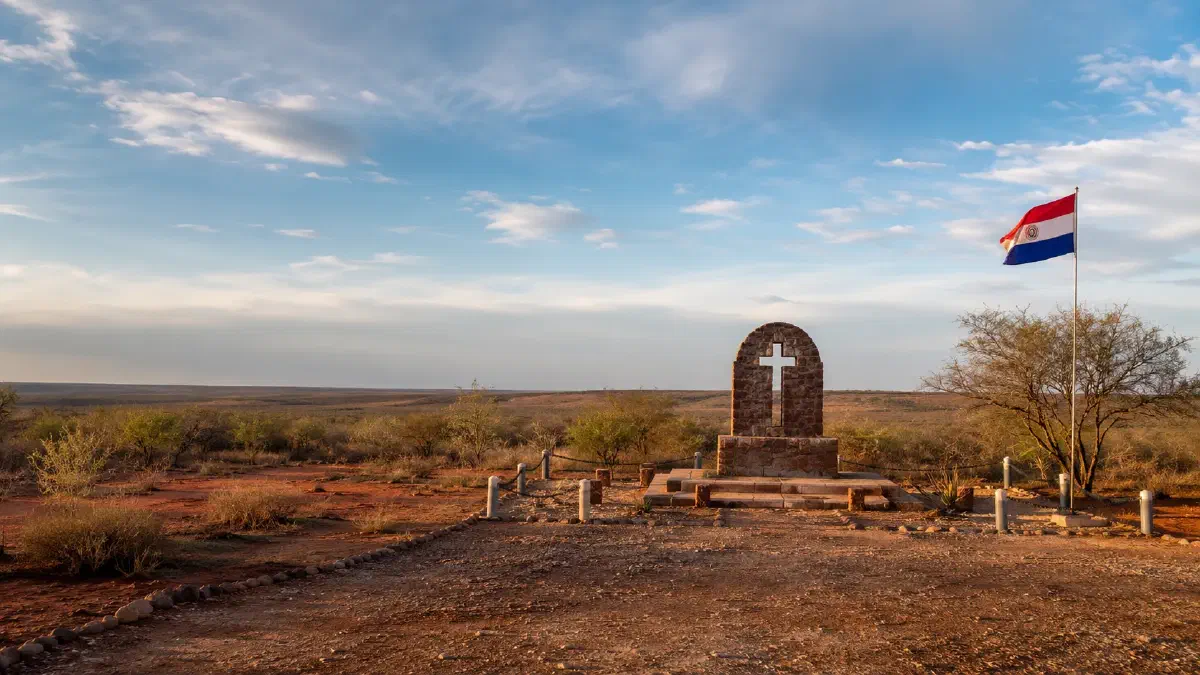

The Chaco is wide, hot, dry, and for many people in Paraguay more than just a region on the map. It also stands for a war that still shapes family stories, school lessons, and national memory today.
Every year on June 12, Paraguay remembers the end of the Chaco War between Paraguay and Bolivia. The Chaco Peace Day, in Spanish Paz del Chaco, is not a loud holiday with special food, music, and big family traditions. It is a quiet national day of remembrance and also a legal public holiday.
In 2026, June 12 falls on a Friday and gives many people a long weekend.
So it is worth taking a closer look: What does this day remember, which places in the Chaco keep this history alive, and what should you know for daily life?
Quick Facts at a glance
- Date: Friday, June 12, 2026
- Fixed or movable: legally movable (feriado movible)
- Status: legal public holiday in Paraguay
- Who is affected: nationwide, especially schools, public offices, and banks
- Meaning: remembrance of the peace protocol of June 12, 1935, after the Chaco War between Paraguay and Bolivia
- Typical focus: official memorial acts in the morning, school programs, speeches, and remembrance of the Excombatientes
- Bottom line: For visitors, the day often feels quiet. In daily life, it is best to do shopping, banking, and public office errands ahead of time.
🧭 Chaco Peace Day: date, status, and meaning#
On the Chaco Peace Day or Peace of the Chaco (Spanish: Paz del Chaco or Día de la Paz del Chaco), Paraguay remembers the end of the Chaco War every year on June 12.
Also in Guaraní, there is a fitting term: Cháko py’aguapy means Chaco peace, while Cháko py’aguapy Ára means Day of Chaco Peace.
It is a nationwide legal public holiday in Paraguay (feriado). It can be moved by government decision (feriado movible) to give people a long weekend. In 2026, this is not needed: the day of remembrance already falls on a Friday.
The historical basis is the peace protocol signed on June 12, 1935, which paved the way for the fighting to end two days later.
Why is this day important?#
The Chaco War between Paraguay and Bolivia (Guerra del Chaco) lasted from 1932 to 1935. The fighting was about the Chaco Boreal, a hot, dry, and hard-to-reach region in western Paraguay. For Paraguay, this war was one of the most important experiences of the 20th century.
The Chaco was strategically important because it was connected to the Paraguay River and access to the Río de la Plata. Hopes for possible natural resources and oil reserves also played a role. Later, it became clear that many of these hopes did not come true.
For Paraguay, the war was extremely hard. Besides the fighting, soldiers had to deal with heat, thirst, poor supplies, illness, and long distances. That is why the Chaco War is often remembered not only as a military conflict, but also as a story of hardship, endurance, and loss.
On June 12, 1935, representatives of Paraguay and Bolivia signed the peace protocol in Buenos Aires. The ceasefire began shortly after. The final chaco peace treaty followed only on July 21, 1938, almost three years later.
Well-known names connected to the Chaco War include José Félix Estigarribia, Eusebio Ayala and Fortín Boquerón.
🪅 How is Paz del Chaco observed in Paraguay?#
Paz del Chaco is not a holiday where music, food stands, and family parties are the main focus. The day has a memorial character and is observed in a quiet and dignified way. Peace, national dignity, sacrifice, and the memory of the Chaco War generation are at the center.
In 2026, this quiet day of remembrance falls on the same day Paraguay plays the United States at the FIFA World Cup. This can clearly affect the mood in the country: historical remembrance and Albirroja fever can stand side by side on this day.
Public remembrance and events#
Public remembrance around Paz del Chaco is especially visible at historical and military places. Besides official ceremonies in Asunción, this mainly concerns the Department of Boquerón in the Chaco.
Around Filadelfia and the Mennonite colonies, the day has a firm place in regional memory, because the settlements of that time came into contact with supply, roads, and logistics during the war. At memorial sites in the region, official speeches, state or military memorial acts, and wreath-laying ceremonies may take place. Excombatientes, meaning former Chaco fighters, and their families are also often invited and honored during such ceremonies.
Today, only very few direct witnesses of the Chaco War are still alive. In 2025, Paraguayan media still mentioned three surviving veterans. One of them, Virgilio Dávalos, died in February 2026 at the age of 111. Because of this, Paz del Chaco today also feels like a farewell to the last generation that experienced the war itself.
The history of the Chaco War is also often taken up in schools, for example in lessons, short presentations, posters, songs, poems, or flag ceremonies. In addition, there are reports in the news, on the radio, and on social media, as well as Paraguayan flags at houses and memorial sites.
If you want to visit public events and monuments, plan enough time. The Chaco is large, and distances often look shorter on a map than they feel on the ground. Check access and opening hours in advance. Reliable information is usually found on the websites or Facebook pages of the local Municipalidad (municipal administration) and the memorial sites. Official government and military pages, local radio stations, and news portals can also provide current program updates.
If you want to visit memorial sites of the Chaco War in Paraguay and get a feeling for the dry, remote vastness, you can find several such places of remembrance along the Ruta Chaco Boreal. Fortín Boquerón in the Department of Boquerón is especially well known, with remains of trenches and bunkers, a military cemetery, and a museum with photos and objects from that time. Fortín Isla Po’i, Fortín Toledo, Fortín Trébol, and Fortín Falcón are also part of the historical memory of the region.
In private life, many people use the free day for family, house and garden work, or visits, especially when a long weekend is coming. In many families, the Chaco War is still present through stories about grandfathers, great-grandfathers, or other relatives. Older Paraguayans in particular often speak about it with respect.
Is there typical food for Paz del Chaco?#
There is no special food just for this day. When families spend the free day together, they often eat what is popular in Paraguay on free days anyway: asado, manioc, Sopa Paraguaya, or warm home-style food on a cooler June day. Our winter dishes from Paraguay also fit well here.
🧩 What does this mean for daily life?#
Since normal daily life pauses on June 12, you should plan for the long weekend. In 2026, the World Cup game also falls on this Friday, which can affect the day even more.
Opening hours, shopping, and errands#
Large supermarkets, shopping centers, gas stations, and some restaurants may be open, but hours vary by chain, branch, and city. As with shopping in Paraguay in general, the same applies on holidays: in Asunción and larger cities, the chance of open stores is higher than in smaller towns. In rural areas, small despensas may open, but you should not rely on that.
Medical emergency services and basic services continue. Regular doctor’s appointments, private clinics, or smaller service providers may be closed.
Since there is no single nationwide rule, you should buy medicine, cash, pet food, and important groceries in advance. A small basic food supply at home is also helpful.
Traffic and travel#
Many families use the free days for visits or short trips. Because of this, important rutas (highways), toll booths, gas stations, bus terminals, accommodations, and historical places in the Chaco can get busier.
Long-distance buses often continue to run on holidays, but not always on the normal schedule. Check tickets and departure times early, especially for longer routes toward Encarnación, Ciudad del Este, Concepción, or the Chaco.
If you drive yourself, plan enough time and fill up the tank in advance. Taxis and ride services like Bolt or MUV may be available, but depending on the place and time, they can be more expensive or harder to get.
Schools, public offices, and banks#
Schools are usually closed.
The same is true for banks, public offices, and many offices. ATMs usually work, but they can be used more heavily on long weekends. You should plan documents, payments, signatures, and public office errands before the holiday.
🤝 As a visitor or new resident: what is good to know?#
You do not need to know any special rituals. What matters is a respectful and calm attitude toward the topic.
✅ What is well received on Paz del Chaco#
- listen calmly and show interest when someone talks about this time
- do not treat the day as “just a day off”
- keep distance and show respect at official acts and events
- do not treat people, flags, monuments, and memorial sites as photo props
- if you are invited: bring neat clothing, time, and a small gift
⛔ What you should avoid on Paz del Chaco#
- loud jokes or comments about the war
- disrespectful or quick judgments about war, Bolivia, and politics
- confusing the holiday with San Juan
- expecting big festivals or a party atmosphere
💬 Cheat sheet: useful sentences for June 12#
A few simple sentences if you talk about the holiday on Día de la Paz del Chaco.
| Sentence | Meaning |
|---|---|
| Hoy se recuerda la Paz del Chaco. | Today people remember the Peace of the Chaco. |
| Es un día importante para Paraguay. | It is an important day for Paraguay. |
| ¿Tu familia tiene alguna historia de la Guerra del Chaco? | Does your family have a story about the Chaco War? |
| Con respeto a los excombatientes. | With respect for the former fighters. |
| Sentence | Meaning |
|---|---|
| Ñamomorã umi Chaco ñorairõhára. | We honor the fighters of the Chaco. |
| Ani ñanderesarái. | Let us not forget. |
| Cháko Ñorairõ | Chaco War / war in the Chaco |
| Cháko py’aguapy | Chaco peace |
🗓️ Short and simple: the most important points for your planning#
- ☑ Paz del Chaco 2026 is on June 12 and falls on a Friday.
- ☑ The day is a national public holiday. Public offices, banks, and schools are usually closed.
- ☑ Shop in advance. Especially in smaller towns, do not count on open stores.
- ☑ Plan cash and medicine. ATMs and emergency services usually work, but preparation is easier.
- ☑ Check travel in advance. Confirm bus connections, tickets, and accommodations early.
- ☑ Do not expect a festival atmosphere. Paz del Chaco is more remembrance than celebration.
- ☑ Stay respectful. The Chaco War is part of many family histories.
❓ Frequently asked questions about Paz del Chaco in Paraguay#
When is Paz del Chaco in Paraguay in 2026?
Is Paz del Chaco an official public holiday in Paraguay?
Is June 12 a public holiday in Paraguay?
Are banks, public offices, and schools closed on Paz del Chaco?
Are stores open on Paz del Chaco?
What is Paz del Chaco in simple words?
What was the Chaco War in simple words?
Is Paz del Chaco celebrated with big events in Paraguay?
Conclusion#
Paz del Chaco is much more than a day off. It is deeply connected to national identity. Its meaning becomes clearer when you know the historical background and understand why it is not a festival, but a moment of remembrance.
In practical terms, this means: since public life slows down, it is best to handle banking and public office errands in advance. If you visit memorial sites, a calm and respectful attitude shows that you take the meaning of the day seriously.
If you want to understand life in Paraguay in the long term, you should see June 12 for what it is: an invitation to better understand the connection between history, family, and land.
If you would like to understand the Chaco War and its significance in the context of the country’s wider history, our overview of the history of Paraguay provides the bigger picture.
Share and support
“Did you already know this meaning of Paz del Chaco? Do you know someone who wants to understand Paraguay better?” Then feel free to like and share this post with other South America fans. This helps carry the meaning of Paraguayan holidays further.
- All dates at a glance: Holidays in Paraguay 2026
- Another holiday in June:
- More about the Chaco War: