
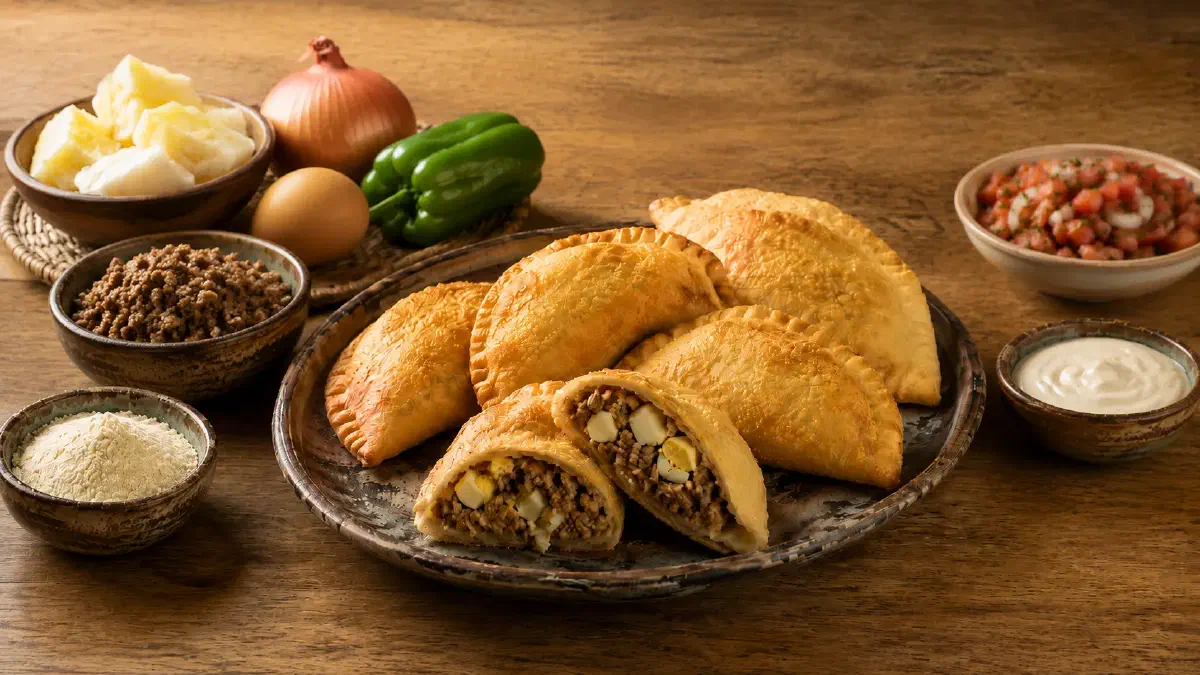

When the smell of freshly fried Pastel Mandi’o fills the street, it is hard not to get hungry for this savory classic from Paraguayan cuisine.
At first glance, they look like classic empanadas. But the dough made with cassava (Mandioca) makes the big difference. It is rustic, filling, and a great gluten-free alternative to wheat flour.
As a hearty snack for the cooler season or as part of traditional dishes for the San Juan festival: Pastel Mandi’o is authentic Paraguayan cuisine you can hold in your hand. In this recipe, I show you step by step what matters for the cassava dough, the filling, and the frying.
📝 Pastel Mandi’o Recipe - Step by Step#
At a glance
- Difficulty: medium
- Preparation time: about 90 minutes
- Servings: about 12 to 14 pieces
🛒 Ingredients You Need#
Here is what you need for the recipe:
Main ingredients#
For the cassava dough:
- 1 kg peeled mandioca, cooked and well drained
- 1 egg
- 180 to 250 g fine corn flour (Harina de Maíz), plus a little more for rolling
- 1 tbsp oil, butter, or pork lard
- 1 tsp salt
- Oil for frying
For the meat filling:
- 500 g ground beef
- 1 large onion, finely chopped
- 1 small green bell pepper or locote, finely diced
- 2 garlic cloves, finely chopped
- 2 hard-boiled eggs, chopped
- 2 tbsp oil
- Salt, pepper, and cumin to taste
Optional ingredients#
- Green onions or parsley
- 1 bay leaf for the meat filling
- 1 pinch of paprika
- A splash of orange juice. Traditionally, Apepú or bitter orange is used, but regular orange also works. It makes the dough softer and more aromatic.
Which ingredients can you replace?#
Flexible alternatives for availability or diet
This recipe is naturally gluten-free. Just check bouillon cubes or spice mixes for hidden gluten sources.
Mandioca: Fresh cassava is ideal. In Paraguay, this is easy to find. In Europe and North America, you can often find it fresh or already peeled in the freezer section of Asian, Afro, or Latino markets. It is often labeled as yuca or cassava.
Corn flour: Fine corn flour (Harina de Maíz) is standard. Very finely ground polenta also works. Add it little by little, because the moisture of the cassava can vary.
Fat: Pork lard tastes the most traditional. Oil is more neutral.
Meat filling: Instead of beef, you can also use chicken, pork, soy granules, lentils, or just vegetables.
Kitchen tools you need#
- Large pot, sieve
- Potato masher, meat grinder, or mortar
- Pan, bowl, rolling pin or a smooth bottle
- Deep pot or pan for frying, slotted spoon, paper towels
👩🍳 Step-by-step preparation#
Preparation#
Cassava
- Fresh: Peel, wash, and cut into pieces.
- Frozen: Thaw completely and pat dry well. This helps avoid too much moisture.
- Cooking: Cook the pieces in salted water until soft.
- Remove the woody fiber from the center.
- Mash or crush the cassava while it is still warm.
Filling
- Peel and chop the hard-boiled eggs.
- Finely dice the onion, bell pepper or locote, and garlic.
Cooking process#
Filling: Heat oil in a pan. Sauté onion, locote, and garlic until soft and translucent.
Meat: Add the ground beef and fry it well. Season with salt, pepper, and cumin. At the end, fold in the eggs and, if you like, green onions or parsley.
Let the filling cool completely. If it is still warm, the cassava dough can tear more easily while shaping or frying.
Dough: To make the cassava dough, work the still warm cassava very finely with a meat grinder, mortar, or potato masher. These traditional methods give the best texture.
Kneading: Mix the cassava with egg, salt, and fat. Add the corn flour little by little until you get a smooth, flexible dough that no longer sticks too much.
Shaping: Divide the dough into small portions. Roll it out on a surface dusted with corn flour, but not too thin, or press it flat with your hands.
Filling: Put some filling in the center, fold the dough over, and press the edges closed. You can use your fingers or a fork.
Frying: Heat oil in a deep pot and fry the empanadas in batches until golden brown.
Test the oil temperature: Put a small piece of dough into the oil. If it bubbles right away, the temperature is good. If the oil is too cold, the cassava dough absorbs too much oil instead of becoming crispy. Do not fry too many empanadas at once, so the temperature stays stable.
Serving: Drain briefly on paper towels and serve warm if possible.
💡 Practical tips for Pastel Mandi’o#
Tips for good cassava dough
Work the cassava right away: Process the cassava right after cooking and draining. If the mixture cools down, it becomes tough and is harder to shape.
Avoid the “rubber effect”: Do not use a food processor. The rotating blades can make the mixture sticky like glue. A potato masher or meat grinder is the better choice.
Avoid a temperature shock: Do not fry Pastel Mandi’o straight from the fridge. The sudden temperature change can make the dough tear in the hot oil.
The right thickness: Do not roll the dough too thin. It is delicate, and a little more dough gives it the stability it needs when closing.
First aid for cracks: No panic. Close small cracks with damp fingers and dust them with a little corn flour.
Storage: Leftovers keep covered in the fridge for up to 2 days. A pan is ideal for reheating them so they become crispy again.
Nutrition facts for Pastel Mandi’o#
The values refer to one piece, based on a total amount of about 12 to 14 Pastel Mandi’o.
- Calories: about 290 to 360 kcal
- Protein: about 10 to 13 g
- Carbohydrates: about 30 to 40 g
- Fat: about 12 to 18 g
- Fiber: about 2 to 4 g
Note: These are average values. The actual values can vary depending on the filling, the size of each piece, and how much oil is absorbed during frying.
🍽️ What goes well with Pastel Mandi’o?#
Cassava empanadas work well as a snack between meals or as a small hearty main dish. But what can you serve with them?
Classic: Serve them plain with a little hot sauce or a simple garlic dip (Salsa de Ajo). They are also often served with Paraguayan pan (white bread), galleta (firm bread roll, sometimes with anise), or coquito (dry, crispy mini bread rolls).
Traditional mix: With Mbejú, Pajagua Mascada, Tortillas paraguayas, Chipa Guasu or Sopa Paraguaya, it fits well with typical platos tradicionales.
Fresh contrasts: A tomato salad, cabbage salad, or a tangy herb sauce such as chimichurri makes the dish feel lighter.
Paraguayan: On warm days, Tereré is the absolute classic.
For cool evenings: A hot Cocido or Mate Cocido goes perfectly with these hearty empanadas.
Refreshing: Cold water with lime or a light fruit juice is a good contrast to this fried snack.
🔄 Variations: How to fill Pastel Mandi’o#
Pastel Mandi’o is very easy to change. The important thing is this: the filling should be well seasoned and not too wet, so the cassava dough stays stable when shaping and frying.
Classic with meat (Guiso): Traditionally, cooked beef is often used. It is crushed in a mortar or meat grinder and mixed with onion, locote, and egg. Chicken or pork also work well.
Pastel Mandi’o de Queso: For a meatless version, fill the empanadas with Queso Paraguay, cream cheese, or a mix of mild and stronger cheese. This gives the filling more flavor and helps it melt better.
Pastel Mandi’o de Jamón y Queso: This modern snack version with ham and cheese is easy to make and very popular when things need to be quick.
Chilena-inspired filling: If you like the taste of Paraguayan empanadas, you can add olives (aceitunas) and, if you like, raisins (pasas de uva) to the meat filling. This gives it a sweet and savory note.
Vegetarian or vegan: Lentils, soy granules, or a savory vegetable and mushroom mix work well. For a vegan version, leave out the egg and cheese and make the cassava dough smoother with a little oil if needed.
Pastel Mandi’o al horno or from the air fryer: In the oven or air fryer, Pastel Mandi’o is less traditional and usually a little drier, but it has fewer calories. Brush the empanadas lightly with oil so they get some color and crispness, and do not make them too large.
Mini Pastel Mandi’o: Small empanadas are great as finger food for guests, buffets, or a Paraguayan recipe table.
🇵🇾 Background information about the recipe#
What makes Pastel Mandi’o special?#
Pastel Mandi’o is often described as a Paraguayan cassava empanada. In Spanish, you may also see the names Empanada de Mandioca or Pastel de Mandioca. It is a highlight of local cuisine. The name already tells you a lot: “Mandi’o” is the Guaraní word for cassava, which is an essential everyday basic ingredient in Paraguayan food.
Corn flour gives the dough the structure and binding it needs. Compared to wheat flour empanadas, the dough is more rustic, denser, and wonderfully crispy when fried. The filling gets its character from typical spices and ingredients such as cumin (Comino), green onions (Cebollita de verdeo), onion (Cebolla), green bell pepper (Locote), and garlic (Ajo). They season the filling well without covering the taste of the cassava.
Urucu for the golden-orange color
The color comes from Urucu, also called Annatto. Traditionally, the seeds are heated in hot fat, which then colors the dough. If you do not have Urucu, paprika powder or turmeric can give a similar visual effect.
This dish shows very well what Paraguayan cuisine is about: a few simple ingredients become hearty food that makes you full.
What role does Pastel Mandi’o play in Paraguay?#
These fried empanadas are much more than a simple snack. In Paraguay, they are part of everyday food culture and also a piece of Paraguayan identity.
Festivals and celebrations: Especially in June, around the San Juan celebrations and San Juan Ára on June 24, Pastel Mandi’o is very present as Paraguayan street food. Together with Mbejú, Pajagua Mascada, Chipa Guasu, or Sopa Paraguaya, this fried cassava pocket is part of the typical San Juan dishes from Paraguay.
Resolution No. 370/2026 also specifically names Pastel Mandi’o as one of the culinary expressions of the Fiesta de San Juan – San Juan Ára, which has been recognized as national intangible cultural heritage since 2026.
Winter snack: Pastel Mandi’o is not only eaten at festivals. Because of the strong dough, the savory filling, and the frying, it is a hearty snack that fits well into the cooler season. As real comfort food, it is a perfect addition to the collection of winter dishes from Paraguay.
Pastel Mandi’o from Coronel Oviedo: In Coronel Oviedo, in the department of Caaguazú, this dish has special regional meaning. The local Pastel Mandi’o is even recognized as intangible cultural heritage of Paraguay. What is honored here is mainly the traditional technique: the meat is crushed in a mortar. The empanadas are cooked with the maimbe method, meaning in a pan lightly greased with pork fat. They are turned “vuelta y vuelta”, meaning briefly turned and browned on both sides.
❓ Frequently asked questions#
Can I prepare Pastel Mandi’o ahead of time?
Why does my cassava dough tear?
Can I freeze Pastel Mandi’o?
Can I make Pastel Mandi’o vegan or vegetarian?
Yes, this works well.
Vegetarian: Replace the meat with cheese, lentils, or a vegetable and mushroom mix. You can keep the egg in the dough.
Vegan: Leave out the egg in the dough. Cooked cassava usually binds well enough. For the filling, use savory soy granules or lentils instead of meat and cheese.
Are Pastel Mandi’o gluten-free?
Conclusion#
Pastel Mandi’o shows how good Paraguayan home cooking can be with very simple ingredients. Whether for the San Juan festival or as a hearty snack between meals, these empanadas are real comfort food. Try different fillings and enjoy the result. Your guests may never see cassava as just a simple “side dish” again.
Do not be afraid of the dough. If it cracks a little at first or the shape is not perfect, that is completely fine. It is part of learning by doing. In the end, the taste is what matters.
Have fun cooking and buen provecho!
Like savory cassava bites? Mbejú has no filling, cooks quickly in a skillet, and tastes especially good fresh and warm. You’ll find more easy bites among our Paraguayan snacks and small bites.
Share and support
Did this traditional Pastel Mandi’o recipe inspire you and make you curious about Paraguay?
Then feel free to like and share this post with other South America fans. This helps make Paraguay’s culinary variety more visible.