
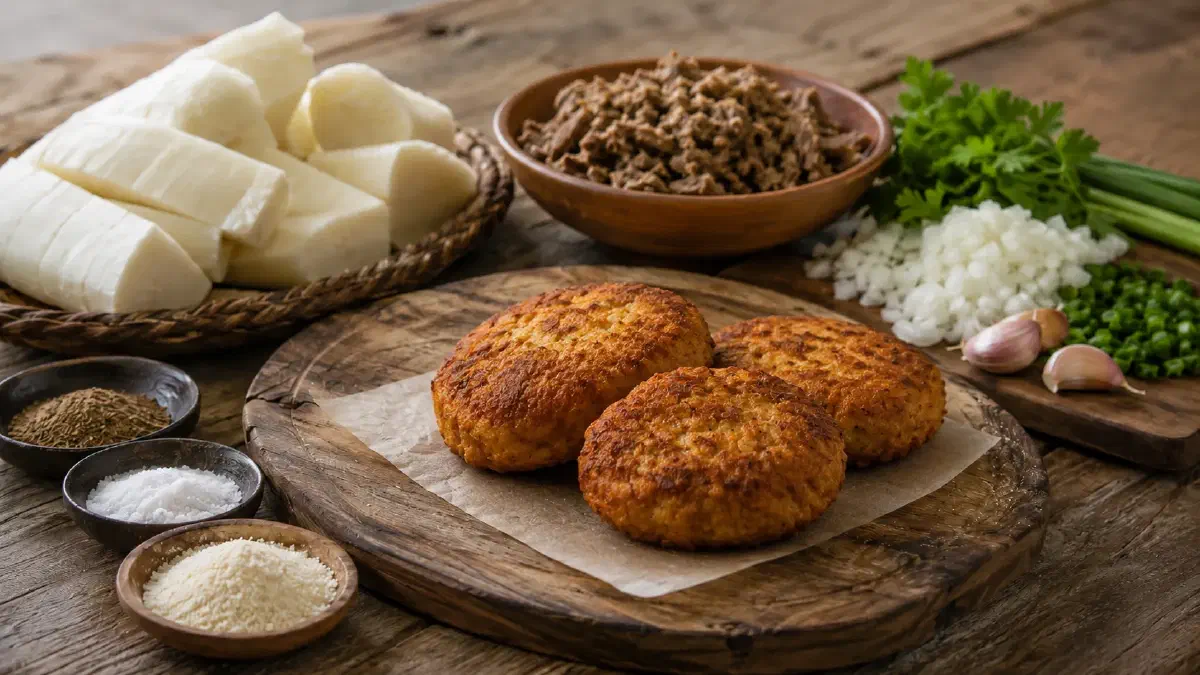

Pajagua Mascada, also commonly written as Payagua Mascada, is one of the typical dishes (comidas típicas) closely connected with the Fiestas de San Juan in Paraguay. To make these savory cassava and beef patties, cooked mandioca is mixed with beef, onions, and spices, shaped, and then fried until golden brown.
At first glance, these small cassava and beef patties might remind you of classic homemade croquettes or meat patties. The main difference is the Paraguayan base: cooked mandioca is added to the mixture instead of soaked bread. The patties taste especially good while warm, but they can also be served cold as a merienda, a quick dinner, or finger food for an evening with friends.
If you want to try a savory Paraguayan recipe at home, this Pajagua Mascada recipe shows you how to prepare it step by step. Friends of ours shared their family recipe with us. You will also find useful tips to help the mixture hold together and give the patties a golden-brown outside.
📝 Pajagua Mascada Recipe: Step by Step#
At a Glance
- Difficulty: medium
- Total time: about 60 minutes
- Preparation: about 25 minutes
- Cooking and frying time: about 35 minutes
- Servings: 4 servings, about 10 to 12 patties
🛒 Ingredients#
You only need a few basic ingredients for these savory cassava patties. You can also add a few optional ingredients to adjust the basic recipe.
Main Ingredients#
- 1 kg mandioca (cassava / yuca), weighed unpeeled (about 750 to 800 g after peeling)
- 400 g ground beef (carne molida)
- 1 medium onion
- 2 garlic cloves
- 2 scallions
- 1 small bunch of parsley
- 1 tsp salt, plus more to taste
- 1/2 tsp cumin (important for the typical flavor!)
- a little black pepper
- 2 to 3 Tbsp wheat flour, cornmeal, or cassava starch for coating
- an additional 1 to 2 Tbsp cornmeal or cassava starch for the mixture, if needed
- a little oil for sautéing
- enough oil for frying
Optional Ingredients#
- 1 egg, if the mixture needs additional binding
- a little finely chopped cilantro
- paprika or ají, for a mildly spicy flavor
- a little butter or lard for more flavor
- a splash of lemon juice for serving
Which Ingredients Can You Replace?#
Flexible Alternatives for Availability or Dietary Needs
Mandioca: It is available almost everywhere in Paraguay. Outside South America, you can often find cassava under the names yuca or cassava in Asian grocery stores or well-stocked supermarkets, either fresh or frozen.
Beef: Fresh ground beef is convenient. Beef cooked until tender and then finely shredded is a more traditional option.
Gluten-free: Mandioca is naturally gluten-free. Replace the wheat flour used for coating with cornmeal (harina de maíz), cassava starch (almidón), or rice flour. Also check that any spice blends are labeled gluten-free.
Kitchen Equipment#
- large pot
- frying pan
- potato masher or meat grinder
- knife and cutting board
- large bowl
- slotted spoon or tongs
- paper towels
👩🍳 Step-by-Step Preparation#
Preparation#
- Peel the mandioca, wash it thoroughly, and cut it into large pieces.
- Finely chop the onion, garlic, scallions, and parsley.
- Prepare a large bowl for the finished mixture.
- Place cornmeal, cassava starch, or wheat flour on a flat plate for coating the patties.
Cooking Process#
Prepare and cook the mandioca: Cook the prepared pieces in salted water for 20 to 30 minutes, until they begin to split slightly and can easily be pierced with a fork.
Important: The mandioca must be completely soft, or the mixture will be crumbly. Cooking it for too long, however, can make it watery and difficult to shape.
Mash the mandioca: Drain the water, allow the mandioca to steam dry briefly, and remove the tough central fiber. Mash it into a smooth purée while still warm so the patties hold together well later.
Prepare the beef mixture: Heat oil in a frying pan, sauté the onion and garlic until translucent, and cook the ground beef until finely crumbled. Season with salt, pepper, and cumin, then stir in the scallions and parsley.
Mix the dough: Add the warm beef mixture to the mashed cassava and knead everything firmly, as you would a dough. Add cilantro, paprika, or ají if desired.
Consistency check: First, try shaping a small patty. If the mixture is dry or crumbly and does not hold together even after fine mashing and thorough mixing, knead in the egg. A few drops of water or a small piece of butter may also help. If the mixture is too sticky or soft, work in 1 to 2 Tbsp of cornmeal or cassava starch.
Shape the patties: Allow the mixture to cool until it is comfortable to handle. Then shape it into evenly thick, palm-sized patties.
Practical tip: Moisten your hands with a little water or oil first so the starchy dough does not stick to your fingers.
Coat and fry: Lightly coat the patties in flour or starch, shake off the excess, and fry them in batches in plenty of hot oil until golden brown on both sides. Drain them on paper towels afterward.
The temperature trick: The oil is hot enough when small bubbles rise around the handle of a wooden spoon. If the oil is too cold, the patties absorb too much oil; if it is too hot, they burn on the outside.
💡 Practical Tips for Pajagua Mascada#
Helpful Preparation Tips
Using mandioca from the day before: Cold mandioca becomes firm in the refrigerator. Warm it briefly in a water bath or microwave. It will soften again and become easier to mash.
Prepare and chill: Shaped, uncooked patties become firmer in the refrigerator and are easier to fry later.
Freeze for later: Freeze the uncooked patties in a single layer first, then transfer them to a freezer bag. Let them thaw in the refrigerator before frying them as usual.
Test first: Fry a very small piece first. This lets you check the binding and adjust the salt and cumin before cooking the full batch.
Nutrition Overview#
The values refer to one serving of about 3 patties, including an estimated amount of oil absorbed during frying.
- Calories: about 430 to 520 kcal
- Protein: about 18 to 24 g
- Carbohydrates: about 45 to 55 g
- Fat: about 18 to 28 g
- Fiber: about 3 to 5 g
These are average values. The fat content may be lower when the patties are prepared in the oven or air fryer.
🍽️ What Goes Well with Pajagua Mascada?#
Because the cassava patties are quite filling, light side dishes and traditional Paraguayan drinks go especially well with them.
Classic: Serve them on their own as a quick snack. In Paraguay, they may also be served with freshly cooked mandioca or Pan Felipe.
Fresh: A green salad or tomato salad with onions and lemon adds freshness to the plate.
Traditional: As typical San Juan food, the patties are often served with classics such as Pastel Mandi’o, Mbejú, Chipa So’o, or Sopa Paraguaya.
Refreshing: Cold Tereré provides a refreshing contrast to the savory finger food.
Classic: A hot Cocido, served plain or with milk, goes well with the patties when you enjoy them as an afternoon merienda.
Simple: A glass of cold water with a splash of lemon helps balance the rich flavor.
🔄 Recipe Variations#
Like many traditional Paraguayan recipes, this dish is based on simple staple foods that many households regularly keep at home. This also makes the cassava patties easy to adapt:
Common Variations#
Pajagua Mascada with beef: Some traditional recipes use beef cooked until tender, which is then finely shredded or passed through a meat grinder. This gives the mixture good binding and is ideal when you have leftover beef from the day before.
Vegetarian Pajagua Mascada: Textured soy protein (TVP), lentils, or finely mashed red beans are possible alternatives. Make sure to squeeze excess moisture from the plant-based ingredient after soaking and season it well so the mixture remains firm and has a rich flavor.
Modern Variations#
Pajagua Mascada in the Oven or Air Fryer
Pajagua Mascada is traditionally fried in oil. You can also prepare the patties with less oil in the oven or air fryer. Brush them lightly with oil, cook them at about 200°C (400°F), and turn them once the bottom begins to brown. The exact cooking time depends on their size, thickness, and the appliance. Check them regularly to make sure they are heated through and lightly browned on the outside.
- Pajagua Mascada in the oven: Place the patties with a little space between them on a baking sheet lined with parchment paper. They are usually less crispy than patties fried in a pan.
- Pajagua Mascada in the air fryer: Arrange the patties in a single layer in the basket and cook them in several batches if needed so the hot air can circulate properly.
Mini Pajagua as Finger Food: For guests or a Paraguayan-themed evening, you can shape smaller patties. They work well on a buffet and cook quickly.
🇵🇾 Background Information About the Recipe#
Name, Meaning, and Spellings#
The name is written in several ways. Along with Pajagua Mascada, the spellings Payagua Mascada, Payaguá Mascada, and less commonly Pajagua Maskada are also used. Different spellings are common with Paraguayan dishes, especially when words from Guaraní or oral tradition are transferred into Spanish. Even Paraguayan sources do not always use the same version.
One common interpretation connects the first part of the name with the Payaguá or Pajaguá, an Indigenous group from the Paraguay River region. Mascada is associated with the Spanish verb mascar, meaning “to chew.” However, the exact origin of the name is not clearly documented.
What Makes Pajagua Mascada Special?#
Pajagua Mascada represents simple Paraguayan home cooking: a few basic ingredients, rich flavor, and a filling texture.
The cooked mandioca provides the bulk, binding, and firm bite, while beef, onions, and cumin create the savory flavor.
Did you know? In everyday Paraguayan life, cassava is not only a simple side dish. It has a role similar to potatoes in many other countries.
What Role Does Pajagua Mascada Play in Paraguay?#
As a traditional comida típica, Pajagua Mascada is especially popular in June, when San Juan Ára is celebrated in many places. At festivals and food stands, the patties are often sold alongside Mbejú, Pastel Mandi’o, and Sopa Paraguaya.
For many people who are new to Paraguay or visit the country in June, the San Juan season is their first opportunity to try Pajagua Mascada.
San Juan Ára as National Intangible Cultural Heritage
Through Resolution No. 370/2026 of June 23, 2026, Paraguay’s Secretaría Nacional de Cultura recognized the Fiesta de San Juan – San Juan Ára and its associated cultural expressions as national intangible cultural heritage. Pajagua Mascada is specifically named as one of the festival’s culinary expressions.
The dish also fits well into everyday cooking outside the festival season. Because mandioca is regularly served in Paraguay, it is also useful for using leftovers from the day before. Another good option is Mandi’o Chyryry: pan-fried cassava with eggs and cheese. During the cooler months, both dishes are popular as warming winter foods.
❓ Frequently Asked Questions#
What is Pajagua Mascada?
Which spelling is correct: Pajagua or Payagua Mascada?
Why does my Pajagua Mascada fall apart?
Can I use cooked mandioca from the day before?
Is Pajagua Mascada gluten-free?
Can I make Pajagua Mascada vegetarian or without meat?
Can I prepare Pajagua Mascada in the oven or air fryer?
How long does Pajagua Mascada keep in the refrigerator and freezer?
What is the best way to reheat Pajagua Mascada?
Conclusion#
Pajagua Mascada shows how a few simple ingredients can create a filling dish with plenty of flavor. The combination of mandioca, beef, and cumin fits both the traditional San Juan festival table and everyday Paraguayan cooking, especially as a hearty snack during the cooler months.
The patties taste especially good when freshly fried. They can also be prepared in advance and are a practical way to use cooked mandioca left over from the day before.
Have fun cooking and buen provecho!
Want to see what else you can make with cassava? Try Pastel Mandi’o. In these crispy turnovers, the cassava is part of the dough instead of a hearty patty. You’ll find more Paraguayan recipes with cassava in our cassava recipe collection.
Share & Support
Did you enjoy this Pajagua Mascada recipe?
Give the article a like and share it with others who would like to discover Paraguayan cuisine.