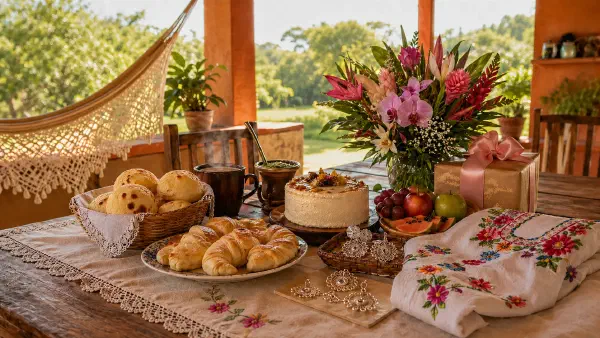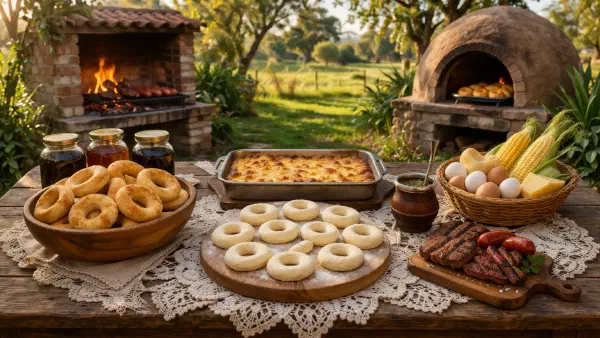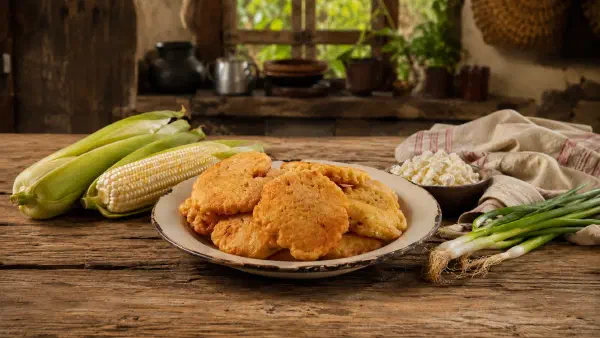
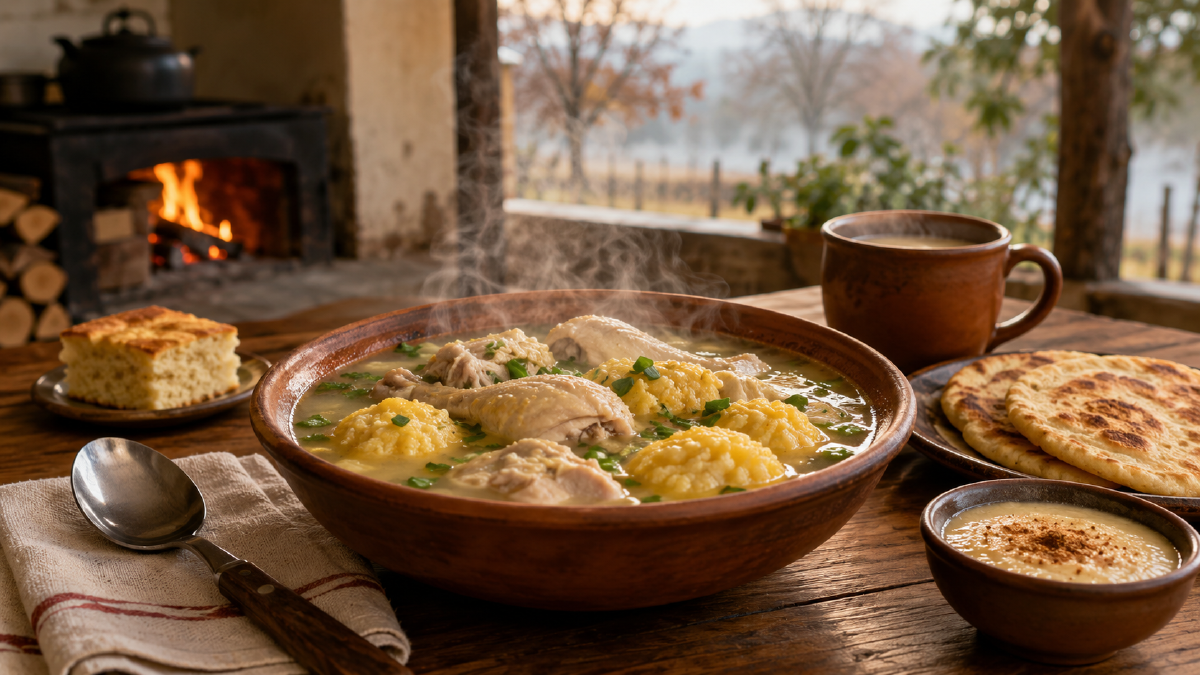

Be honest: who would have thought that in a country like Paraguay, you might one day crave a hot stew? But when the south wind, the Surazo, moves across the country and temperatures in Paraguay drop noticeably, one thing is clear: winter in Paraguay has arrived.
Then it is less about the pool, Tereré and summer salad, and more about a warm oven, Mate and dishes that warm you from the inside and give you enough energy for cool days. Since these warming dishes are back on our table right now, I have put together 13 winter dishes from Paraguay for this article – dishes that have been loved here for generations and are now also regular favorites among many of us immigrants.
Some of these dishes are more than everyday food: Sopa Paraguaya, Vori Vori and Locro are among the dishes whose traditional preparation was officially recognized in Paraguay as intangible cultural heritage in 2017. The language also shows how diverse Paraguayan cuisine is – Spanish words, Guaraní words and local everyday language often come together very naturally in the names of many dishes.
🧉 The Power Start: Breakfast for Cold Mornings#
In Paraguay, breakfast in winter is often warm and very hearty, so people have enough energy for working outside.
Mbejú: When it is rainy and uncomfortable outside, there is hardly anything better than a freshly made, steaming Mbejú, also often written Mbejú. This flatbread made from manioc starch and lots of cheese is the perfect comfort food and quick to prepare. For an extra filling version, I recommend Mbejú relleno – a modern version filled with extra cheese and ham.
Tortillas Paraguayas: Not to be confused with Mexican corn tortillas: the Paraguayan tortilla is a savory fried dough cake made with wheat flour, lots of cheese and spring onions. They are wonderfully flexible and can be prepared with meat (Tortilla So’o) or other vegetables, for example corn (Tortilla avatiky). In our home, they are not only served on a winter morning for breakfast, but also often as a quick snack or as a crispy side dish with a hot soup.
Revido: This rustic classic is made from a simple dough of flour, water and salt, which is broken up in hot fat in a pan until golden, crispy crumbs form. In the past, it was an important basic energy source for forest workers because it was cheap and kept people full for a very long time. Even today, it is still the ultimate “campo worker’s breakfast”. If you want to enjoy it in an authentic way, eat it with a fried egg.
Like many Paraguayan families, we traditionally drink Mate or Cocido Quemado (caramelized Yerba Mate) with milk with it. On weekends, we sometimes have the sweeter version too – Mate dulce, with sugar and, depending on your appetite, milk instead of water.
🍲 The “Soul Warmers”: Hearty Soups & Stews#
At lunchtime in winter, there is really only one rule: it has to be hot and steaming in the pot.
Vori Vori (Bori Bori): The name Bori comes from the Spanish word “bolita” (small ball) – in Guaraní, this becomes “Vori”, so here it means something like little ball-little ball. This rich chicken soup with hand-rolled corn and cheese balls was again listed by TasteAtlas in 2026 as the number 1 soup in the world. For many immigrants, it is a good first dish to try because it can remind you of dumpling soup or marrow dumpling soup from home. We tried it for the first time when our first Capataz offered it to us during our first winter here; since then, it has become a regular dish in our meal plan.
Soyo (So’o Josopy): The name says it all: “So’o Josopy” means crushed meat in Guaraní. In this warming soup, finely pounded beef and vegetables come together into a thick, smooth dish. It is a fixed part of everyday winter cooking and is almost always served with fried tortillas.
Sopa de Locro & Puchero: When the south wind blows, it is time for Sopa de Locro. This thick stew made from white corn and beef simmers for hours until the broth becomes wonderfully creamy. If you prefer something a little lighter, choose Puchero, a clear beef broth with large pieces of vegetables such as corn on the cob, pumpkin and potatoes. Both dishes have real “grandma’s kitchen” vibes and are also easy for us immigrants to adapt with extra spices.
🍴 Hearty Fillers & Side Dishes#
These dishes work as a meal on their own or as a strong side dish with Asado.
Sopa Paraguaya & Chipa Guasu: These two corn and cheese dishes are a must. While Sopa Paraguaya is more firm and compact, Chipa Guasu stays especially juicy because of the fresh corn. In winter, both are often eaten as a main meal with boiled manioc or as a hearty side dish with Asado. They develop their full flavor best when baked in the traditional clay oven, the Tatakuá.
Arroz Kesu / Arroz con Queso: This is the Paraguayan answer to “Mac and Cheese”. Rice, lots of local cheese and a splash of milk make a simple, filling dish that feels especially good on gray days.
Mandi’o Chyryry: “Mandi’o” means cassava and “Chyryry” roughly means fried or to fry. This typical manioc dish is also our favorite way to use boiled manioc from the day before. Fried in a pan with egg, cheese and onions, it gets a very savory flavor and always reminds us of hearty fried potatoes – just in a Paraguayan way.
Pastel Mandi’o: These heavy pastries made from manioc and corn flour are much more filling than normal empanadas. Filled with beef and egg, they are ideal food for a cold winter night by the fire.
Pajagua Mascada: The name is often connected with the Payaguá, a historical Indigenous group from the Río Paraguay area. Today, many people know Pajagua Mascada mainly as hearty food for the San Juan festival in Paraguay. Together with Pastel Mandi’o, it is one of the typical classics there, when fire, games and traditional foods are at the center of the celebrations in June.
The base is a strong dough made from boiled manioc, minced meat, garlic and spring onions, which is fried in hot oil until crispy. Fresh from the pan, Pajagua Mascada reminds you a little of a meat patty, but with much more manioc. Crispy on the outside, soft on the inside and really filling, it is exactly the kind of snack that tastes especially good on a cool evening.
🍯 Desserts: A Sweet Finish for Cold Days#
Mazamorra (Kaguyjy): The Guaraní name “Kaguyjy” is often explained as a cooked, thickened corn preparation. This traditional dessert shows that the simplest ingredients can create a real feel-good moment: white corn is cooked in milk and sweetened with honey or sugar cane syrup (Miel de Caña). In its style, it is similar to rice pudding and immediately gives you a warm feeling in your belly.
Kivevé: This creamy pumpkin dish made with Andai, cornmeal, and Queso Paraguay combines the natural sweetness of the pumpkin with the mild, slightly tangy cheese. Depending on how it is prepared, Kivevé can be served semisweet as a light meal or merienda, or made a little more savory as a side dish with bife or asado. This meat-free dish also has its place in the traditional cuisine of Holy Week.
More sweet ideas for cold days
If you like sweet winter dishes, Arroz con Leche and Dulce de Calabaza also fit well into the cold season. Both remind you of Mazamorra and Kivevé through their ingredients and are easy to prepare ahead of time.
❓ Frequently Asked Questions#
Can I make Paraguayan specialties outside Paraguay?
Yes. With a few simple substitutions, many Paraguayan specialties are easy to make outside the country as well.
Cassava starch (Almidón de Mandioca) is often available in Asian or African grocery stores, usually labeled as “Tapioca Starch.”
As a substitute for Queso Paraguay, different mild cheeses work better depending on the dish. For baked dishes such as Sopa Paraguaya or Chipa Guasu, a combination of mild feta and a little mozzarella can work well. For creamy dishes such as Kivevé, Queso fresco, Farmer’s Cheese, or ricotta are better options.
You can replace Andai squash in Kivevé with butternut squash. It also has mildly sweet, orange flesh and can be prepared in a similar way.
What do people eat in Paraguay when it is cold?
When the south wind, the Surazo, moves through the country and temperatures drop, simple and filling dishes often come to the table in Paraguay. Many of them are part of traditional Paraguayan cuisine and warm you exactly when it gets uncomfortable outside. Especially popular are hot soups and stews such as Vori Vori, Locro or Puchero, but also fresh-from-the-oven classics like Chipa Guasu and Sopa Paraguaya.
Warm pan dishes like Mbejú, Tortillas Paraguayas or Pajagua Mascada also fit well. If you like something sweet, choose Mazamorra, Kivevé or Arroz con Leche – best with hot Cocido or Mate.
Which winter dishes from Paraguay are especially easy for beginners?
Which dishes are good meat-free options?
Which ingredients are especially typical for Paraguayan winter dishes?
How can I make the dishes a little lighter?
Conclusion: Winter Cuisine in Paraguay#
Paraguayan winter cuisine is simple, filling and surprisingly varied. When the south wind comes and the evenings get cooler, steaming soups, pan-fried manioc dishes, fresh corn and cheese classics from the oven and sweet feel-good dishes bring good mood to the table.
For me, this has become part of winter in Paraguay: in the morning, when the oven has just been lit, something warm like tortillas or Mbejú, with Mate or Cocido – and Chipa Guasu always works, whether as a side dish or as a meal on its own.
If you want to understand food in Paraguay, you should therefore not only think of Asado, Chipa or Tereré, but also of these warming dishes for cold days.
Want to start with one of these winter classics? Mbejú is an easy place to begin. And if you’re wondering why comfort food like this has a season in Paraguay at all, our overview of winter in Paraguay explains how cold it can get and what the south wind has to do with it.
Share & support
Do you know someone who is interested in Paraguayan cuisine or life in South America? Then feel free to give this post a like and share it with other South America fans – and help make Paraguay’s culinary variety more visible.
More on winter in Paraguay:
For the colder season:
Paraguayan cooking basics:
Reply by Email