
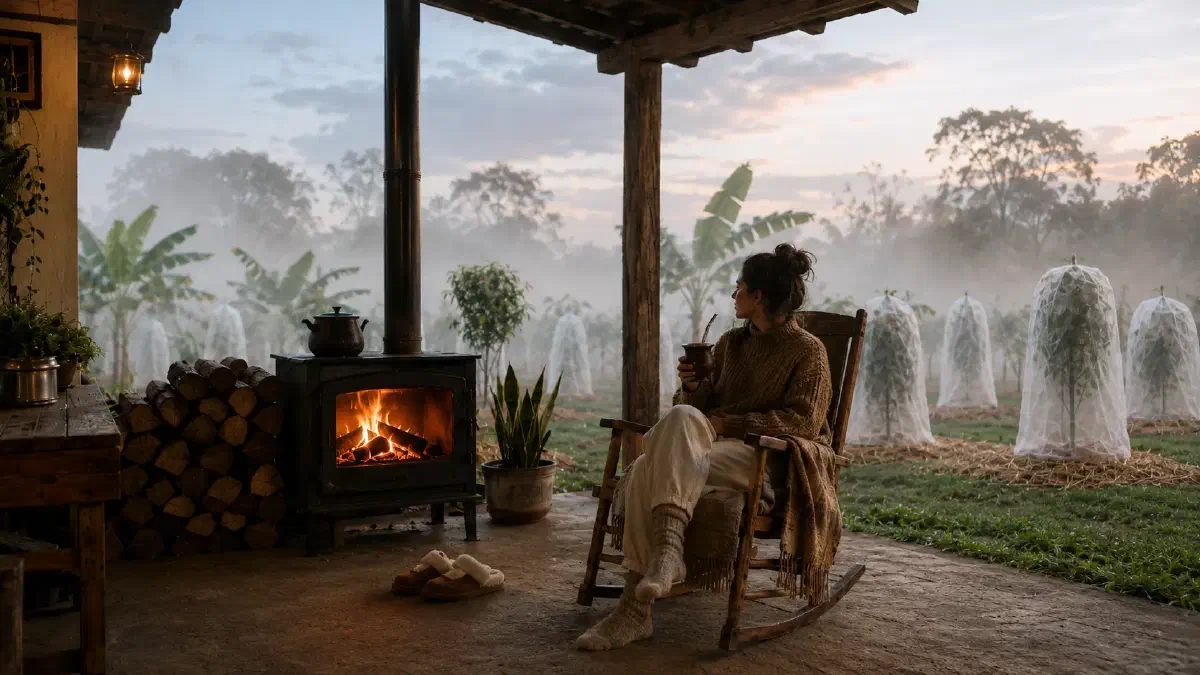

Yesterday it was still 32 degrees, air conditioning and humid air. Today I am sitting by the fireplace in a sweater. It was officially used for the first time today.
That is how fast the weather can change in Paraguay. After a heavy storm with typical Paraguayan rain, a strong cold front arrived. Suddenly, winter does not feel so far away anymore. If you remember the first cool autumn night, you know: that was only a first taste.
Right now, low temperatures of up to 4 degrees are forecast for the next nights in different regions of Paraguay. During the day it is still lovely in the sun, but as soon as the south wind (viento sur) arrives, you really start to feel the cold.
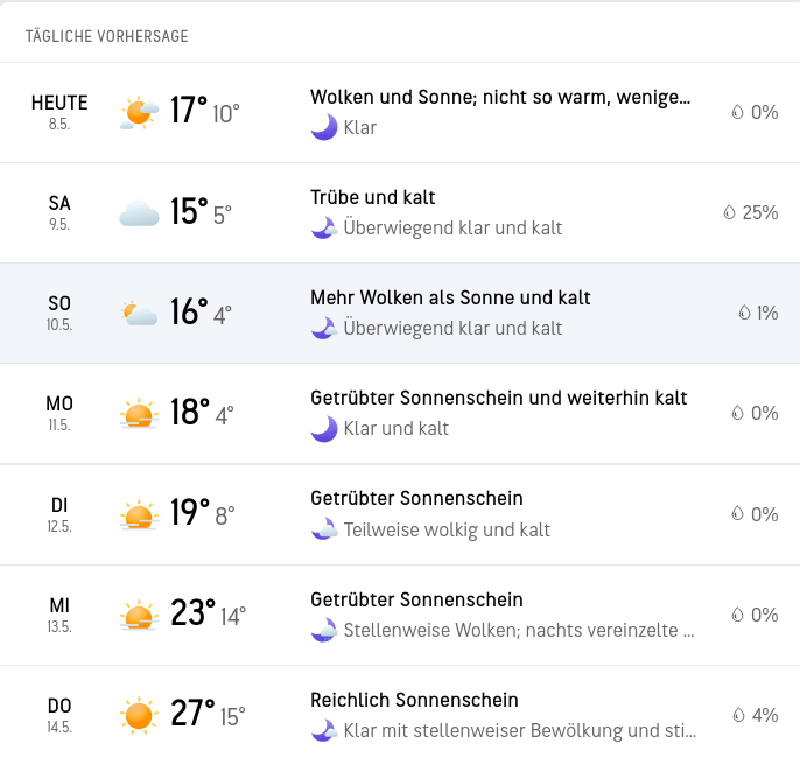
These weather changes show what is really prepared in daily life. Is the firewood dry and ready? Are blankets and slippers easy to reach? And what happens to the young mango or banana plants in the garden when the temperature moves close to freezing?
Officially, astronomical winter only starts on June 21, 2026, but real life often feels different. This time we were glad that we had already done the first preparations, such as getting the firewood ready. Other things, like protecting sensitive plants, we now decide day by day depending on the thermometer.
Because winter in Paraguay does not mean months of snow, but it does mean cold nights, cool tile floors and sensitive plants that do not handle sudden cold well.
This article gives you 10 practical preparations, so you can enjoy the cold season with less stress.
1. Check how cold it really gets in your region#
Winter in Paraguay is not the same everywhere. You notice how different the climate can be by region and season, especially during the first cold fronts. A cold night in Asunción feels different from a cold night in Itapúa, Guairá, Misiones, Caaguazú or Alto Paraná. And the Chaco has its own extremes again.
The following forecast shows these regional differences clearly:
| City (Region) | Low temperature |
|---|---|
| Villarrica (Guairá) | 5 °C |
| Asunción (capital) | 7 °C |
| San Juan Bautista (Misiones) | 7 °C |
| Encarnación (Itapúa) | 7 °C |
| Coronel Oviedo (Caaguazú) | 7 °C |
| Ciudad del Este (Alto Paraná) | 8 °C |
| Mariscal Estigarribia (Chaco) | 9 °C |
| Fuerte Olimpo (Chaco) | 10 °C |
Source: Dirección de Meteorología e Hidrología, official forecast for Sunday, May 10, 2026, status 08.05.2026.
The table shows why it is important to look at your own region. If you only check “Paraguay weather” in general, you can easily miss how different cold nights can feel across the country. The same cold front does not feel the same everywhere in Paraguay. In this forecast, there was a 5-degree difference between Villarrica and Fuerte Olimpo.
From my own experience, I know that the temperature number is only half of the story. Factors like biting south wind, high humidity or a clear starry night decide how cold the early morning hours really feel.
Vocabulary check for the forecast:
- frente frío: cold front
- vientos del sur: south winds
- sensación térmica: feels-like temperature
- helada / escarcha: frost / frost crystals
- madrugada fría: cold early morning hours
2. Observe the microclimate on your property#
Two properties in the same town can behave very differently in winter. You notice this especially when you do not live directly in the city.
Is your property in a low area? Is it open to the wind? Are there trees that offer protection? Is there a stream, a wet meadow or an open field nearby? Small details like these can decide where cold air stays and which plants react first.
You often recognize cold zones by these signs:
- frost crystals appear there first in the morning
- fog stays there longer
- banana leaves turn brown there first
- young plants look weak after cold nights
- the south wind blows through especially strongly
- the ground stays wet and cold for longer
After cold nights, I almost always check the same places first. When the banana leaves start hanging there first, I know: that night was really cold.
3. Check the fireplace, stove or salamandra before using it for the first time#
Many fireplaces and stoves in Paraguay are only used for a few weeks each year. That is exactly why they are easy to forget. In summer nobody thinks about them, and during the first cold spell everything is suddenly supposed to work.
Before the first fire, you should check whether the fireplace, salamandra or stove is clean and clear. Old ash, dust, leaves, bird nests or blocked smoke pipes can become unpleasant or dangerous.
Check before the first use:
- remove old ash
- check the stove pipe
- test the smoke outlet
- look for bird nests, leaves or blockages
- keep flammable things away from the area
- organize cleaning or inspection if you are unsure
In Paraguay, you can now also find service providers who clean and check fireplaces, smoke pipes or stoves. This is especially useful if the fireplace has not been used for a long time or if you are not sure whether the draft works properly.
If you heat with fire, the room must not be completely airtight. Fresh air and a good smoke outlet are more important than a perfectly sealed room.
If you do not have a fireplace: Many split units in Paraguay have a heating function (mode: “Heat” or the sun symbol). It does not give the same radiant heat as a stove, but it is useful to quickly remove the basic cold from a room.
4. Prepare firewood, carbón and kindling early#
If you have a stove or fireplace, it is better not to buy firewood in Paraguay only when everyone else is also looking for it. As soon as the first cold front is really noticeable, demand increases. Then wood can be more expensive, quickly sold out or still too wet.
Dry wood is worth a lot. It burns better, smokes less and makes the evening more relaxed.
How to store firewood better:
- store it dry and with air circulation
- do not place it directly on the ground
- keep some distance from the house wall
- protect it from rain
- collect small pieces of wood for lighting the fire
- do not store wet wood directly inside the living area
Practical kindling material:
- dry small twigs
- wood shavings
- egg cartons
- candle leftovers
- small amounts of dry paper
Please do not burn plastic, painted wood or trash. It does not only smell bad, it also does not belong in the fire for health reasons.
5. Keep warm clothes, blankets and bedding ready#
This sounds simple, but in Paraguay it is more important than many people think at first. Many houses are not built for cold weather. Often there is no heating, little insulation, cold tile floors and rooms that cool down quickly at night.
During the day, you may still sit comfortably in the sun. In the evening it feels different. Then sweaters, thick socks, blankets and slippers suddenly move to the front.
Prepare before the first cold front:
- blankets and warm bedding
- thick socks or slippers
- sweater, jacket and warm sleepwear
- extra blanket for children, guests or older people
- dry place for freshly washed laundry
Laundry is also a topic. In damp and cool periods, it dries much more slowly. If you wash your winter blankets only when it is 11 degrees and drizzling, you quickly notice that drying things in the Paraguayan winter can be hard.
Small daily-life tip
A winter basket in the living area is practical: blanket, thick socks, light jacket. It sounds simple, but it makes cold evenings much more comfortable.
6. Create one warm area in the house and reduce drafts#
In many Paraguayan houses, not the whole house is winter-ready. It does not always have to be. Often it makes more sense to make one area cozy and warm on purpose.
Most of the time this is the living room or the room where the fireplace or stove is. There it helps to close doors earlier in the evening, close curtains earlier and keep cold air outside as much as possible.
This helps quickly inside the house:
- close doors earlier in the evening
- use curtains or blinds
- place draft stoppers in front of doors
- make cold tiles more comfortable with a rug or mat
- keep blankets or a winter basket in the living area
- place slippers directly near the bed or sofa
For drafts, simple solutions are often enough. A rolled-up towel in front of the door is not elegant, but sometimes it is exactly what helps.
Do not seal everything completely
If you heat with a fireplace, stove or gas, the room needs air. Sealing is good against drafts, but safety comes first.
7. Watch humidity, mold and laundry#
Winter in Paraguay is not only cold. It is often also humid. And damp cold enters a house differently than dry cold.
Rooms without much sun are especially affected: bedrooms, storage rooms, closets, corners behind furniture and everything standing directly against cold outer walls.
What you should watch:
- air the rooms during the day when it is warmer and drier
- place mattresses, blankets and pillows in the sun from time to time
- do not press clothes too tightly into closets
- keep leather, shoes, bags and documents dry
- move furniture a little away from cold outer walls
- do not dry laundry inside without airing the room
When laundry dries inside the house, humidity increases even more. You notice this especially in small rooms. Then it helps to air regularly and not let the air stand still.
But when humidity is extreme, for example when it is foggy outside, it is better to keep the windows closed and air the rooms only when the sun has dried the outside air.
8. Check gas, electricity, light, hot water and supplies#
Winter preparation in Paraguay is not only fireplace and cozy blanket. It is also normal house organization.
Check early whether you have enough gas. An empty gas bottle is always annoying, but in cold weather it is especially frustrating. If you use gas, a boiler or an instant water heater for hot water, test early whether everything works reliably.
Household check before cold nights:
- Energy: check the gas bottle and test hot water.
- Electricity: check heaters, cables and plugs.
- Light: prepare flashlight, batteries, candles and lighter.
- Safety: keep sand or a suitable way to extinguish fire near the wood stove.
A small shopping trip before the cold front also makes the cold days more relaxed. Then you do not need to go out for small things when the south wind whistles around the house. Many supplies like pasta, milk, drinking water, but also animal feed or medicine become especially practical when the cold arrives suddenly. You can also read my tips for the basic supplies for daily life to be better prepared for different situations.
9. Protect sensitive plants, fruit trees and potted plants#
For me, this is one of the most important points when you live in Paraguay with a garden or property. Many plants look strong during the day, but react badly to cold nights. The early morning hours are especially critical: this is often when the lowest temperatures are reached, and young plants can suffer. Depending on the location, this includes mango, avocado, banana, papaya, maracuja, young citrus plants and ornamental plants.
What helps before a cold night:
- Cover: Cover young plants early, but make sure the material does not press heavily on tender shoots.
- Location: Put potted plants under a roof or next to a protective house wall.
- Trunk & roots: Protect young trunks and mulch the root area with leaves or grass clippings.
- Airing: Open the covers again during the day when the sun shines.
- Rest: Do not cut or fertilize your plants shortly before a forecast cold front.
Material you can prepare: In Paraguay, people improvise a lot. That is fine. The important thing is that the material is ready before it gets dark and windy. Use what you have:
- Frost protection fleece, old bed sheets or jute sacks.
- Bamboo sticks, wooden sticks and clothespins for fixing.
- Stones or boards to weigh things down on the ground.
- Large buckets or pots as quick protection to place over small plants.
If leaves turn brown after a cold night, do not cut everything immediately. Wait a few days. Often you only see later what is really damaged and what recovers.
10. Prepare animals, quincho and outdoor areas for cold nights#
If you have animals, they are also part of winter preparation. During the day, dogs, cats, chickens or other animals often move around normally. But at night they need dry, wind-protected places.
Check for animals:
- dry sleeping place protected from wind and rain
- use blankets, boxes or straw only when they stay dry
- give special attention to young, old or sick animals
- protect the chicken coop from drafts
- keep the feeding place dry
- check water places in the morning
The quincho, outdoor kitchen, grill area and veranda are also part of daily life in Paraguay. Many areas are half outside and are also used in winter, just in a different way.
Prepare outdoor areas:
- store firewood and carbón dry
- make the sitting area more protected from wind
- keep a jacket or blanket in the quincho
- keep grill equipment dry
- empty hoses or store them in a protected place
- check outdoor taps and washing areas
- keep covering material easy to reach
If you have a pool near the quincho: During cold fronts, the chlorine need drops clearly. But remember to empty the skimmer more often during strong south wind, because a lot of dirt can blow in.
Paraguay tip
The quincho is not useless in winter. You just use it differently: less draft, dry wood, a warm jacket and a place where you do not sit directly in the south wind.
Quick check: What helps immediately and what needs preparation#
Warmth: Prepare blankets and sweaters, slippers and / or a heater.
Isolation: Close doors and curtains in the evening.
Protection: Cover sensitive plants and bring animals into protected areas.
Fuels: Store firewood dry; check gas bottle and supplies.
Technology: Check fireplace, stove or salamandra before using it.
Garden & animals: Collect frost protection material; mulch young plants and prepare animal shelters for winter.
House: Reduce drafts at doors and windows.
Your winter checklist: Ready for the next cold front?#
Before the next cold front, you can go through this list:
- Weather forecast and helada risk checked for your region
- Firewood bought and stored dry
- Fireplace, stove or salamandra checked
- Warm clothes and blankets ready
- Drafts in the house reduced
- Gas, hot water, light and batteries checked
- Sensitive plants protected
- Mulch and covering material prepared
- Animals kept dry and protected from wind
- Quincho, hoses and outdoor areas checked
Frequently asked questions about winter in Paraguay#
How long does the cold phase in Paraguay usually last?
From what temperature should I cover my plants?
This depends a lot on the plant, the location and the age of the plant. Young mangoes, avocados, bananas and papayas can be sensitive when temperatures fall clearly. At the latest when helada is forecast or when low temperatures are around 5 °C or below, I would protect sensitive young plants.
Do not only look at the temperature in the weather app. South wind, humidity, clear nights and the microclimate on your property also matter.
Is a fireplace worth it for only a few cold weeks?
That depends on the house, region and your own feeling of cold. Many houses in Paraguay are not insulated, have cold tile floors and cool down quickly at night. That is why a fireplace, salamandra or air conditioner with heating function can make cold nights much more comfortable.
Another advantage: warmth often also helps against the typical winter humidity inside the house.
Why does laundry dry so badly in the Paraguayan winter?
Winter in Paraguay is not only cold, but often humid. Especially with fog, rain or little sun, laundry dries more slowly. When it hangs inside the house, the humidity in the rooms increases even more.
This can make drying harder and can also increase the risk of mold, especially in closets, bedrooms and on cold outer walls.
Can water pipes freeze in Paraguay?
In most regions, the risk is low because deep ground frost is rare. Still, clear and very cold nights with Escarcha can happen, especially in cooler regions, in the south or in open locations.
I would empty exposed hoses outside before cold nights or store them in a protected place. It is quick and can prevent problems later.
What should I do during a power outage in a cold front?
During storms, strong wind or cold fronts, power outages can happen again and again in Paraguay. If you only heat with an electric heater or air conditioner, you should have a simple alternative.
Useful options are, for example, a working fireplace, a safe gas solution, warm blankets, flashlight, batteries and charged power banks. Important: Use gas or fire solutions only safely and with enough ventilation.
Do I need to watch for termites when storing firewood?
Yes, absolutely. Firewood should not be stored directly against the house wall and not directly on the ground. Both can increase humidity and attract pests like termites, often called Kup’i in Guaraní.
Better is airy storage on pallets, stones or a simple base. Also keep some distance from the wall, so air can circulate and the wood stays dry.
Why is it sometimes colder inside the house than outside?
This is often because of the way houses are built. Many houses in Paraguay have little or no insulation, simple windows, cold tile floors and walls that cool down at night. When the sun later warms the air outside, the house can still feel cold because floors and walls keep the cold longer.
Helpful things are airing the room during the warmer part of the day, curtains, rugs or mats on cold floors and one room that you make warm and cozy in the evening.
Conclusion: Winter in Paraguay is short, but you feel it#
Winter in Paraguay is not like winter in Central Europe. It is shorter, often sunnier and sometimes really pleasant during the day. But you should not underestimate the cold nights.
Because many houses are not built for cold weather, winter often feels stronger in daily life than the number on the thermometer suggests. Cold tiles, humid rooms, south wind, little insulation and sensitive plants make the difference.
The good news: You do not need to prepare everything perfectly. Many things are simple. Store firewood dry, keep warm clothes ready, check the fireplace or stove, observe sensitive plants, protect animals and make the house a little more winter-ready.
And when the next cold front arrives, it’s much easier to relax when the important things are already taken care of. Then it can be chilly outside: your sweater is ready, the firewood is dry — and for something warm on the table, you’ll find recipes for cooler days in my collection of Paraguayan winter dishes.
Share & support
Winter is part of life in Paraguay, even though it is easy to underestimate. A few cold nights are often enough to realize that a little preparation makes everyday life much more comfortable. If this article helped you, I would be happy about a like or if you share it . Maybe it helps someone who still thinks winter in Paraguay is not a real topic.