
If you are new to Paraguay, you usually notice quite quickly while shopping that what matters is not only where and when you shop, but also what you are better off simply having at home. Everyday life here tends to be a bit more pragmatic than in Germany. You do not always just head out quickly for one thing, visitors drop by spontaneously, the weather gets in the way, and sometimes something simply is not available in the supermarket.
That is exactly why it helps to know which foods are almost naturally part of the basic household setup in many homes in Paraguay. A lot of it seems unremarkable at first, but it plays a constant role in everyday life: when cooking, when guests show up unexpectedly, or simply when weather and roads throw your plans off track.
So this article is not about a perfect pantry list, but about one simple question: Which foods should you have at home in Paraguay to make everyday life easier? And along the way, it also helps you understand a bit better how cuisine, habits, and daily supply actually work here.
The basics are simpler, but very practical for everyday life In many households, it is less about huge stockpiles and more about a few ingredients you can quickly make something with.
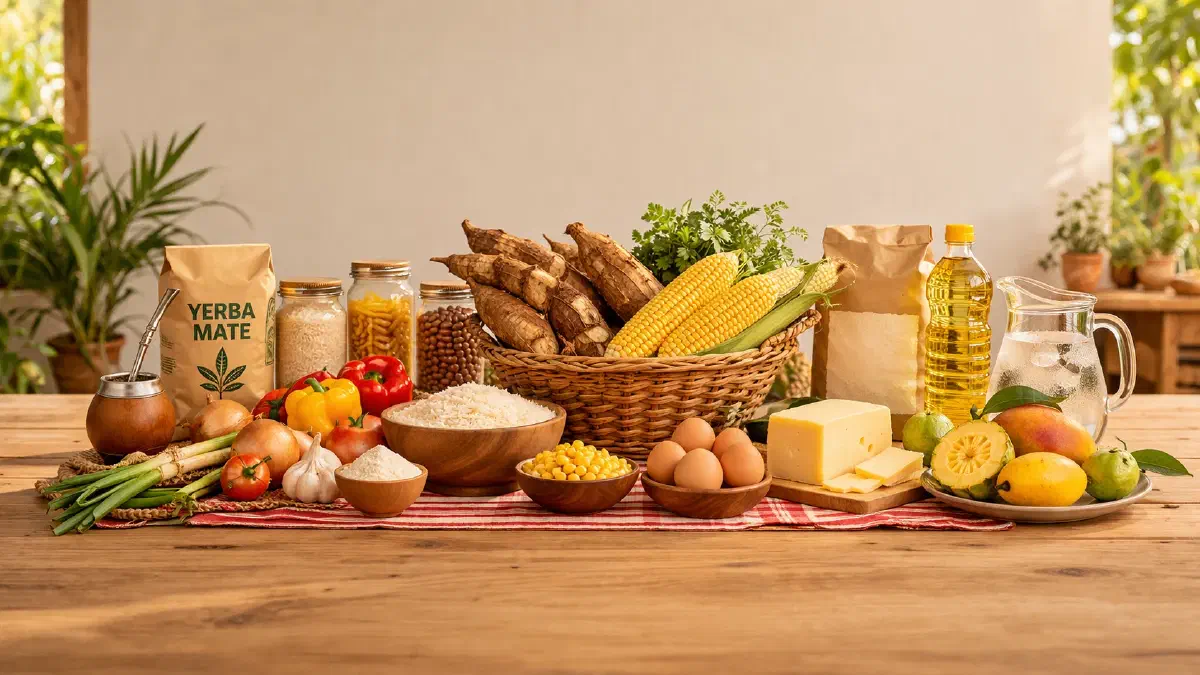
Corn, mandioca, eggs, cheese, and yerba are real staples If you want to understand Paraguayan food culture, you can hardly get around these things.
Practical basics often also include milk, oil, flour, and salt That may sound unspectacular, but in daily life it matters more than many people think at first.
City and countryside work differently In the countryside, kitchen gardens, fruit trees, home eggs, or small supplies from your own growing area are more common.
Weather and roads matter If you live on dirt roads or have to travel longer distances, you often shop a bit more proactively.
🌧️ Why it makes sense to keep certain basics at home#
For me, this is one of those things you only really understand once you actually live here.
In Germany, people often think: I will just go out later or Friday is shopping day. Of course that also works in Paraguay. But not always as conveniently, and not equally everywhere.
Here in Paraguay, supply and everyday planning depend much more on weather, roads, distance and daily planning than you might first think. Especially outside city centers or away from the main rutas, many side roads and rural roads are unpaved and can be difficult or even impossible to use during rainy periods. You should also keep the many public holidays in Paraguay in mind, because they can create long weekends and temporarily slow down public life, shopping and logistics.
And even in Asunción, there are well-known spots that regularly end up under water during heavy rain, where you would need a kayak if you wanted to leave the house.
That is exactly why many people here prefer to keep a few things at home that always work, whether for rain, unexpected visitors, or the moment when something is missing from the supermarket again.
Since we moved to Paraguay, we automatically shop differently too. We still have a more or less regular shopping routine with fixed days, but because we do not live in an urban area, having a basic food setup is essential. And when you happen to see certain things, you stay flexible and take them along - you never know…
What do I need to be able to put together something filling on short notice, take care of visitors, or make sure I have everything important when it rains?
Start with a small, reliable set of basics.
You will find a checklist for your pantry at the end of the article.
🏠 What simply belongs to the basic household setup in Paraguay#
This basic household stock is not a rigid list, but rather a practical first guide based on our own experiences on the ground. Depending on the region, household size, budget, and personal eating habits, the importance of individual staples can naturally vary.
A good starting point of reference is the Paraguayan canasta familiar. Put simply, this means a group of basic-need products officially defined by the tax authority (DNIT), in other words things the authority considers fundamentally important for everyday life. Of course, that is not exactly every family’s shopping list, but it does give a fairly good idea of which foods are seen as basic in Paraguay. In winter, rice, milk and cheese quickly become a warming Arroz Kesu in our kitchen, for example.
The dry basics in the cupboard#
Rice and pasta are simply part of everyday household life for many families in Paraguay. Not because they are especially Paraguayan, but because they simply work in daily life. They are quick to prepare, filling, affordable, and easy to combine with whatever happens to be available: cheese, eggs, vegetables, meat, or even just some oil and salt. On days when things need to be simple, they are often the easiest solution.
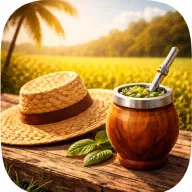
Quite different, but at least just as common, is yerba mate. It is simply part of life in many households. Tereré is not just any drink, but part of everyday life, social interaction, and often hospitality as well. And when the morning is cool, especially during the Paraguayan winter, many people drink hot mate instead of cold tereré. In supermarkets, yerba is available plain or already mixed, for example with cedrón or other herbs. If you prefer it more traditional, you can buy pohã ñana, herbs for mate or tereré, separately. And yes, cold water or ice is almost part of the basic setup too.
Then there are those quieter basics that are easy to overlook but are constantly needed in the kitchen: water, milk, salt, flour, and cassava starch. It sounds unspectacular, but in daily life it matters.
Having enough drinking water at home matters more than many people think at first, especially when it is hot, when visitors come over, or when a power cut means there is no running water available for cooking. In addition to the public supply network, some households, especially in the countryside, also use their own well. Many also keep bottles, canisters, or bidones of purchased drinking water at home.
Milk is needed not only for coffee or tea, but also for simple preparations. Salt is used almost everywhere. And with flour, there is a small difference compared with Germany: in Paraguay, not only wheat flour matters, but also corn flour and cassava starch. Many dishes that are completely normal here are made from exactly those ingredients. These unspectacular supplies often save the day in everyday life because they can quickly turn into something warm, filling, or suitable for guests.
Fresh things that should not be missing#
Fresh foods are a bit more regional and personal. Not every household always has the exact same things. But a few ingredients clearly run through everyday life in Paraguay. Corn and mandioca strongly shape the cuisine and show up again and again in many different forms. Mandioca is not just any side dish. Anyone who lives in Paraguay for a while quickly notices how naturally it is included with many meals. In Germany, you might more often add bread, potatoes, or rice. Here, it is often mandioca. And corn is just as deeply rooted in everyday cooking, whether fresh, frozen, canned, or processed as flour.
Then there is Queso Paraguay and eggs, which play a role in many simple everyday dishes. Because if you have a bit of flour, fat, cheese, and eggs at home, you can quickly make something filling out of it. That can be a simple dough base, a quick warm meal, or something extra to put on the table when visitors arrive. Many classics like Paraguayan tortillas, Mbejú, Mandi’o Chyryry, Chipa Guasú, Pastel Mandi’o or Pajagua Mascada rely on exactly these ingredients. That is why they are not only culturally typical, but also genuinely useful in daily life.
This basis is often complemented by vegetables and other fresh ingredients that constantly appear in the kitchen. Onions, spring onions, garlic, tomatoes, bell peppers, or carrots are a normal part of everyday life for many families. Depending on the region, household, and season, this may also include beans or peas, sweet potatoes, peanuts, or fruits such as pineapple, guavas, and mangoes.
Meat and fish: important in daily life, but not always part of the basic setup#
Meat is part of daily life in many Paraguayan households. Beef, chicken, and depending on the household also pork often play a larger role than in some European everyday cuisines. Still, I would not classify meat in quite the same way as rice, yerba, flour, or eggs. The difference is simple: meat is fresher, more perishable, and much more dependent on when shopping happens, what is currently available, and whether there is enough space for cooling or freezing.
In some more rural households or more traditional kitchens, dried meat is also used, known as carne seca, charque, so’o piru, or cecina. That is not some invented curiosity in Paraguay, but part of the traditional cuisine and appears in typical dishes too, for example in chastaca or as a filling in more rustic empanadas.
Fish usually plays a smaller role in everyday life than beef or chicken. Depending on the region, habit, and shopping options, it may be more important in some places and hardly relevant in others.
Meat and fish are naturally part of the picture, but for everyday basic household supplies I see them more as an addition and not as a fixed staple.
For personal pantry planning, dried meat, canned meat, or canned tuna can still be interesting. In many supermarkets, you can buy these products quite normally.
🏡 In the countryside, the basic setup often looks a bit different#
In rural areas, many people have their own plot of land, often with a garden, sometimes with animals or larger areas for growing food and self-sufficiency. That means that, depending on the farm and the region, eggs from their own chickens, meat from their own animals, milk from their own cow, homemade Queso Paraguay, fruit from the trees, vegetables and herbs from the garden, or also mandioca, batata, corn, and peanuts from their own cultivation are much more naturally part of everyday life than in the city. The focus then shifts automatically away from the supermarket alone and toward what is grown at home or easy to get from the surrounding area.
🍽️ What is often weighted differently in Paraguay than in Germany#
What I notice again and again in everyday life is this: in Paraguay, food is often less about having a huge selection and more about what really works in daily life. What matters most are ingredients that fill you up, can be used in many ways, and can be put on the table without much effort.
Compared with Germany, bread, rolls, and the classic evening-bread logic with lots of topping choices are often less central. Instead, mandioca appears with many meals, side dishes are often simpler, and warm food is eaten more often in the morning or evening as well. Because of that, things often feel a bit more grounded and pragmatic. People use what is there, what happened to be available, or what can quickly be turned into something.
You can also notice the difference in shopping itself. In Paraguay, it is often less about one big weekly shop in a single store. Depending on where you live, daily life, and availability, people think more flexibly. You pick something up spontaneously, add something later, and pay more attention to what is actually available instead of just following the shopping list. Especially in the countryside, what comes from the garden, from neighbors, or from the surrounding area also plays a role.

What is a must-have in your pantry?
Feel free to send us an email. Everyday experiences like these help keep the article and checklist practical and useful.
❓ Frequently asked questions (FAQ)#
Why is it better to keep a few basics in stock in Paraguay?
Is mandioca really that important?
Why does almost everyone have yerba at home?
Which ingredients appear especially often in Paraguayan recipes?
Is it different in the countryside than in the city?
Do things like toilet paper, water, or household supplies also count as basics?
Conclusion#
What people in Paraguay almost always have at home is often not spectacular at all. And that is exactly the point. It is less about special products and more about a small, reliable base of dry supplies and, depending on the area, a few fresh ingredients.
Add yerba mate, a few herbs, and ice water, and you are already quite well prepared for visitors, spontaneous meals, or rainy days.
That is exactly why it is worth seeing these staple foods not just as a shopping list, but also as a small key to everyday life in Paraguay. They tell you a lot about what is cooked, shared, improvised, and actually needed in daily life here.
And some of these everyday staples can be turned straight into something typically Paraguayan: Mbejú needs only a few ingredients and comes together easily in a skillet.
- Shopping in Paraguay: How It Really Works in Everyday Life
- When keeping provisions becomes part of a tradition: Jopara and Karai Octubre: Paraguay’s October 1 Tradition
Reply by EmailIf you know someone who would find these everyday tips helpful, feel free to share this article with them.