
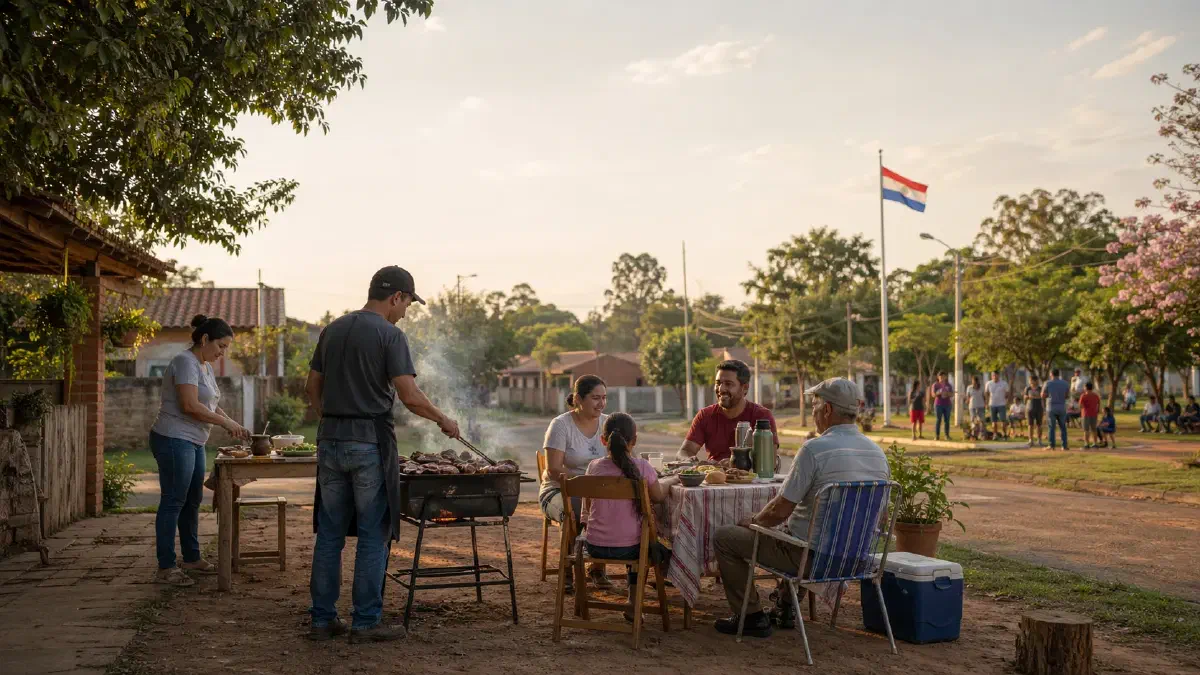

On Friday, May 1, 2026, it quickly becomes clear in Paraguay that this is not just an ordinary day. Labor Day, known locally as Día del Trabajador, is a fixed nationwide public holiday , and you notice that in everyday life. Many errands are postponed, authorities and banks remain closed, and numerous shops have changed opening hours or do not open at all.
At the same time, May 1 is a day to pause and breathe for many families. Often, the smell of Asado is already in the air by late morning, while the streets in many places become quieter than usual. In this article, you will learn what is behind this holiday, why it matters in Paraguay, and what you should practically expect when it comes to shopping, travel, invitations, and everyday life.
Quick Facts at a Glance
- Date: Friday, May 1, 2026, which means a long weekend
- Fixed or movable: fixed holiday, every year on May 1
- Status: official nationwide public holiday (Feriado Nacional)
- Who celebrates: workers, families, schools, and public life across the country
- Why: the day recalls the importance of work, workers’ rights, and social recognition
- In short: Many errands are only possible in a limited way on this day. At the same time, May 1 is a quiet family and public holiday for many people, with food, visits, or small gatherings.
🧭 What and When Is Labor Day in Paraguay?#
Labor Day, known locally as “Día del Trabajador,” falls firmly on May 1 every year in Paraguay. In 2026, that is a Friday, creating a long weekend for many people. That makes the holiday not only culturally interesting, but also important for everyday planning: shopping, visits to authorities, travel, or visits are better taken care of or prepared in good time.
In terms of meaning, Día del Trabajador stands for the recognition of work, social dignity, and the importance of the people who carry the country’s everyday life. For many, it is also a day to pause after often demanding workweeks and an opportunity to spend time with family or friends. In everyday life, the holiday becomes visible through closed authorities, less activity in many places, and the typical gathering around food, grilling, or visits.
In Paraguay, “Día del Trabajador” is the official and very commonly used name for May 1. Literally, it means “Day of the Workers,” but in Spanish it generally refers to the working person or employee as a whole. In English, “Labor Day” is the more natural and common form in this context.
Historical Background: How Did Labor Day Come to Paraguay?#
Internationally, May 1 recalls the workers’ protests in Chicago in 1886, where the fight for the eight-hour workday was at the center. Paraguay also picked up this idea early on. The first official observance took place as early as 1906 and was driven by the trade unions emerging at the time. Over time, what began as a more political day of remembrance became a firmly established holiday in public life. That historical meaning still resonates today, even though many people experience the day mainly as a free holiday spent with family and friends.
🪅 How Is Labor Day Perceived and Lived in Society?#
Labor Day is clearly noticed almost everywhere in Paraguay, but it is not lived in the same way everywhere. Depending on the place, family, and setting, the holiday can feel very different.
How people talk about the day: Many see May 1 not only as a free holiday, but also as a day when work is given dignity and deserves respect. Depending on the environment, the focus may be more on family and everyday life or more strongly on the political meaning.
Emotional and family significance: For many, this day is about recognizing work. This does not only mean the workplace itself, but also the daily effort to provide for the family and carry everyday life. In private settings, the holiday often feels calm and communal for that reason.
Public atmosphere: Depending on the place and environment, May 1 in Paraguay can feel quite different. In some families, shared food and time together are the main focus. In larger cities, the day can become more visibly political, for example through demonstrations or public speeches. In other places, the church-related and religious side of the holiday is more noticeable because the day is also connected with San José Obrero.
🧩 What Does This Mean in Practical Everyday Life?#
Shopping and Errands#
On May 1, you should not leave important errands in Paraguay until the last minute. Many authorities and banks remain closed, and numerous shops have changed opening hours or do not open at all. Anyone who wants to plan holidays here more calmly should also know how Shopping in Paraguay generally works in everyday life.
Supermarkets and despensas: Large supermarkets, smaller shops, and neighborhood despensas handle the holiday differently. Many remain closed or open only for shortened hours. If you want to be on the safe side, it is better to shop no later than the day before.
Shopping centers, restaurants, and mercados: The same applies here: depending on the city and operator, the holiday can look very different. Some areas remain closed, others open later or only partially. It is best to check current information directly on site or on social media pages.
Banks, money, and authorities: Banks and public offices remain closed. ATMs and digital payments generally continue to work, but it still makes sense to plan some cash in advance.
Pharmacies, gas stations, and other important errands: Especially when it comes to medication, fuel, or urgent shopping, you should not wait until the holiday. Which places are open often depends on the area and the respective operator.
Traffic & Travel#
Since May 1, 2026 falls on a Friday, many people use the long weekend for visits, outings and other activities, or trips into the interior.
Roads and travel: Before holidays and long weekends, important exit roads can get busier, especially in the afternoon and evening of the day before. If you are planning a longer trip, an early start is worth it.
Buses, taxis, and ride platforms: In public transport, you should expect holiday service rather than normal weekday schedules. Some connections run regularly, others less often. Waiting times for taxis, Bolt, or Uber can also be longer depending on the time and place.
Long-distance buses and fuel: If you want to travel overland, it is better to check departures directly with the respective connection beforehand. Refueling is also more relaxed if you do it the day before.
Schools / Work / Authorities#
Schools, authorities, and most public offices remain closed on May 1. Depending on the school, there may be smaller programs or performances in the days before, where professions, work, and everyday life are addressed. On the holiday itself, however, the pause from normal routines is clearly in the foreground.
Where Is Labor Day Especially Noticeable?#
Labor Day is especially visible in Asunción. There, marches, demonstrations, and public speeches by trade unions and workers’ organizations are often at the center on May 1. Topics often include wages, working conditions, social security, and the situation of many people in informal or insecure employment.
Outside the capital, the holiday often feels less political and more family-oriented or locally shaped. In smaller towns and rural areas, spending time with family or friends is usually the main focus.
Depending on the place, May 1 can also have a religious or local character, because it also falls on the memorial day of Saint Joseph the Worker. In places where San José Obrero is venerated as a patron saint, masses, processions, or smaller programs with music and community gatherings are often part of the day.
In border cities such as Ciudad del Este, the holiday is also noticeable, even though the rhythm there can be somewhat different because of trade and border traffic. Many shops remain closed or operate only in a limited way, while individual areas may still be open.
If you want to know what is actually planned in your city or region, it is worth checking the Facebook pages of the Municipalidad, local radio stations, pages of churches or parishes, trade unions, event venues, and regional media. Around holidays, much is announced locally rather than bundled nationwide.
Typical Food & Drinks on This Day#
On May 1, sharing food plays an important role in Paraguay. In many families and neighborhoods, an Asado is simply part of the holiday. Not everywhere is it turned into a big event, but eating together, grilling, or at least putting something special on the table is very typical for this day.
Asado as the classic: Grilled meat is especially common, for example Costilla (ribs) or Chorizo (sausage). When several family members or friends come together, the grill is often at the center.
Typical side dishes: People often serve Mandioca, Sopa Paraguaya, or Chipa Guasu . A simple salad, for example with tomatoes and onions, also goes well with it and adds a bit of balance.
Drinks: Depending on the group, there may be cold beer, soft drinks, or Tereré. Especially at family or neighborhood gatherings, sharing Tereré is also a very natural part of the day for many people.
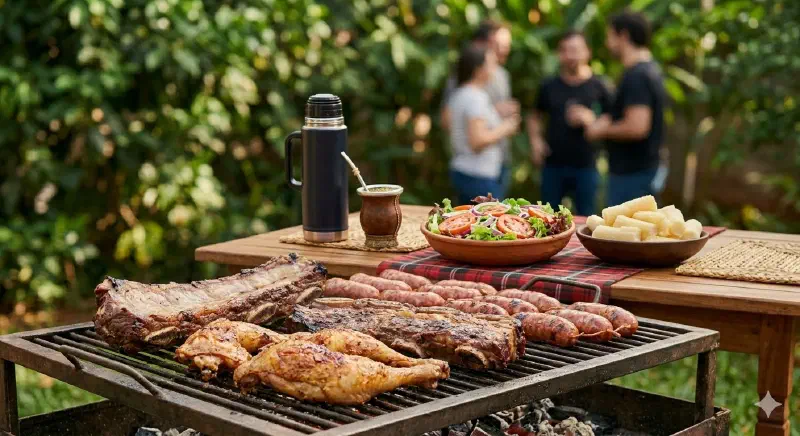
- If you are invited: Often, you will first be offered something to drink and later grilled meat with typical side dishes. In some families, it is a very classic Asado; in others, it is simpler, depending on what can be prepared. Eating together is often more important than having a fixed menu.
Tip You can almost never go wrong with a small gesture, for example drinks, bread, salad, or a side dish.
🤝 Joining In as a Visitor: What Is Polite and What Is Better Not?#
Anyone experiencing May 1 in Paraguay does not need to know a big program. What matters more is having a feeling for the setting. Depending on the place, the day may be more family-oriented, local, or political. With a bit of attention and respect, you can usually get along well almost anywhere.
✅ Do#
Accept invitations: If neighbors, friends, or colleagues invite you to eat or to an Asado, it is usually meant warmly and is a good opportunity to get to know the holiday and the family better.
Bring a small contribution: Drinks, bread, salad, ice, or a side dish are usually good choices. It does not need to be anything big, just a friendly gesture.
Observe the setting: In family gatherings, things are often relaxed; at church-related or official occasions, they are usually a bit more reserved. Take a quick look at how others behave and adapt to that.
Think about heat and sun: Even in early May, it can still get warm during the day. If you are outside for longer, water, sunscreen, and light clothing are a good idea.
⛔ Don’ts#
Do not treat everything like an event: For many people in Paraguay, May 1 is not an outing program, but a real holiday with personal, family, or social meaning.
Do not take photos everywhere without asking: At private gatherings, in churches, or at demonstrations, it is better to ask first or at least be discreet.
Do not rely on exact times: If you are invited, the day often unfolds more loosely than in Germany. Food, conversations, and arrivals often take some time. In my experience, such gatherings often start more casually than announced. If 12:00 is mentioned, that does not automatically mean everyone is already there exactly at noon. So far, we have usually been completely within the expected range when arriving 10 to 15 minutes later.
Do not plan everything at the last minute: Shopping, refueling, or other errands should be organized in advance whenever possible so that you do not have to improvise unnecessarily on the holiday.
A Small Etiquette Guide#
At a private Asado, clothing is usually simple and suitable for everyday wear. But if you attend a mass, procession, school event, or official memorial event, you are on the safe side with neat, rather modest clothing. In family gatherings, it often comes across better to join in first and get a feel for the tone of the day instead of immediately trying to shape everything yourself. If you behave respectfully, show interest, and are not pushy, you usually leave a good impression.
💬 Cheat Sheet: Useful Phrases for Getting Around#
Spanish 🇪🇸#
“¡Feliz Día del Trabajador!”
English: “Happy Labor Day!”“¿Qué va a estar abierto hoy?”
English: “What will be open today?”
Guaraní 🇵🇾#
“Vy’apavẽ mba’apohára árape.”
English: “Happy / congratulations on Labor Day.”“Oñemomorã ko árape Mba’apohára Ára.”
English: “Today Labor Day is being observed.”
🗓️ The Most Important Things for Your Planning#
So that May 1 in Paraguay stays relaxed, a little preparation is often enough.
- Shop in advance: It is best to buy groceries, drinks, ice, bread, or meat for grilling no later than April 30.
- Refuel in good time: In many places, refueling is possible even on the holiday, but it is more relaxed beforehand.
- Have some cash with you: Cards and digital payments often work, but cash is still useful for smaller purchases.
- Check travel plans in advance: If you are on the move, check connections, meeting points, or departure times beforehand.
- Think about sun and water: Even in early May, it can still get warm during the day.
- Stay flexible with timing: If you are invited somewhere, try not to plan too tightly. Holidays often unfold more loosely than a fixed schedule.
❓ Frequently Asked Questions (FAQ)#
When is Labor Day in Paraguay in 2026, and is May 1 always a public holiday?
Are supermarkets, shopping centers, or smaller shops open on May 1?
Do people work on Labor Day in Paraguay?
On May 1 in Paraguay, is it more about family celebrations or political demonstrations?
What should I bring if I am invited to an Asado or a meal?
Conclusion#
Día del Trabajador is an important part of Paraguay’s everyday and holiday culture. It shows how closely work, family life, and social recognition are connected here. That is exactly what makes this holiday so special. Anyone who wants to understand Paraguay beyond the surface and better grasp everyday life here gets an honest glimpse on this day of what holds the country together for many people.
If you would like to keep track of the other public holidays and possible long weekends after May 1, you will find them in our overview of public holidays in Paraguay.
Share & support
“Would you have thought that May 1 in Paraguay connects family, work, and community so closely?” Then feel free to give this article a like and share it with other South America enthusiasts — and help spread the meaning of Paraguayan holidays and their traditions.
- All dates at a glance: Holidays in Paraguay 2026
- More holidays in May: