
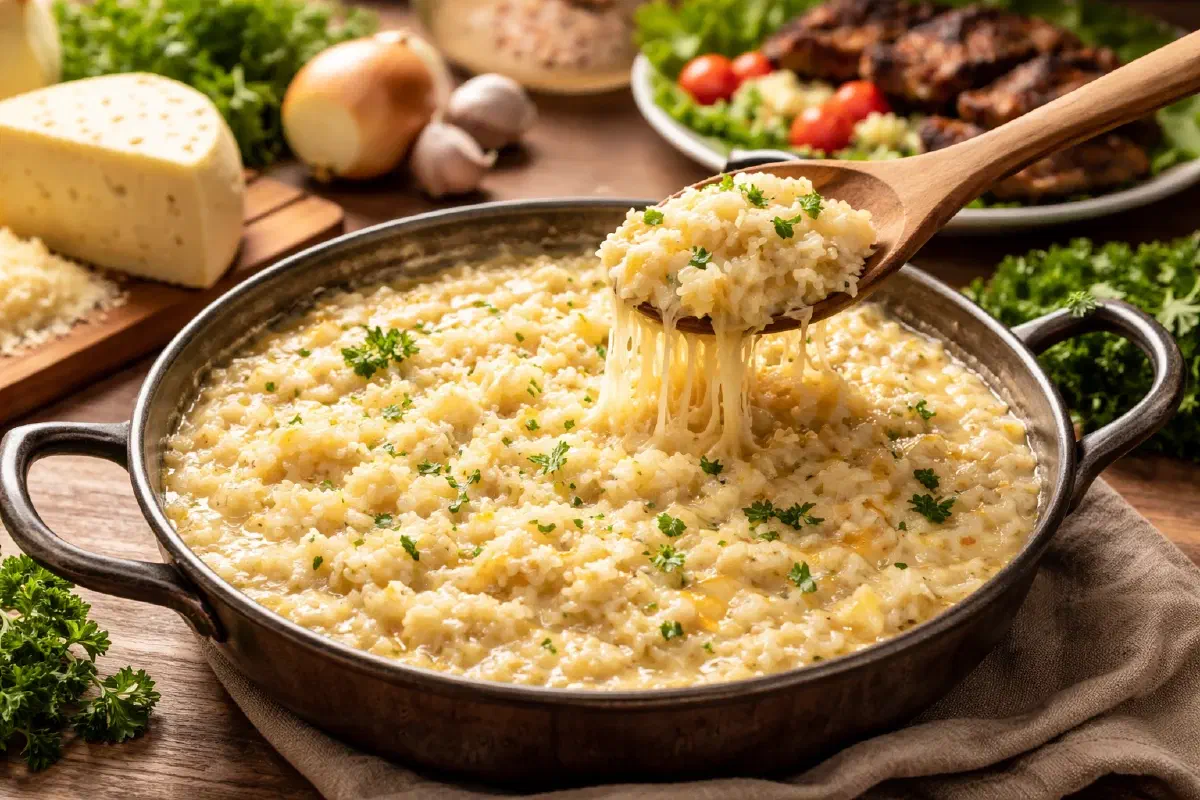

Arroz kesu sounds very simple at first: rice with cheese. But that is exactly what makes this Paraguayan classic so good. With only a few ingredients, you get a creamy cheese rice that is warm, filling and wonderfully easy - real comfort food that should not be missing from any family recipe book in Paraguay.
You can eat it straight from the pot, serve it as a classic side dish with Asado, or enjoy it as a quick vegetarian main dish on cooler days. Arroz con queso, as the dish is called in Spanish, is one of those easy Paraguayan recipes that works well in everyday life and simply makes you happy. To help you make it well, here is a step-by-step guide, useful ingredient swaps and practical tips, so your cheese rice turns out soft and creamy.
📝 Easy Arroz kesu Recipe - Step by Step#
At a glance
- Difficulty: Easy
- Preparation time: about 25 minutes
- Servings: 4 people (as a side dish)
🛒 Ingredients you need#
Most ingredients for this recipe are simple, practical and often already in the pantry. The overview below shows you what you need for the basic recipe and what you can add if you like.
Main ingredients#
- 1 cup rice, for example long-grain rice or short-grain rice
- 2 cups water
- 2 cups whole milk
- 200 g to 300 g Queso Paraguay or a suitable alternative
- 1 small onion, finely diced
- 1 tbsp oil or butter
- Salt to taste
Optional ingredients#
- A splash of cream for extra creaminess
- 1 small garlic clove for more flavor
- 1 bay leaf for more aroma
- A little fresh parsley or spring onion for serving
Which ingredients can you replace?#
Flexible alternatives depending on availability or diet
Arroz kesu is naturally gluten-free and vegetarian. This makes the recipe a good choice if you are looking for a simple gluten-free or vegetarian dish from Paraguay. If you use broth, choose a gluten-free vegetable broth if needed.
Cheese: Instead of Queso Paraguay, you can also use Queso Cremoso or Queso Fresco in Paraguay. In Germany or Europe, a mix of mild mozzarella and a little feta or young Gouda comes quite close.
Liquid: The classic version uses water and milk. For more flavor, use a little mild broth. For a lighter version, use a little less milk.
Lactose-free: Lactose-free milk and a mild, well-tolerated cheese work well. Plant milk is possible, but it changes the typical taste.
Kitchen tools you need#
- A medium-sized pot
- A cooking spoon, preferably wooden
- Knife and cutting board
- Measuring cup or cup
👩🍳 Step-by-step preparation#
Preparation#
- Finely dice the onion.
- Crumble the Queso Paraguay roughly with your hands or cut it into small cubes.
- Have water, milk and rice ready. Use the same cup for rice and liquid, so the ratio is right.
Cooking#
- Heat oil or butter in a pot and sauté the onion until it is translucent. It should become soft, but not brown too much.
- Add the rice and stir briefly, so it mixes with the fat and onions.
- Add the water and let the rice simmer over medium heat.
- When the water is almost absorbed, add the milk and stir regularly so nothing sticks to the bottom of the pot.
- When the rice is soft and creamy, remove the pot from the heat. The texture may still look a little more liquid, because the rice thickens while resting.
- Stir in the chopped cheese, put the lid on and let the rice rest for about 2 minutes.
- Season with salt and serve warm right away.
💡 Practical tips for Arroz kesu#
Tips for texture and cheese
- Heat: Do not cook the rice too hot once the milk is in the pot. Stir regularly so nothing sticks to the bottom.
- Texture: A good cheese rice should not be too dry. It may still look slightly moist just before serving.
- Cheese: Add the cheese only at the end. This way, small soft pieces remain and the cheese does not disappear completely into the rice.
- Resting: Let everything rest briefly at the end. The rice will thicken a little and become creamier.
- Reheating: If you reheat leftovers, add a small splash of milk, water or broth. This makes it softer again.
Nutrition overview#
The values refer to one serving as a side dish, with 4 servings in total. Depending on the amount of cheese and the texture, one serving is about 220 to 280 g.
- Calories: approx. 430 to 505 kcal
- Protein: approx. 18 to 24 g
- Carbohydrates: approx. 45 to 46 g
- Fat: approx. 19 to 24 g
- Fiber: approx. 1 g
The nutrition values are average values and can vary depending on the ingredients, amount of cheese and portion size.
🍽️ What goes well with Arroz kesu?#
Arroz kesu is versatile: You can eat it plain, serve it as a creamy side dish with many meals, or turn it into a simple main meal with egg, salad or meat.
- Plain: Warm from the pot, while the cheese is still soft.
- Classic: With Asado, meaning grilled meat.
- Hearty: With Milanesa, meaning breaded meat, fried chicken or mild fish.
- Simple: With fried egg or scrambled egg as a quick meal.
- Fresh: With green salad or tomato salad.
- Paraguayan: Tereré, especially on warm days.
- Refreshing: Fresh juice or Limonada.
- Warming: Mate cocido or herbal tea on cooler days.
- With grilled meat: A light red wine.
🔄 Recipe variations#
The basic dish is simple and easy to change. Some variations make it heartier, others mainly change the color, taste or texture.
Known variations#
With bacon or chicken: The creamy rice with cheese is usually made without meat in the classic version. If you want it heartier, you can add fried bacon cubes or small chicken strips.
Vegan version: For a plant-based version, use margarine instead of butter, plant milk and a vegan cheese alternative that melts well. Nutritional yeast sauce is also an option and adds a savory flavor. A few drops of lemon juice add freshness and lightly remind you of the mild acidity of Queso Paraguay.
Modern variations#
With pumpkin: In modern cooking, pumpkin is also often added. The pumpkin makes the rice a little sweeter, softer and gives it a stronger color.
🇵🇾 Background information about the recipe#
What makes Arroz kesu special?#
Arroz kesu, also called Arroz quesu or Arroz con queso, is a traditional Paraguayan rice dish. The name is Jopara, a mix of Spanish and Guaraní, and literally means “rice with cheese”.
And that is exactly what it is about: soft-cooked rice is combined with Queso Paraguay to make a hearty, creamy dish. Unlike a classic rice side dish, Arroz kesu should not be loose and grainy, but soft, juicy and slightly creamy.
What role does Arroz kesu play in Paraguay?#
In 2018, DINAPI included Arroz kesu alongside other traditional foods in an official list of Paraguay’s gastronomic and culinary heritage ↗.
Arroz kesu is also a fixed part of Paraguayan everyday cooking: few ingredients, simple preparation and many ways to serve it. It works just as well as a creamy side dish as it does as a simple main meal. It also shows what many everyday dishes are all about: warm, filling food without much effort.
On cooler days especially, many people see it as real comfort food and a popular winter dish from Paraguay.
The dish also has its place beyond everyday meals. During Holy Week and especially on Good Friday, Arroz kesu is a simple meat-free option in some families.
Which ingredients shape Arroz kesu?#
Like many traditional dishes in Paraguay, Arroz kesu combines ingredients that became part of regional cooking over a long time. Rice came into the country through European influences, while dairy products and cheese became important in everyday cooking through cattle farming. Today, these basic ingredients are still part of the typical everyday pantry in many Paraguayan homes.
The Queso Paraguay is especially important. It has a mild, slightly tangy cheese flavor and makes the rice not only soft, but also hearty and creamy. The cheese does not melt away completely. It stays in small, soft pieces or forms light strings when served. This is exactly what makes the texture of Arroz kesu so typical.
❓ Frequently asked questions#
Which rice is best for Arroz kesu?
What is a good substitute for Queso Paraguay?
Is Arroz kesu gluten-free and vegetarian?
Can I prepare Arroz kesu ahead of time?
Why does my Arroz kesu become too dry?
How do I store Arroz kesu?
How do I reheat Arroz kesu without making it dry?
Final thoughts#
Arroz kesu shows why simple Paraguayan everyday cooking has so much charm. Rice, milk and cheese do not become a big festive meal here, but something even better: a warm, creamy meal that warms you from the inside on cooler days.
When food needs to be quick, or when family suddenly comes by, this cheese rice fits perfectly. It is also a filling side dish for Asado in the cooler season and comes to the table without much effort.
So if you are looking for a simple, quick rice dish from Paraguay, Arroz kesu is a good place to start.
Have fun cooking and buen provecho!
Looking for another classic side for an asado or family meal? Try Chipa Guasu. This moist corn casserole also brings plenty of cheese to the table, but tastes completely different from Arroz Kesu. You’ll find more ideas among our Paraguayan side dishes.
Share & support
Did this traditional Arroz kesu recipe inspire you and make you curious about Paraguay? Then feel free to give this post a like and share it with other South America fans - and help make Paraguay’s culinary variety more visible.
Reply by Email