
🍽️ What is Tropical Ceviche?#
Ceviche originally refers to a dish made from raw fish that is denatured by the acidity of citrus fruits. The Tropical Ceviche variation expands this principle with a wonderful component: the sweetness of ripe Paraguayan fruits.
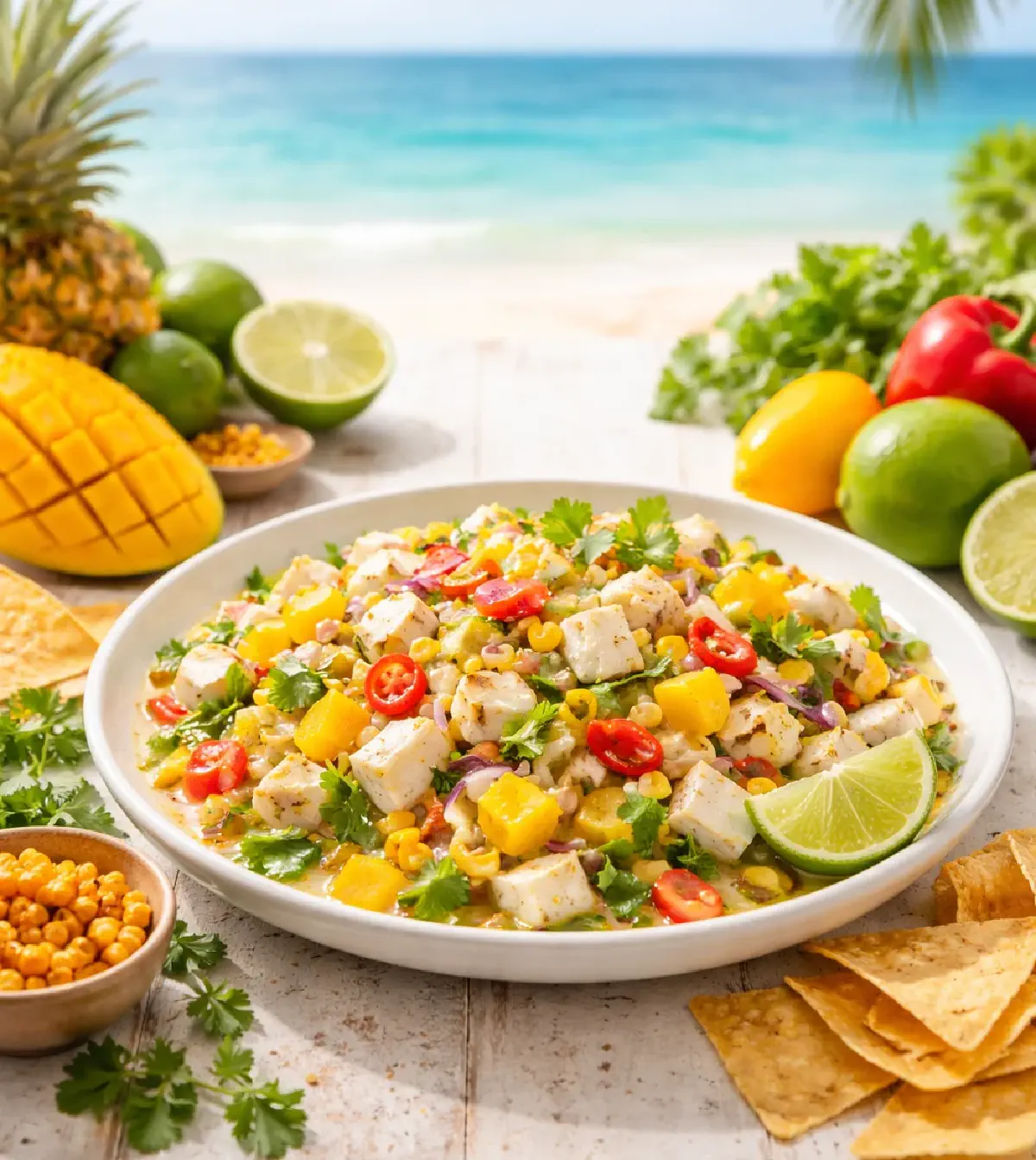
This creates a colorful composition that stands out through its acidity and freshness. The combination of raw fish, exotic fruits such as mango or pineapple, and additions like colorful bell peppers (Locotes) makes the dish a visual highlight on every plate. Because of this aesthetic appeal, the dish is also often served in Paraguay as an elegant starter for special occasions, such as Valentine’s Day. The fish is not heated, but denatured solely by the acidity of limes.
Want to try the recipe right away!
Go directly to the recipe🇵🇾 The cultural tradition behind Tropical Ceviche#
Paraguay may be a landlocked country, but it has enormous river systems such as the Río Paraguay and the Río Paraná. The tradition of eating fish cold or marinated has become established especially in urban centers such as Asunción and Encarnación.
Ceviche in particular has developed into a true symbol in modern fusion cuisine in recent years. It combines the traditional treasures of the region with a light, contemporary way of preparation.
Historical origin#
The basic idea of ceviche comes from the coastal regions of South America, especially Peru. Through cultural exchange and migration, this style of preparation reached the heart of the continent. Here, the recipe was adapted to local conditions, with residents using sour limes from their own gardens and fish from local rivers.
Importance in regional cuisine#
In a country where the thermometer often rises above 40 degrees, heavy meat dishes at lunchtime can be a challenge for the circulation. Tropical Ceviche offers a welcome change. Today, it is considered a sign of modern, health-conscious eating in Paraguay and is gladly served at social gatherings by the pool or on the terrace.
In Paraguay, the quality of the fish often determines the entire culinary experience, which is why it is best to buy the fish directly at the market in the morning.
A closer look at the main ingredients#
For a successful Tropical Ceviche, two components are crucial: the quality of the protein and the perfect ripeness of the fruit.
Fish and seafood - the foundation#
In Paraguay, we often use locally farmed tilapia or the highly valued surubí. Tilapia is ideal because its flesh stays firm and absorbs the flavor of the marinade well. Fish provides valuable omega-3 fatty acids and high-quality protein, making it a light alternative to the ever-present beef.
Anyone who prefers a more luxurious version often adds shrimp (camarones), which gives the dish extra texture and color.
Other special ingredients: mango and coriander#
Besides the fish, mango plays the leading role in the tropical version. During harvest season, the trees in Paraguay are so full that you can find the fruit on every street corner. Pineapple can also be used as an alternative.
Fresh coriander is also used - known in Paraguay as Kuratũ - and it is essential for the authentic aroma.
Characteristics#
For this recipe, the mango should still have a certain firmness. An overripe, overly soft fruit would fall apart in the acidity of the limes and affect the appearance of the dish. The combination of the sharpness of red onions or chili, the authentic aroma of coriander, and the sweetness of the fruit creates the typical flavor profile.
Recipe for Tropical Ceviche - step by step#
- Difficulty: Easy
- Preparation time: approx. 45 minutes
- Servings: 4 people
📝 Main ingredients#
- 600 g firm fish fillet (for example tilapia or surubí or international white fish)
- 1 large, firm mango
- 6 to 8 limes (freshly squeezed juice)
- 2 red onions
- 1 bunch of fresh coriander
- 1 red chili pepper
- Salt and a pinch of pepper
Optional ingredients#
- 100 g peeled and briefly blanched shrimp
- 1-2 colorful bell peppers (Locotes)
- A handful of roasted corn kernels for crunch
- A splash of olive oil to round off the acidity
- Some diced avocado for extra creaminess
Substitutions#
This dish is naturally gluten-free and lactose-free.
Instead of tilapia or surubí: Pike-perch, sea bream, sea bass, or cod → What matters is that the fish is absolutely fresh and has firm flesh. If you cannot get fresh fish or do not like it, you can also work exclusively with briefly blanched shrimp.
Instead of mango: Fresh pineapple → contains enzymes that make the fish soften faster.
Instead of coriander: Flat-leaf parsley or a mixture of mint and basil → the authentic character may change slightly.
Required kitchen equipment#
- A very sharp knife (important for clean fish cubes)
- A large glass bowl (metal can react with the acidity)
- A citrus press
- Cutting board
👩🍳 Step-by-step preparation#
Preparation#
First, rinse the fish thoroughly under cold water and pat it dry with kitchen paper.
Cut the fillet into even cubes of about 1.5 cm.
Peel the red onions and cut them into very thin strips (julienne). Peel the mango and cut the flesh into cubes as well, ideally slightly smaller than the fish pieces. Do the same with the bell pepper - the bell pepper cubes should be about half the size of the fish pieces.
After cutting, place the onion strips in ice-cold water for ten minutes so they lose their aggressive sharpness and stay nice and crisp.
Preparation / curing process#
Put the fish cubes into the glass bowl and season them generously with salt.
Squeeze the limes and pour the juice over the fish until it is almost completely covered.
Let the fish rest in the refrigerator for about 15 to 20 minutes until the flesh turns whitish and opaque.
Tip: Add 2-3 ice cubes directly to the liquid to keep the leche de tigre ice-cold.
Add the drained onions, the finely chopped chili, and the mango and bell pepper cubes.
Carefully fold in the freshly chopped coriander.
Taste once more with salt and serve the dish immediately while it is still ice-cold.
Make sure not to leave the fish in the lime juice for too long, otherwise the flesh will become tender and dry. Twenty minutes is often the ideal timing.
🔄 Variations of the recipe#
With meat or fish#
In Paraguay, people often experiment with different types of fish. The version with surubí strips is especially elegant.
Vegetarian / vegan version#
Ceviche de Palmitos is a fantastic local alternative. Here, hearts of palm are sliced and marinated like fish. This version is very popular among residents who prefer a plant-based diet or want to skip fish during intense heat. Alternatively, you can also use oyster mushrooms.
Modern or creative interpretations#
Some chefs in Asunción now add a splash of passion fruit juice to the lime marinade. This intensifies the tropical aroma and gives the sauce, known as “leche de tigre”, a bright yellow color and a complex sweetness. Others refine the ceviche with a splash of tomato juice, moving it in the direction of a “ceviche de carretilla”.
What goes well with Tropical Ceviche?#
To make your meal perfectly rounded, here are a few ideas for side dishes and drinks that go well with it.
- Mandioca: Classic boiled cassava is the neutral companion par excellence.
- Batata: Sweet potatoes from the grill or oven balance out the acidity.
- Chipa Guasu: A piece of this savory corn cake goes surprisingly well with it.
- Tereré: The national drink with lots of mint is the ideal thirst quencher.
- Clericó: A Paraguayan fruit punch for festive occasions.
- White wine: A dry Sauvignon Blanc pairs well with the lime.
- Lemonade: Freshly squeezed with a touch of ginger or with mint and ice.
Nutritional overview#
The following values refer to one portion of about 250 g of the finished dish.
- Calories: 210 kcal
- Protein: 28 g
- Carbohydrates: 18 g
- Fat: 4 g
- Fiber: 3 g
These nutritional values are average figures and may vary depending on the type and amount of fish used as well as the ripeness of the fruit.
❓ Frequently asked questions (FAQ)#
Which fish can I use in Europe / America as an alternative?
Which fish is best to use in Paraguay?
Can I still eat the ceviche the next day?
Is the fish really 'done' after 20 minutes in lime juice, or is it still raw?
What happens if the fish stays in the acid too long?
Is frozen fish suitable for ceviche?
Can I briefly fry or boil the fish as well?
What do I do if it is too sour?
Can pregnant women or children eat ceviche?
Conclusion#
Whether as a romantic starter on Valentine’s Day or as a cool rescue on a hot afternoon in Paraguay - Tropical Ceviche is a feast for the senses. The preparation does not require great culinary talent, only respect for fresh ingredients. Try it next hot weekend and bring a piece of South American joie de vivre to your plate.
Share & support
Did this Tropical Ceviche recipe inspire you and spark your curiosity about Paraguay? Then feel free to give the post a like and share it with other South America enthusiasts - helping make Paraguay’s culinary diversity more visible.