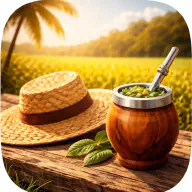
Holy Week, known in Paraguay as Semana Santa, and the Easter celebration that follows (Pascua) are far more than just a string of days off. For many families, they form the emotional and cultural heart of the year, a time when public life noticeably slows down. Anyone who lives in Paraguay or visits the country quickly notices that these days are shaped by a deeply rooted mix of Christian faith, lived traditions, family time, and shared rituals such as baking chipa.
Date: Movable (March or April), beginning with Palm Sunday.
Status: Official holidays on Maundy Thursday and Good Friday, while the whole week is culturally significant.
Who celebrates: The whole country celebrates, with a focus on family reunions and the Catholic Church.
Why: In remembrance of the suffering, death and resurrection of Jesus Christ.
Peak: Wednesday evening to Good Friday, as well as the festive Easter Sunday.
Short conclusion: The cities empty out and the countryside fills up. A reverent silence takes over, which turns into a large family celebration on Sunday.
🧭 What is Holy Week in Paraguay (Semana Santa)?#
Holy Week covers the period from Palm Sunday to Easter Sunday. In Paraguay, this week means a massive movement of people from the capital Asunción out into the rural interior. For many families, traveling to visit relatives is a completely natural part of the week, so they can keep old customs alive together. It is a time of inward reflection and, above all, a time of community. The religious component is complemented by strong social and culinary elements.
Here are the most important stages of the week:
- Palm Sunday (Domingo de Ramos): The entry of Jesus into Jerusalem is celebrated with blessed palm fronds (Pindó).
- Holy Wednesday (Miércoles Santo): The beginning of the major travel wave. Preparations for the big family gathering and the holidays are completed. In some households, cooking and baking also begin at this point.
- Maundy Thursday (Jueves Santo): A very family-centered day, with baking and cooking together at the center.
- Good Friday (Viernes Santo): The day of absolute silence, prayer and remembrance of the crucifixion.
- Easter Sunday (Pascua / Resurrección): The joyful high point of the week, marked by a generous feast in celebration of the resurrection.
For readers from outside Paraguay in particular, Semana Santa and Pascua often merge into one shared Easter term.
Semana Santa refers in Paraguay to the entire Holy Week - from Palm Sunday to Easter Sunday.
Pascua refers more specifically to Easter itself, above all Easter Sunday as the feast of the resurrection.
In everyday life, this distinction often becomes blurred: many people talk about Easter but mean the entire week with its traditions, family visits, church services and chipa baking.
Historical Background#
Its origins lie in Spanish colonization and the associated missionary work of the Jesuits and Franciscans. Over the centuries, these Catholic rites blended with the way of life of the Guaraní. The significance of remembering the suffering of Christ is deeply anchored in the Paraguayan soul. The country’s history has been shaped by hardship, which is why the passion story of the Bible often finds such strong resonance. Since the founding of the state, Holy Week has been a fixed point in the calendar, one that shapes identity and secures family unity.
🪅 How Society Experiences It & Traditions#
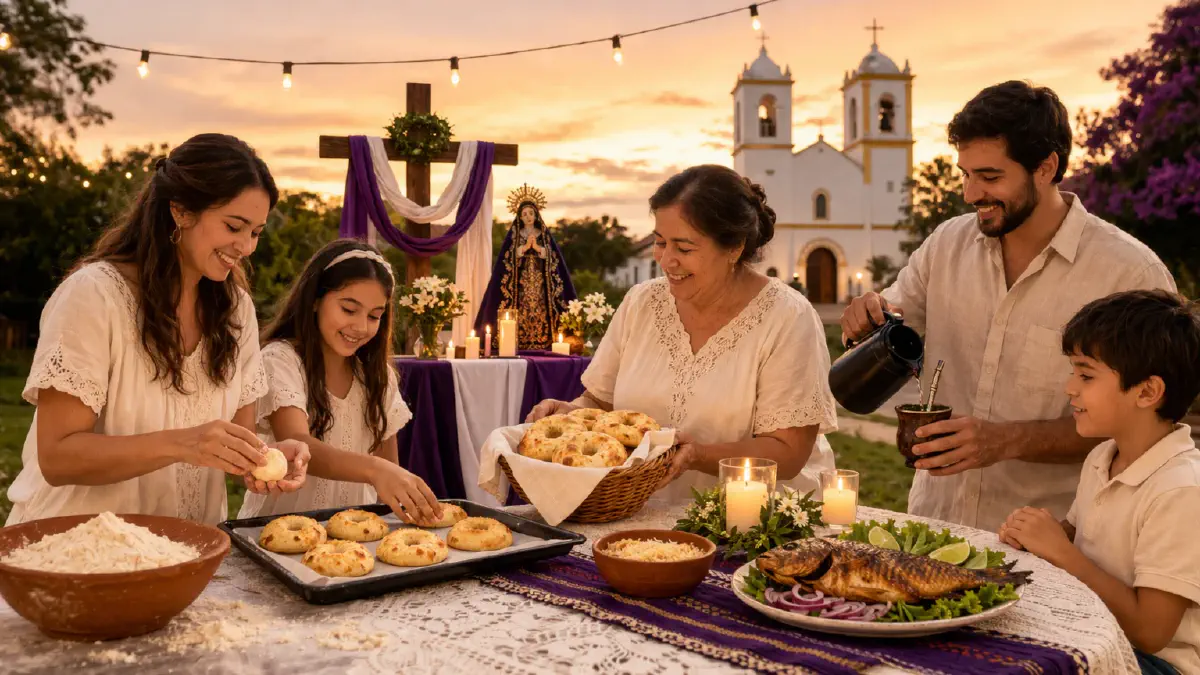
Semana Santa is treated with great respect. While Wednesday and Thursday are centered entirely around family, Friday is marked by silence and devotion. Easter Sunday is then celebrated with a large family gathering featuring asado and music.
Family Preparations#
In the days before Good Friday, the tatakua, the brick clay oven, is traditionally heated up. The whole family prepares the food together. You could almost call it a chipa marathon: on Wednesday and Thursday, families across the country bake chipa. These rings made from corn flour and cassava starch are the symbol of the week. The adults knead the heavy dough for the chipa, while the children enthusiastically shape the chipas into different forms. At the same time, the men often take care of preparing the meat for the big Sunday asado.
Good Friday (Viernes Santo)#
Good Friday in particular is regarded as a day of absolute silence and devotion. In many rural regions, no music is played on this day and people speak only quietly. Many people traditionally visit seven different churches or take part in local Stations of the Cross. These processions are often designed in a very emotional way and serve as a quiet reflection on the suffering of Christ.
Symbols and Atmosphere#
In churches, processions and religious depictions, purple as the color of penance and later white as the color of hope and resurrection often define the visual atmosphere of this time. In some places, you can hear the purahéi jahe’o, a lamenting and very moving chant that expresses the sorrow over Christ’s death. Especially on Good Friday, the mood in many places is quiet, collected and almost heavy - before it slowly begins to brighten again toward Easter Sunday.
Typical Food Around Semana Santa and Easter#
Food in Paraguay during Semana Santa and Easter is not a side issue, but part of lived tradition.
During Holy Week#
- Chipa Almidón: This classic pastry made from cassava starch, cheese and anise is baked in large quantities starting on Tuesday or Wednesday and shared with family, neighbors and visitors.
- Sopa Paraguaya and Chipa Guasu: These typical corn dishes are often prepared before Good Friday and are a natural part of the table in many families.
- Good Friday and fasting: Depending on the family, the region and personal religiosity, people may fast on Friday, avoid meat or simply eat very plainly. Some eat cold leftovers from the day before, while others deliberately prepare fish dishes. This is not completely uniform across Paraguay, but meals are often simpler and more restrained.
On Easter Sunday (Pascua)#
- Asado as a celebratory meal: After the quieter days, Easter Sunday is celebrated much more festively in many families. Meat often goes on the grill, and shared meals once again move to the center.
- Sweets for Pascua: Depending on the family, sweet Easter pastries or a Rosca de Pascua may also be part of the celebration - although they are less universal than chipa or sopa paraguaya.
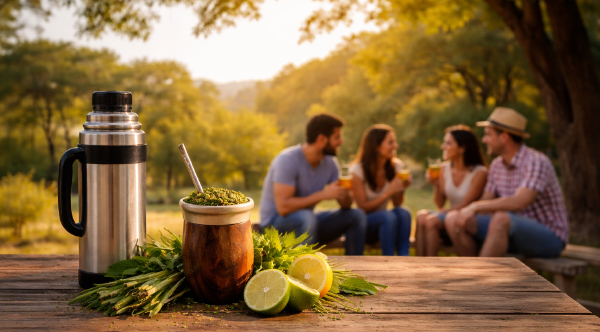
Tip: If you are invited to a Paraguayan family during this week, you will almost certainly be welcomed with fresh chipa and a cold tereré. Refusing chipa is considered impolite, because it is the result of many hours of shared work.
🧩 What Does This Mean in Everyday Life?#
Shopping and Errands#
The rhythm of the country changes during Holy Week.
- Supermarkets: These are normally open until Wednesday. On Maundy Thursday they often close earlier, and on Good Friday the large chains usually remain completely closed.
- Small shops: In recent years, we have observed that smaller private despensas in the neighborhoods often open for a few hours despite the holidays. This is very individual and varies by region. It is worth asking around in your immediate neighborhood.
- Pharmacies: It is helpful to have a small supply of medication, because small pharmacies and local shops are not reliably open everywhere.
- Banks & public offices: These often close by Wednesday midday and do not reopen until Monday. It may make sense to have some cash at home beforehand, rather than relying on individual ATMs during the holidays.
- Restaurants: In the cities, many restaurants are closed on Good Friday, while gas stations often remain the only place to pick up small essentials.
Traffic & Travel#
Traffic on Tuesday and Wednesday before Easter is extremely heavy.
- Long-distance buses and accommodation: Buses to the interior and to popular regions, as well as accommodation there, are often fully booked weeks in advance. Booking early is essential.
- City traffic: In Asunción, things are much quieter from Thursday midday onward.
- Roads: Anyone driving to the interior should fill up the tank in time and allow extra time and patience for traffic jams at toll booths.
Schools / Work / Public Offices#
Many schools run on a reduced schedule around Semana Santa; the official holidays in 2026 fall on Thursday, April 2, and Friday, April 3. Small internal celebrations are often held on Monday or Tuesday, when children bake chipa together.
Public offices and parts of the public administration may already have reduced hours from Wednesday onward; Maundy Thursday and Good Friday are definitely non-working days. For most workers (day laborers and those outside public administration), work usually comes to a halt no later than Wednesday afternoon.
Where in Paraguay Is It Especially Noticeable?#
Semana Santa is felt throughout the country, but some places and regions put special emphasis on it.
- Tañarandy in San Ignacio (Misiones) is one of the best-known Easter and Semana Santa experiences in Paraguay. In 2026, the event is once again part of the program. At nightfall, the procession of the Virgen Dolorosa moves along the Yvága Rapé, accompanied by thousands of candiles made from halved apepú fruits, antorchas and faroles. The celebration then ends in La Barraca, where the famous living tableaux showing scenes from the Passion of Christ are presented.
- Yataity (Guairá): The Circuito del Auténtico Ao Po’i shows how this traditional textile art is created, from cotton to embroidery.
- Cordillera / Eusebio Ayala: The gastronomic route Chipa Rapé is a fitting recommendation for anyone who wants to experience Easter traditions through food as well.
- Asunción and other cities: The Seven Churches route remains one of the best-known religious traditions of Holy Week. In 2026, it will even be offered again in Asunción as an organized bicycle tour.
- Rural areas: Anyone who wants to experience the quieter, more family-centered side of Semana Santa will often find it in the countryside - with Chipa Apo, local Stations of the Cross, small chapels and more deeply lived family rituals.
🤝 Joining In as a Visitor: Do’s & Don’ts#
✅ Do#
- Try the different kinds of chipa while they are still warm from the oven.
- Visit a local church to experience the special atmosphere and hear the purahéi jahe’o chant.
⛔ Don’ts#
- Avoid loud yard work or loud music on Good Friday.
- Do not expect quick service from public offices or service providers during this week.
- Do not underestimate the heat if you take part in processions or other events.
A Small Etiquette Guide#
- Modest clothing is very important in church.
- In rural areas, respectful and quiet behavior on Friday is highly valued.
- If you are invited to a meal, keep in mind that family comes first during this time. Sharing tereré is the perfect opportunity to start a relaxed conversation.
💬 Cheat Sheet: Useful Phrases for Getting Around#
Spanish 🇪🇸#
- "¡Felices Pascuas!"
English: “Happy Easter!" - "¿Ya prepararon la chipa?”
English: “Have you already prepared the chipa?"
Guaraní 🇵🇾#
- “Pascua vy’apave.”
English: “A happy Easter celebration." - “Hetereí ko chipa.”
English: “This chipa is very tasty."
🗓️ Planning Tips for Everyday Life and Travel#
- Check your supplies early and do larger shopping trips by Tuesday or Wednesday at the latest.
Tip: It is best to buy shelf-stable foods before Easter. Prices often rise during Easter week - especially for products in high demand such as eggs, fresh cheese (Queso Paraguayo), corn(flour), meat and fish.
- If you want to travel, fill up the tank in time and plan for heavier traffic and longer travel times on many roads.
- Long-distance buses and accommodation are often booked out early around the holidays - booking early is worth it.
- Since local events and opening hours can change at short notice, it is wise to check current information in advance.
The best way to experience this time is to adapt to the slower rhythm and remain open to community.
❓ Frequently Asked Questions (FAQ)#
Are all shops closed during Holy Week?
Can I buy fuel and withdraw cash on Good Friday in Paraguay?
Are pharmacies open during Holy Week?
When is the absolute high point of Holy Week?
Is participation in the processions free of charge?
Do I need to book accommodation in advance for Tañarandy or other Easter events?
Conclusion#
Anyone who experiences Easter in Paraguay quickly notices how closely family life, faith and a slower everyday rhythm belong together during these days. Semana Santa is the time when Paraguay visibly slows down and many families focus on what really matters. This may feel unusual at first for outsiders, but it offers a special insight into the country’s culture, religious traditions and family cohesion. Anyone who has smelled the scent of fresh chipa once will not forget Easter in Paraguay anytime soon.
📖 Further Reading#
- Overview of public holidays in Paraguay
- Food: Classic Easter Recipes
- All content about: Ostern
Did you already know this meaning of Holy Week? Do you know someone who would like to understand Paraguay better? Then feel free to give the article a like and share it with other South America enthusiasts. Help spread the word about Paraguayan holidays and their meaning.