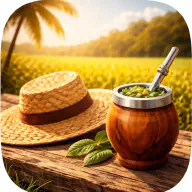
Easter is just around the corner, and in Paraguay that means a very special time. Holy Week, known here as Semana Santa, is for many people in the country one of the most important religious and family celebrations of the year. It is an intense time shaped by deep faith, lived traditions, family, and of course shared enjoyment.
Anyone who lives here quickly notices that during Semana Santa people do not simply cook. They prepare, bake together, eat, and share. Much of these days revolves around the kitchen, family, and being together. In Asunción and other larger cities, things often become noticeably quieter because many people travel to be with their families.
Unlike in many European countries, where the Easter Bunny often takes center stage around Easter, in Paraguay it is above all Semana Santa itself that shapes the atmosphere. At the same time, especially in cities, you now also see more modern influences such as chocolate Easter eggs, decorated sweets, or Easter baskets. In many shopping centers and also in some households, you can now find Easter decorations with bunny motifs or branches decorated with Easter eggs.
Depending on the place, processions, religious reenactments, or other events are an integral part of Semana Santa in Paraguay. A beautiful addition to the days off can be the Ao Po’i Rape in Yataity, where you can experience traditional Paraguayan craftsmanship.
But the heart of the holidays undoubtedly takes place in the kitchen.
📅 Holy Week (Semana Santa) in Paraguay: What the individual days mean#
Easter carries a different weight in Paraguay than it does in many countries in Europe or North America. The celebrations stretch across the entire week, with each day carrying its own meaning and culinary impact. From Palm Sunday to Easter Sunday, the rhythm of life changes noticeably. Many people travel to be with family, preparations are underway in the kitchens, and typical dishes are decided on days in advance.
Palm Sunday (Pindo Karai, Domingo de Ramos): On Palm Sunday, Holy Week begins liturgically. The week is ushered in with blessed palm branches. From a culinary point of view, it is often still a normal Sunday, but the preparations begin in people’s minds.
Monday and Tuesday: In many households, planning and preparation already begin on these days. Typical tasks include shopping and, in more traditional families, setting aside wood, gathering ingredients such as eggs, corn, milk, and suero (whey), and everything else needed for chipa and other Easter dishes.
Wednesday (Miércoles Santo): For many, the big wave of travel practically begins by Wednesday midday. From then on, the roads and bus terminals are very busy. Once visitors arrive, one thing is clear: it is time for Chipa Apó, making chipa together. People often work in large quantities. The chipa is shaped, baked, and later stored in baskets or carefully wrapped cloths so that it will last for the coming days.
Maundy Thursday (Jueves Santo): The day of Karu Guasú (the big meal, the last large and hearty meal before Good Friday). It is the main day for preparing food, because in many families no fire should traditionally be lit on Good Friday. People also often eat together already on this day. Typical is a traditional asado with side dishes. It has something of a family celebration, just without much fuss.
Good Friday (Viernes Santo): A day of quiet and reflection, which is much calmer for many families. Prayer, Via Crucis, visits to churches, or processions then play an important role. From a culinary point of view, people often fast or at least avoid meat and prepare lighter dishes instead. The foods prepared the day before are often eaten cold. In some families, fish is also served. But the way this is handled depends on each family’s traditions, personal religious practice, or the region in Paraguay (countryside or city), and there can be noticeable differences.
Easter Sunday (Domingo de Pascua): On Easter Sunday things become festive again. The day of the Resurrection is celebrated with a generous asado and great joy among loved ones. Sweet cakes such as Rosca de Pascua and, by now, more chocolate eggs are also part of it. Even if the latter is more of a younger and more urban influence.
Traditions and preparation during Holy Week#
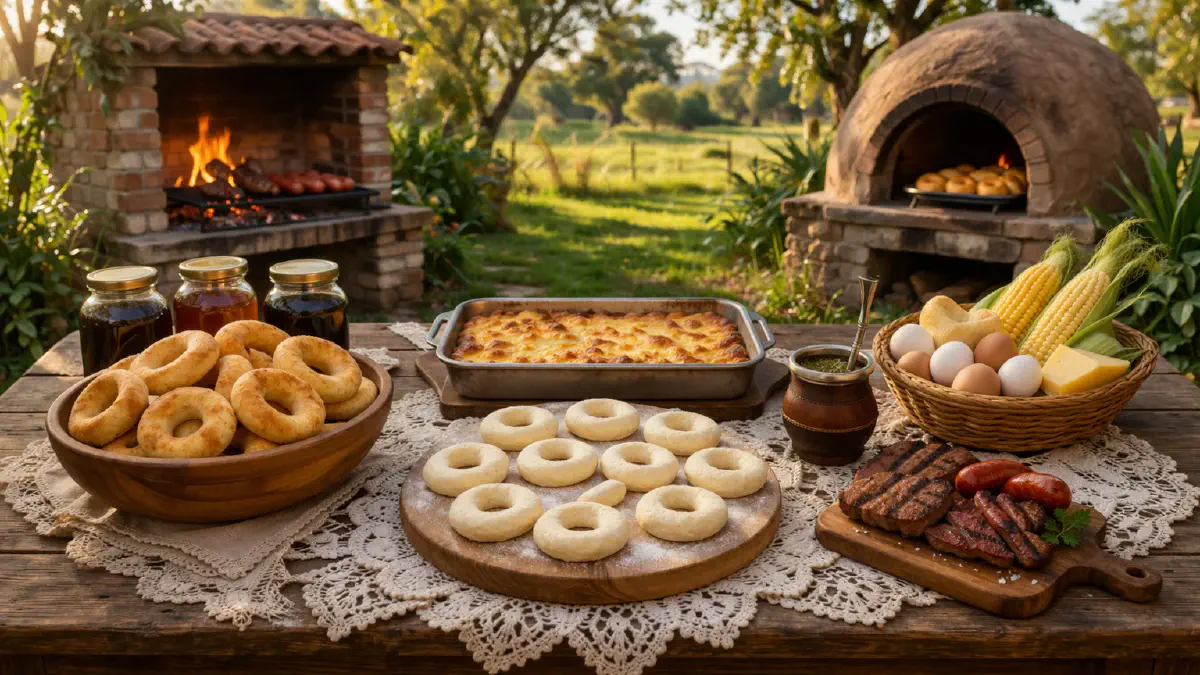
For many families in Paraguay, cooking together on Wednesday and Thursday is simply part of Semana Santa. It is not only about the food itself, but above all about being together. In many households, the traditional wood-fired oven, the Tatakuá, is heated up, and even the preparation has something festive about it.
Especially baking chipa (Chipa Apó) is an event for the whole family. Children shape little figures or animals out of the dough, while the adults prepare larger quantities for the coming days. Because many families either do not cook on Good Friday or cook only very sparingly, dishes that can be prepared ahead of time and still taste good later play an important role. That is exactly what makes Easter cooking in Paraguay so special: it is communal, practical for everyday life, and closely tied to family traditions.
Anyone living in Paraguay without their own farm or rural setup should buy the shelf-stable ingredients for Easter dishes early, because the prices of products such as eggs, fresh cheese (Queso Paraguay), cornmeal, meat, and fish usually rise noticeably during Holy Week. Products are also often sold out quickly, or there are long lines at market stalls.
⭐ These Easter recipes must not be missing in Paraguay#
Some dishes are almost always part of Semana Santa in Paraguay - depending on the family, in slightly different forms, but with very clear classics.
Chipa Almidón: The traditional cassava starch and cheese pastry that is baked in many families around Easter.
Sopa Paraguaya: The savory corn bake that naturally appears on the table at holidays.
Chipa Guasú: A juicy corn bake made with fresh corn.
Mbeju: A simple, savory cassava and cheese flatbread cooked in a pan.
Asado: Festive grilled food, often with beef, chicken, or pork.
Pira caldo or Chupín de surubí: Typical fish dishes that fit well with Good Friday.
Rosca de Pascua: The traditional sweet Easter pastry.
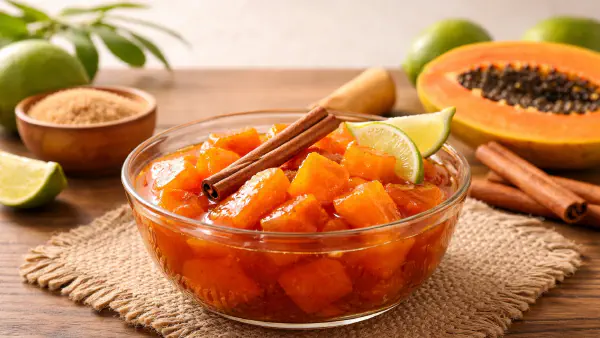
Kosereva: A typical sweet made from Apepú and sugarcane syrup.
🍽️ What people eat at Easter in Paraguay#
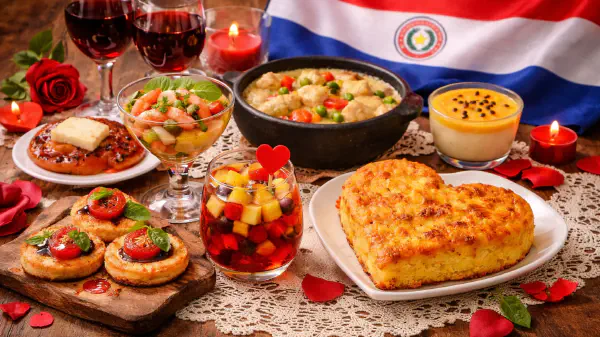
Those coming from Europe or North America sometimes expect Easter to have a clearly structured menu with starter, main course, and dessert. In Paraguay this is often less strict. The focus is usually on savory classics, pastries, baked dishes, grilled food, and dishes that work well for family gatherings. Starters and salads do exist, but they play more of a supporting role or are modern additions.
Traditional recipes for Semana Santa#
Chipa (Almidón)#
Without chipa, Easter in Paraguay is almost unimaginable. In many families, Miércoles Santo is the big baking day, and this is exactly where Chipa Apó, making chipa together, comes from. Large quantities, different shapes, and baking that is almost automatically linked to family, conversation, and tradition are typical. Chipa is considered the “bread” of Holy Week.
Traditional chipa consists mainly of cassava starch, cheese, eggs, and pork lard. Every family has its own secret recipe, which is often passed down from generation to generation.
Depending on the region and the family, there are also other variations, such as mixtures of cassava starch and cornmeal (Chipa Mestizo) or versions with peanuts or honey (Chipa kandói).
Sopa Paraguaya and Chipa Guasú#
These two classics are steady companions at many Sunday and holiday meals and are also hard to imagine missing at Easter in Paraguay. While Sopa Paraguaya is firmer and more bread-like, Chipa Guasú stands out for its juicy, almost creamy texture, since it is made with fresh corn (Choclo). Both are baked in the oven, can be prepared in advance, and very naturally find their place on the table when many people come together.
Mandioca hervida is also often served - boiled cassava that is part of the meal as a typical filling side dish or almost like a kind of bread substitute.
Paraguayan asado#
When people think of festive food in Paraguay, they very quickly think of asado. Around Easter, it plays a role mainly on Maundy Thursday and, depending on the family, also on Easter Sunday. Unlike strictly liturgical dishes, the focus here is less on symbolism and more on eating together with family.
In Paraguay, asado does not mean only beef. Depending on the household, chicken or pork also goes on the grill - often as a mix of what is practical and what suits the family. Popular choices include Costilla (ribs or cross-cut ribs), Vacío (flank or belly cut), chicken legs, Chorizo (sausage), or Morcilla (blood sausage). It is traditionally prepared on the Parrilla (grill grate), and sometimes also a la estaca (on a cross or on a spit over the fire). It is often not all served at once, but little by little - exactly as it becomes ready.
Rosca de Pascua#
Rosca de Pascua is the traditional sweet Easter pastry that naturally belongs to Semana Santa in many Paraguayan families. In some families, the recipes used for it have already been passed down through generations.
It is usually baked in a ring shape and, depending on the recipe, decorated with cream, sugar, or candied fruit.
Compared to some European Easter breads, it often seems a little simpler and not quite as sweet in Paraguay, which fits well with the overall down-to-earth holiday cuisine. It is especially ideal for breakfast, afternoon coffee, or as a sweet pastry for visiting family.
More recipes#
Alongside the big Easter classics, there are more dishes in Paraguay that fit well into these days. These include simpler, filling, and often meatless dishes that can be prepared ahead of time and feel intentionally calmer than the festive meal of Maundy Thursday.
Mbeju clearly belongs here. This cheese and cassava flatbread cooked in a pan is simple, savory, and precisely for that reason so practical. It fits well for breakfast, merienda, or as a quick addition when there are already many dishes on the table.
Especially for Good Friday, dishes such as Arroz kesu (creamy rice with cheese), Ensalada de arroz (rice salad), or traditional fish dishes are good options. As concrete recipe ideas, Chupín de surubí (layered fish bake or fish stew) or Pira caldo (hearty fish soup) fit very well into the collection. A bit more specific, but very suitable, is also Rora kyra - a creamy, savory dish that in more traditional contexts is associated with Good Friday.
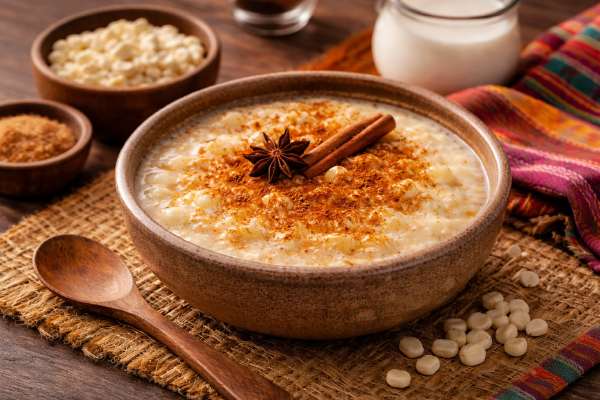
On the sweet side, Kosereva is a beautiful addition to Easter cooking. This sweet made from Apepú (a bitter orange) and sugarcane syrup, which in Paraguay is often called miel de caña or miel negra, feels typically Paraguayan and adds yet another flavor to Easter week. Arroz con leche (sweet milk rice) also fits well here, especially as a mild dessert for family gatherings.
Modern developments#
In recent years, Paraguay’s cuisine has also changed in some ways. While the classics remain undisputed, many households experiment with new forms or adapt dishes to eating habits and more urban Easter imagery.
Chipa So’o: A chipa filled with a savory meat filling. Actually a year-round snack, but at Easter it is often served as a filling meal in between.
Health-conscious variations:
- chipa versions with whole-grain cornmeal or seeds such as flaxseed
- egg-free chipa
- lower-calorie Chipa Guasú versions
Elaborately decorated Roscas de Pascua
Homemade chocolate Huevos de Pascua.
🧉 Drinks for Easter#
When it comes to drinks, Easter in Paraguay is also more down-to-earth than spectacular. Cocido quemado, Mate, and Tereré are naturally part of everyday life and therefore also part of the holiday table. Cocido in particular traditionally goes very well with chipa or mbeju in the morning.
If you cannot get Cocido or do not want it, you can start with coffee. But if you really want to taste Paraguay, try chipa once quite consciously with cocido or mate.
As special additions, Aloja, a traditional drink made with water, lemon, and miel negra, or Caña may also appear - more regional or festive drinks that do not belong everywhere, but clearly feel Paraguayan. Clericó can also be on the table, especially at family or summery gatherings. Compared to Christmas and New Year’s, however, around Easter it is more of an extra than a real must-have classic.
🌿 Decoration: simple and family-centered#
Traditional Paraguayan table decoration is rather simple. People use what nature provides, and often the decorated table itself is not the center of attention, but the shared meal and the family visit. A richly set table with chipas in all shapes and the family around it is often already the most beautiful decoration.
At the same time, in recent years there have been clearly more Huevos de Pascua (Easter eggs), chocolate bunnies, and decorative Easter products modeled after U.S. and European examples in supermarkets, bakeries, shops, and also in some households. Craft and decoration ideas around Easter baskets and decorations have also increased noticeably in recent years. Yet in private households in the countryside, this hardly plays a role.
❓ Frequently asked questions about Easter recipes in Paraguay (FAQ)#
Why is only cold food often eaten on Good Friday?
Can chipa dough be prepared in advance and frozen?
Which dish should I start with if I am just getting to know Paraguayan Easter cuisine?
Are there vegan alternatives for chipa?
Can I mix traditional and modern elements for my own Easter celebration?
Conclusion#
Paraguayan Easter recipes are more than just food. They are an expression of community and culture. Alongside the classics, there are now also some newer variations, so there is something for everyone. Whether you already live in Paraguay or want to bring a piece of Paraguay to your table from Europe, trying these dishes is worth it in every case. For me, the aromas of fresh chipa and sopa coming out of the oven are among the most beautiful culinary experiences in this country.
Feliz Semana Santa and good luck trying out the recipes!
📖 Further information and recipe links#
- Overview of holidays in Paraguay
- Semana Santa and Easter in Paraguay: Traditions, Family Time and Chipa
Would you like to cook one of these dishes right away? Here you can find our detailed guides:
- Traditional Chipa Almidón
- Hearty Sopa Paraguaya
- Juicy Chipa Guasu
- Crispy Mbeju from the pan
- Creamy Arroz kesu
- Fresh Ensalada de arroz
- Savory Rora kyra
- Hearty Pira Caldo
- Hearty Chupín de Surubí
- Traditional Rosca de Pascua
- Kosereva made from Apepú and miel de caña
- Homemade Arroz con leche
- Asado paraguayo with meat, side dishes, and typical combinations
- Refreshing Clericó
Have these Paraguayan Easter recipes inspired you and sparked your curiosity about Paraguay? Then feel free to give the post a like and share it with other South America enthusiasts - and help make Paraguay’s culinary diversity more visible.