
🍽️ What is Dulce de Mamón?#
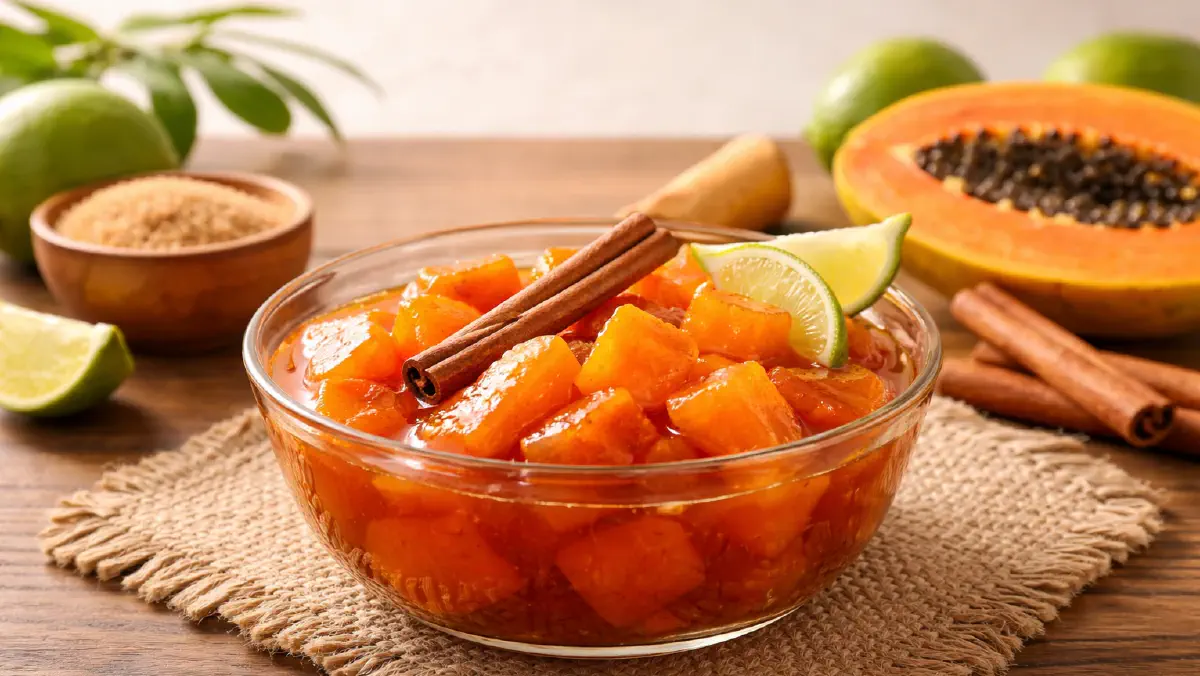
Anyone who lives in Paraguay or travels through the country will hardly miss this sweet delicacy. Dulce de Mamón is a traditional dessert made from the fruit of the papaya tree. In the Guarani language, papaya is simply called Mamón. What makes this dessert special is the use of the green, unripe fruit. By slowly simmering it in a rich sugar syrup, the firm pieces turn into an amber-colored delicacy with a unique texture.
Would you like to try the recipe right away?
Go straight to the recipe🇵🇾 The cultural tradition behind Dulce de Mamón#
In Paraguayan gardens, the papaya tree is almost part of the standard inventory. Since the trees often bear more fruit than can be eaten ripe, preserving them by cooking them down has become an ideal method. Quite often, there is so much papaya left over that needs to be used soon, and this dessert is the perfect solution.
Historical origin#
The history of this dessert goes far back to colonial times, when European preservation techniques met the region’s abundant local fruits. Sugar was a valuable commodity then, and preserving fruit in syrup made it possible to save the harvest through the hot months. Today, it is a fixed part of Paraguayan identity and is missing from hardly any menu at family celebrations or when guests come over.
Importance in regional cuisine#
Dulce de Mamón is much more than just a sweet snack. It is a true traditional classic. It represents the patience and calm of the Paraguayan way of life. Since preparation takes several hours, it is often a shared project in the home kitchen. There is hardly a restaurant in the interior of the country that does not offer this dessert as the crowning finish to a hearty barbecue evening.
Taking a closer look at the main ingredients#
For an authentic result, choosing the right ingredients is essential. Above all, this comes down to the ripeness of the fruit.
Mamón (Papaya) – the foundation of the recipe#
Papaya is an everyday fruit in Paraguay. For this recipe, only green or at most half-ripe papaya is used. If the fruit is still very firm and pale inside, it will hold its shape during cooking. Ripe papayas turn mushy quickly, and the result becomes more like jam than firm pieces in syrup.
Papayas are rich in papain, an enzyme that supports digestion. Even when unripe, they contain fiber and vitamins, although after such long cooking, enjoyment is naturally the main focus.
More special ingredients#
Alongside the fruit, lime (cal virgen) or alternatively baking soda plays an important role in the preparation. The sugar provides the necessary preservation and the typical syrup texture.
Properties of lime (Cal)#
It is dissolved in a bowl of water to soak the papaya pieces. This chemical process helps the outside of the fruit stay firm while the inside becomes buttery soft during cooking.
In Paraguay, you can find the right lime in shops. In Europe, make sure to use food-grade calcium hydroxide (E526) or go straight for baking soda instead. Industrial lime is harmful to health!
Recipe for Dulce de Mamón - step by step#
- Difficulty: Medium (requires patience)
- Preparation time: about 4 hours (plus soaking time)
The cooking time depends heavily on the size of the pieces and the firmness of the papaya - Servings: about 10 servings (makes about 2-3 jars)
📝 Main ingredients#
- 2 kg green papaya (Mamón)
- 1.5 kg white sugar (adjust the amount depending on taste and ripeness)
- 2 liters water
- 1 tablespoon lime (cal virgen) or 2 tablespoons baking soda
- 1-2 cloves (optional)
- 1 cinnamon stick (optional)
Optional ingredients#
- A little orange peel or lemon juice for a fruity aroma
- A splash of vanilla extract near the end of the cooking time
- A small piece of ginger for mild heat
- A small pinch of salt to round things out
Too many spices quickly take the spotlight away from the Mamón. Start sparingly and season carefully at the end.
Substitutions#
- Natural properties: This dish is naturally gluten-free and vegan.
- Sweeteners: Instead of white sugar, you can also use brown cane sugar or Paraguayan Miel de Caña. This makes the syrup darker and more malty.
- Firming agent: If lime is not available, baking soda works as a substitute to help keep the pieces firm.
- Cheese alternatives: If Paraguayan cheese is not available, a mild young Gouda, mozzarella, or a lightly salted cream cheese works very well.
Kitchen equipment needed#
- A very large container for soaking
- A large heavy pot with a thick base
- A vegetable peeler and a sharp knife
- A wooden spoon for stirring
- Sterilized preserving jars
👩🍳 Step-by-step preparation#
Preparation#
First, peel the papayas thoroughly.
It is best to wear gloves, since the sticky sap that comes out can irritate sensitive skin.
Cut the fruits in half and remove the seeds inside. Cut the flesh into cubes, strips, or thick slices about 2 to 3 centimeters wide.
If the pieces are roughly the same size, everything will cook evenly. That prevents some pieces from falling apart while others are still too firm.
Dissolve the lime in a large bowl with plenty of water and place the papaya pieces in it. They should rest in this solution for at least two to three hours or ideally overnight.
Preparation / cooking process#
After soaking, rinse the papaya pieces several times very thoroughly under running water so that no residue or off taste from the lime remains in the finished dessert.
Put the sugar and water into the large pot and bring the mixture to a boil until the sugar has fully dissolved.
Now add the papaya pieces along with the cloves and the cinnamon stick.
Reduce the heat to a low setting. The mixture now needs to simmer gently for about three to four hours. Stir only occasionally and very carefully so the pieces do not break apart. The process is finished when the syrup is thick and the papaya has taken on a deep golden to reddish color.
Tip If you let the papaya come briefly to a stronger boil without a lid at the end of cooking, the syrup gets an especially beautiful shine.
At the end, you can add vanilla and, if desired, a few drops of lemon or grapefruit juice.
Remove from the heat and let it cool. The syrup often thickens further as it cools.
🔄 Variations of the recipe#
Traditional variations#
In some regions of Paraguay, the recipe is refined with a little orange juice, which adds a pleasant acidity to the rich sweetness. This variation is often called Dulce de Mamón con Naranja.
Vegetarian / vegan version#
The recipe is already fully plant-based. Anyone who wants to avoid refined sugar can use Miel de Caña instead. This gives the dessert a rustic, darker note.
A touch of vanilla and lime makes the dulce even more refined, without needing any dairy.
Modern or creative interpretations#
Modern versions include adding a pinch of sea salt or using it as a cheesecake topping. It is also very popular served with yogurt, vanilla ice cream, or quark cream. Roasted nuts provide a great crunchy upgrade just before serving.
For guests, I like to serve it in small glasses with plain yogurt. It looks beautiful and also softens the sweetness a bit.
What goes well with Dulce de Mamón?#
To round out your meal, here are a few ideas for side dishes and drinks.
- Cheese: Traditionally, a thick slice of Queso Paraguay is served with it. The combination of salty and sweet is unbeatable.
- Crackers: Simple salted crackers create a nice contrast in texture.
- Bread: White bread or toast is perfect for soaking up the remaining syrup.
- Yogurt: Plain yogurt or unsweetened yogurt, including plant-based alternatives, adds a fresh acidic contrast.
- Vanilla ice cream or cream: softens the strong sweetness and adds creaminess
- Cocido: A hot mate tea with caramelized sugar goes wonderfully with it.
- Water: Because of the high sweetness, a glass of ice-cold water is often the best companion.
- Coffee: Strong black coffee pairs beautifully with the sweetness.
- Liqueur: A small shot of local Caña after the meal rounds off the experience.
Sweet plus cheese is often the favorite combination here. If you have never tried it before, Dulce de Mamón is a perfect introduction.
Nutritional overview#
The following values refer to one portion of about 100 grams.
- Calories: 280 kcal
- Protein: 0.5 g
- Carbohydrates: 68 g
- Fat: 0.1 g
- Fiber: 1.5 g
The nutritional values are average values and may vary depending on the amount of sugar and the ripeness of the papaya.
❓Frequently asked questions (FAQ)#
Can I also use a ripe papaya?
How do I prevent the papaya from falling apart?
How sweet should the recipe be?
Where can I get 'Cal virgen' and what are the alternatives?
In Paraguay, you can find ‘Cal virgen’ (slaked lime) in almost every Ferretería or in supermarkets near the baking ingredients.
Important for readers in Europe: Please never use lime from a hardware store or cleaning section there, since it is not approved for food use. Instead, look for food-grade calcium hydroxide (additive E526), often available in pharmacies or in specialist shops for brewing supplies and pastry ingredients.
The simplest and safest alternative at home is regular *baking soda. It also helps stabilize the papaya’s cell structure, although the result is usually a little softer than with lime.
How long does the dessert keep?
Is Dulce de Mamón gluten-free?
Why did my papaya pieces stay hard inside?
What do I do if the syrup stays too thin?
Which spices work best?
Conclusion#
Dulce de Mamón is a simple dessert that requires a bit of patience in preparation, but rewards you with an incomparable flavor. It is the perfect project for a relaxed afternoon when you have fruit to use up or simply want to try a Paraguayan sweet dish. Once you have made it, you will notice that it quickly becomes something you cook by feel. Add a piece of cheese on the side, and the world feels right.
Share & support
Did this traditional Dulce de Mamón recipe inspire you and spark your curiosity about Paraguay? Then feel free to give the post a like and share it with other South America enthusiasts - helping make Paraguay’s culinary diversity more visible.