
Quick Facts#
Quick facts at a glance
- Date: fixed day of remembrance on March 1 (day off), in some years the day off is practically moved to a weekday
- Status: official public holiday in Paraguay
- Who celebrates: nationwide, especially visible among the state, the military, schools, and families interested in history
- Why: remembrance of Paraguay’s “heroes” and of the end of the devastating War of the Triple Alliance
- Peak: often around official ceremonies, depending on the place more likely in the morning and around central squares
- Bottom line: you will usually notice a quieter atmosphere, less government office activity, and depending on the area more flags and ceremonies
🧭 What is Día de los Héroes?#
Día de los Héroes is one of the most important state remembrance days in Paraguay. It is less of a “party holiday” and more of a day when history and national identity become visible. Many people associate it with respect, pride, and also grief, depending on how the past is talked about within the family.
In everyday life, the day often feels like this: fewer “errands”, more “remembrance”. In Asunción, this is especially noticeable around central squares and public buildings. There are more official moments there, sometimes short-notice notices or barriers, and overall the atmosphere is a bit quieter than on normal weekdays.
If you are new to the country: this holiday helps you get a sense of how present history can be in everyday life in Paraguay, even without celebrations happening everywhere.
Historical Background#
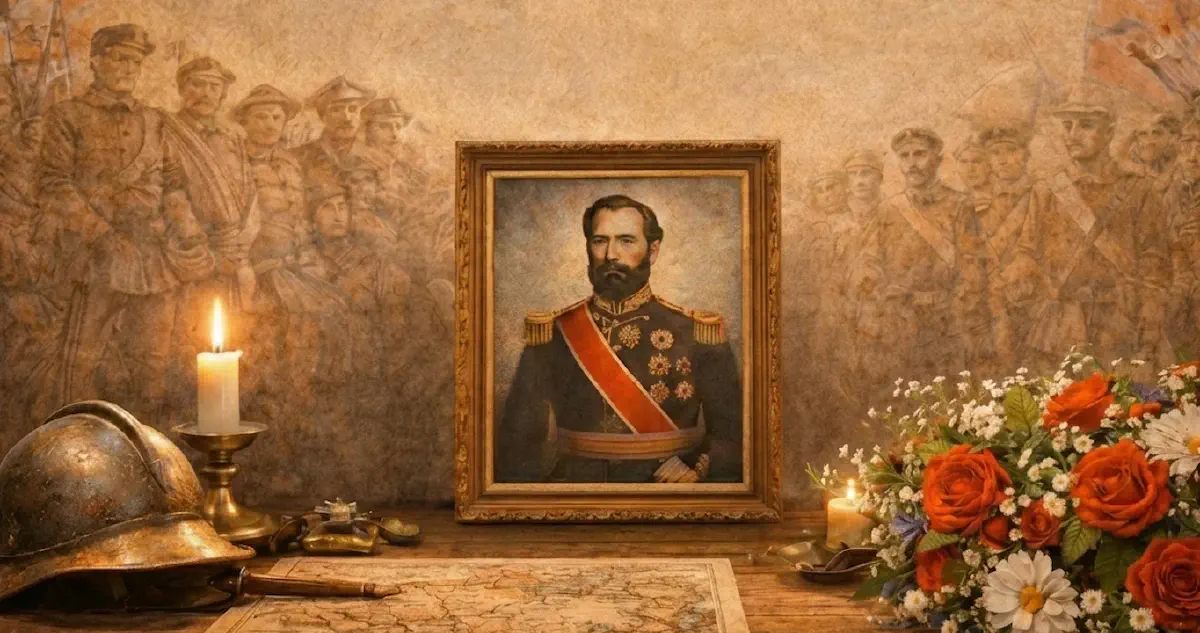
The day commemorates the end of the War of the Triple Alliance (1864 to 1870), one of the most devastating conflicts in South American history. Paraguay faced an alliance of Brazil, Argentina, and Uruguay. The causes were political tensions in the region, questions of power, and military decisions under President Mariscal Francisco Solano López.
What began as a regional conflict developed into a years-long war with enormous consequences for Paraguay. The country lost a large part of its male population, many towns and villages were destroyed, and the economy was left in ruins. Paraguay then had to reorganize itself with great difficulty, also territorially, because the country lost land to Brazil and Argentina. The war ended on March 1, 1870 with the death of López at Cerro Corá in the north of the country. With him, military resistance finally collapsed.
In official remembrance, this moment is considered a historical turning point. Paraguay lost the war, but the narrative in Paraguay often emphasizes perseverance, sacrifice, and national self-assertion. That is exactly why March 1 is not a classic day of victory or triumph, but a day of remembrance.
What often still resonates in daily life is also the view of the time afterward: because so many men were missing, women played a major role in rebuilding many families and communities. Their role is still especially honored today on Día de la Mujer Paraguaya.
What I notice again and again in conversations with locals here: many people do not speak only about “a battle”, but about a period that is still told today as a collective experience. You quickly hear sentences like “that shaped us” or “you don’t forget that”. In family stories especially, the war still appears as a point of reference, even though there are of course no direct eyewitnesses anymore.
🪅 Perception in Society & Traditions#
For many Paraguayans, the holiday is emotional because it is associated with sacrifice, perseverance, and the feeling that the country endured despite everything. At the same time, history is not told the same way everywhere. In some families it is spoken about with great reverence, in others more soberly, and that often depends on generation, region, and personal background.
The day is most noticeably felt where the state and schools are visible.
Official ceremonies such as wreath-laying or short remembrance moments often take place at symbolic locations, in Asunción for example around central squares and monuments.
In schools, the day is addressed depending on the institution, sometimes with short presentations, historical context in class, or a small ceremony. This does not always happen exactly on the holiday itself, but often in the period around it.
Symbolism is usually rather restrained: cockades, ribbons, or flowers at remembrance sites, sometimes uniforms at official appearances, and occasionally patriotic music or the national anthem as part of ceremonies.
Typical Food & Drinks on This Day#
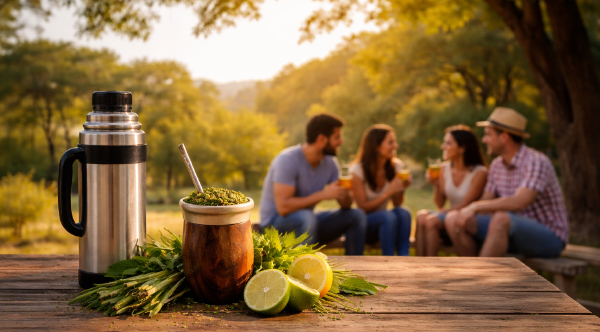
Día de los Héroes does not have a “must-have dish” like some religious holidays do. More often, it comes down to what Paraguay does really well on days off: time with family, sharing food, Tereré, and depending on the mood maybe also a relaxed barbecue evening.
If you are invited, you will often be offered:
- Asado or something hearty from the grill, depending on the family either very simple or on a bigger scale.
- Chipa, Sopa Paraguaya, or Mbejú as a snack or side dish.
- Tereré almost always, especially on warm days.
As a small gift, things you can share almost always work well: ice cream, drinks, or something sweet. If you know their preferences, yerba is also a good idea.
🧩 What Does It Mean Practically in Everyday Life?#
Opening Hours & Services#
On Día de los Héroes, the difference between “official” and “practical” matters. Officially, it is a public holiday. In practice, a lot depends on the place, the chain, and the neighborhood. What is often typical:
- Government offices, banks, post offices: usually closed or operating in holiday mode.
- Supermarkets, shopping centers: often open, but sometimes with reduced staff or different hours.
- Despensas and small shops: often open, especially in residential areas, sometimes even more reliable than larger structures.
- Pharmacies, gas stations, restaurants: usually available, though there are differences depending on city and location.
- Mercados: may operate normally, in a limited way, or only in certain areas, depending on how strongly the place “lives” the holiday.
Planning note: if you depend on a specific errand getting done (bank, public office, parcel), plan as if it were a Sunday. Then you will rarely be completely wrong.
Traffic & Travel#
Traffic is often split into two patterns:
- In cities, around official places, things can run differently for a while (road closures, detours, more police).
- On roads out of town, depending on whether it becomes a long weekend, there can be more excursion traffic.
For travel, the rule is: buses and taxis do run, but the rhythm and availability can feel different on public holidays. If you are going farther out, it is wise to plan connections and arrival logistics a bit more generously.
Schools, Work, Government Offices#
- Schools are often closed or do not have regular classes.
- Private companies handle it differently, depending on the sector and location.
- Government office operations are generally heavily limited.
My everyday tip from Paraguay: if a holiday looks like “just one day” on paper, in practice it is often used as a reason for a family gathering. You notice this in spontaneous meetups, visit rounds, and in the fact that some people simply are not reachable.
Where in Paraguay Is It Especially Relevant?#
The holiday is nationwide, but it is often especially noticeable where there are central symbols, more public visibility, or a stronger presence of institutions.
- Asunción: more visible symbolism, often around central squares and national buildings.
- Places with a strong military or government connection: sometimes more ceremonies, more flags, more official presence.
- City vs. countryside: in the countryside it can be quieter, but family time is even more dominant there. In cities you are more likely to see “the official side”.
What kinds of events are typical?
- remembrance ceremony, wreath-laying, short parade elements, cultural program points, sometimes folklore.
Where do people look for announcements?
- official (social) channels of the Municipalidad, local radio stations, churches, sometimes tourism offices or notices.
- Ask in the neighborhood or in local groups in the community / city.
🤝 Joining in as a Visitor: Do’s & Don’ts#
✅ Do’s#
- Behave respectfully: at remembrance sites, quiet and restrained behavior feels most appropriate. For many people, Día de los Héroes is less a “holiday” and more a day of respect and remembrance.
- Clothing: for official places or church, rather covered and neat, especially if you want to take photos.
- Show interest: a simple “I’m still learning, tell me more” often opens doors.
⛔ Don’ts#
- No loud jokes or “political hot takes” - for many people, the topic is personal.
- Better take photos of uniformed people or official proceedings only if it is clearly public and the situation allows it.
- Alcohol is not “forbidden”, but at remembrance sites it can quickly seem out of place.
⚠ In larger crowds, the standard rules apply: keep your bag close to your body, do not let your phone dangle openly in your hand, bring enough water, and take the sun seriously.
💬 Cheat Sheet: Useful Phrases for Getting Around#
Spanish 🇪🇸#
“Feliz Día de los Héroes.”
English: “Happy Heroes’ Day."“Hoy se conmemora el Día de los Héroes en Paraguay.”
English: “Today Heroes’ Day is commemorated in Paraguay."
Guaraní 🇵🇾#
- “Ko árape ñanemomandu’a ñande héroe kuéra rehe.”
English: “Today we remember our heroes."
🗓️ Tips & Planning#
- Shopping: if you depend on specific products, take care of it beforehand. Fresh items and specialty products in particular are not equally available everywhere on a public holiday.
- Cash: having a bit of cash in reserve never hurts, in case the bank or certain services are not operating as usual.
- Fuel: gas stations are usually open, but if many people are on the road, they can feel busier than normal.
- Appointments: it is best not to schedule public office visits and paperwork for this period, even if individual places might theoretically be open.
- Invitations: if you are invited, mentally plan for “Paraguay time”. People often do not arrive exactly on the minute, but they stay longer.
- Excursions: if you want a quiet outing, the early hours are often more pleasant. Later on, there is usually more movement, especially when many people use the day off for family visits.
❓ Frequently Asked Questions (FAQ)#
Is Día de los Héroes an official public holiday?
Are supermarkets and shopping centers open?
Should I expect road closures?
Do buses and taxis run normally?
Are schools closed?
What is the right way to greet someone?
Are there typical events you can attend?
What if March 1 falls on a weekend?
Conclusion#
Día de los Héroes in Paraguay is not an “event holiday”, but a day when history becomes visible. For expats and newcomers, it is a good moment to understand Paraguay better: what is closed is one side of it. More important is often the atmosphere behind it, meaning respect, remembrance, and the sense that the past remains part of how the country understands itself today.
If you experience it quietly and attentively, you can learn a great deal about culture, communication, and everyday life here in a single day.
📖 Further Reading#
Share & support
“Did you already know this meaning of the holiday? Do you know someone who would like to understand Paraguay better?” Then feel free to give the post a like and share it with other South America enthusiasts, helping spread the meaning of Paraguayan holidays.