
🍽️ What is Chupín de Surubí?#
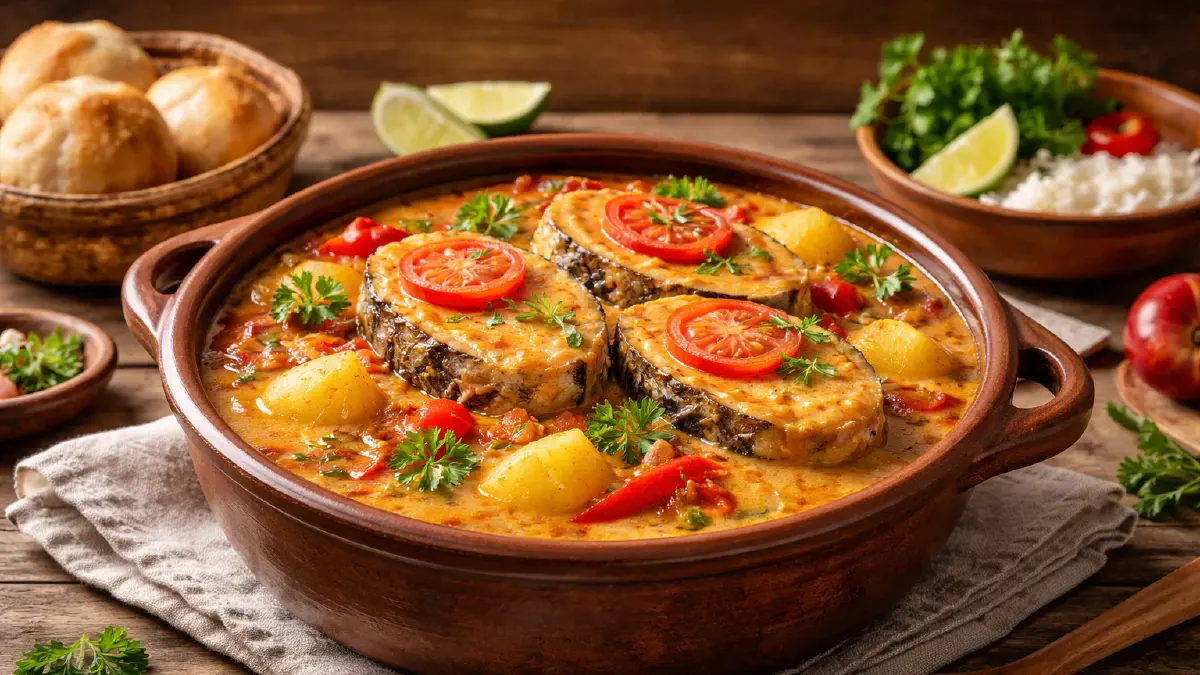
Anyone who lives in Paraguay or travels through the country will hardly miss this dish. Chupín de Surubí is a hearty, layered fish stew that is especially served in the regions along the great rivers Río Paraguay and Río Paraná. The name is often associated with the Ligurian-Italian Ciuppin/Cioppino, showing how European influences merged with local ingredients. Unlike a classic soup, Chupín is thicker and becomes especially aromatic through the slow layering of fish, potatoes, and vegetables.
You want to try the recipe right away!
Go directly to the recipe🇵🇾 The cultural tradition behind Chupín de Surubí#
In Paraguayan culture, eating together is a central pillar of social life. A Chupín is often prepared in large pots for the whole family or a group of friends, especially on holidays or after a successful day of fishing by the river.
Historical origin#
The origins of this dish lie in shipping and fishing. Immigrants from Genoa brought their fish preparation techniques to South America. In Paraguay, people adapted the recipe to the treasures of their own waters. Although meat is everywhere in Paraguay, the huge rivers offer a welcome and appreciated variety on the menu.
Importance in regional cuisine#
Surubí is considered the “king of the rivers.” That is why a Chupín is not just a meal, but often a festive dish. It represents the hospitality of the people here, who proudly like to share their regional products. You can often find this dish on the menus of restaurants located directly by the water.
A closer look at the main ingredients#
A good Chupín stands or falls with the quality of its components. There are no shortcuts here if you want to experience the true taste of Paraguay.
Surubí - the foundation of the recipe#
Surubí is a large catfish (freshwater fish) native to the subtropical rivers of South America. Its flesh is white, firm, and has a pleasantly mild flavor that does not taste too “fishy.” This also makes it popular with people who do not usually reach for fish very often. From a nutritional perspective, Surubí provides valuable omega-3 fatty acids and is an excellent source of protein. Since it is comparatively low in bones in the flesh, it can be wonderfully cut into thick slices, the so-called “rodajas.”
Other special ingredient(s)#
Besides the fish, potatoes and tomatoes play the main role. They form the base for the stew’s creamy consistency. In addition, bell peppers (locotes) and onions add color and aroma and should be fresh and crisp. As they cook slowly, they release their sweetness into the broth, creating the typical character of Chupín.
When buying Surubí, make sure the flesh is firm and smells neutral. At local markets in Paraguay, the fish is often available directly in the morning after it has been caught, which gives the best result.
Recipe for Chupín de Surubí - step by step#
- Difficulty level: Medium
- Preparation time: about 60 minutes
- Servings: 4 to 6 people
📝 Main ingredients#
- 1.5 kg Surubí (cut into slices about 2-3 cm thick)
- 1 kg potatoes (waxy, sliced)
- 3 large onions (cut into rings)
- 2 red bell peppers (cut into strips)
- 2 green bell peppers (cut into strips)
- 4 ripe tomatoes (peeled and diced)
- 3 garlic cloves (finely chopped)
- 200 ml dry white wine
- 200 ml fish stock or water
- Olive oil or vegetable oil
- Salt, pepper, bay leaves, and fresh oregano
Optional ingredients#
- 200 ml cream (for a creamier version)
- fresh or dried chili pepper or hot chili sauce (for heat)
Substitutions#
Natural characteristics of the dish
- The traditional recipe is naturally completely gluten-free
- The classic basic version contains no dairy products or lactose at all.
- Anyone watching their carbohydrates (low carb) can simply reduce the amount of potatoes even more.
Fish with limited availability
- In Europe, catfish (closest to Surubí) or cod are good substitutes.
- Monkfish or halibut also keep a firm structure when cooked.
Vegan diet
- Thick slices of oyster mushrooms provide a very similar texture.
- Alternatively, use eggplant or zucchini.
- Firm natural tofu absorbs the flavors of the sauce very well.
Dairy products for the creamy version
- Coconut milk is an ideal lactose-free and vegan solution.
- A neutral cashew cream provides an especially velvety note.
Low-acid and low-allergen adjustments
- For histamine sensitivity, red bell peppers can replace tomatoes. Omit lemon juice.
- Instead of white wine: use a splash of mild vegetable broth with a drop of apple cider vinegar. Alternatively, use more fish stock or water.
Changes in flavor and texture
- Saltwater fish are much saltier than the Paraguayan freshwater fish Surubí.
- Mushrooms and substitute fish often need about ten minutes less cooking time.
- Plant-based alternatives need additional herbs like oregano for the necessary depth.
Required kitchen equipment#
- A large, deep pot with a fitting lid (ideally a heavy cast-iron pot or a classic cacerola)
- A sharp chef’s knife
- A cutting board
- A ladle for serving
👩🍳 Step-by-step preparation#
Preparation#
First, rinse the fish briefly under cold water and pat it dry with kitchen paper.
Season the fish slices with salt, pepper, and a little lemon juice and let them rest in the refrigerator for about 15 minutes.
Meanwhile, wash all the vegetables and cut them into the appropriate shapes.
If you want to peel the tomatoes more easily, score them crosswise and briefly pour boiling water over them. After that, the skin will come off almost by itself.
If you like, you can also lightly saute the vegetables before layering or lightly sear the fish.
Preparation / cooking process#
Generously coat the bottom of the pot with oil and heat it lightly.
Now begin layering: first a layer of onions and peppers, then a layer of potato slices.
Place the marinated fish pieces on top of the vegetable bed.
Spread the diced tomatoes, garlic, and spices over them.
Repeat the process until all ingredients have been used up, ideally finishing with a vegetable layer.
Carefully pour the white wine and fish stock along the edge of the pot.
Cover the pot tightly and let the Chupín simmer gently over medium heat for about 30 to 40 minutes.
Never stir the stew during cooking! Stirring would break the fish pieces and potatoes apart. The Chupín cooks perfectly through the rising steam in the closed pot.
Instead of on the stovetop, you can also prepare the ingredients in a deep baking dish with a lid and cook the dish in the oven.
🔄 Variations of the recipe#
With meat or fish#
Although the classic Chupín is prepared with Surubí, in Paraguay there are also versions with other river fish such as Dorado or Patí. In rural regions, bacon (panceta) is sometimes added to give the dish a smoky note.
Vegetarian / vegan version#
For a fully plant-based version, large pieces of firm tofu, eggplant or zucchini or a mixture of different mushrooms work well. Use a strong vegetable stock instead of fish stock and add a little smoked paprika powder to imitate the depth of flavor.
Modern or creative interpretations#
Some chefs in modern cuisine refine their Chupín today with capers or olives, which creates a clear bridge to Mediterranean cuisine. Finishing with a splash of cream shortly before serving is also a popular modern variation that makes the stew smoother.
There are also traditional additions that are used depending on the family recipe. These include Queso Paraguay, which makes the dish creamier, as well as hard-boiled eggs, which are often used as a garnish when serving.
What goes well with Chupín de Surubí?#
To make your meal perfectly complete, here are a few ideas for side dishes and drinks that pair well with it.
Cassava: Traditionally cooked cassava (Mandi’o) is the classic and popular side dish in Paraguay.
Rice: Cooked white rice (Arroz blanco) absorbs the wonderful sauce of the Chupín perfectly.
Bread / baguette / galleta: A simple but very fitting side dish for soaking up the aromatic broth.
Tomato and onion salad or green salad as a refreshing component
Cerveza: An ice-cold Paraguayan lager is the best choice on hot days.
Vino Blanco: A dry Chardonnay or a lively Sauvignon Blanc pairs wonderfully with the rich fish.
Tereré: In Paraguay, it is often enjoyed with the meal or afterwards on warm days.
Nutritional overview#
For one portion (about 400 g):
- Calories: about 450 kcal
- Protein: 35 g
- Carbohydrates: 25 g
- Fat: 22 g
- Fiber: 4 g
The nutritional values are average values and may vary depending on the fat content of the fish and the amount of oil used.
❓ Frequently asked questions (FAQ)#
Which fish is best for Chupín?
Can I use frozen fish?
How do I prevent the stew from burning on the bottom?
Can I reheat the Chupín the next day?
Can I freeze the Chupín?
Does the fish need to be scaled?
Is the dish very spicy?
Conclusion#
Chupín de Surubí is more than just a simple fish dish. It is a piece of Paraguayan joy of life and tradition. With its simple ingredients and uncomplicated preparation, it brings the flavor of the great rivers directly into your kitchen. Whether you live in Paraguay or want to discover the country from afar through its cuisine: this stew will delight you with its hearty character.
Give it a try and bring a piece of South America to your plate!
Did this traditional Chupi de Surubi recipe inspire you and spark your curiosity about Paraguay? Then feel free to give the post a like and share it with other South America enthusiasts - helping make Paraguay’s culinary diversity more visible.