
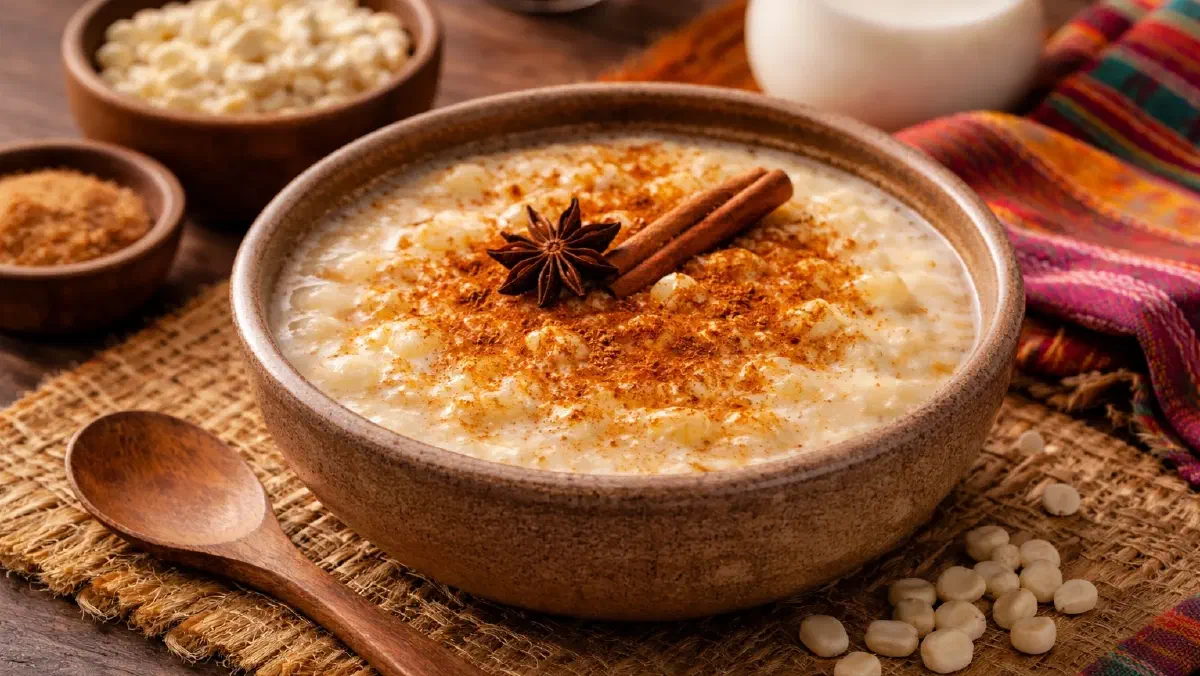

Mazamorra, known in Guaraní as Kaguyjy, is a traditional Paraguayan dessert made with locro, a dried white corn. As it cooks slowly, the kernels soften and the dessert develops its creamy texture.
When I first tried Mazamorra, my first thought was: “A little like rice pudding – just with corn.” The comparison only goes so far, though. The soft corn kernels remain clearly noticeable and give the dessert its own distinctive texture.
In conversations with Paraguayans, you also notice that for many people Mazamorra is closely connected with childhood, family, and familiar everyday cooking.
This Mazamorra recipe follows a modern Paraguayan preparation with baking soda, milk, and sugar. The base is only mildly sweet, so you can adjust the sweetness later to your taste.
📝 Mazamorra Recipe: Step by Step#
At a glance
- Difficulty: Easy
- Total time: about 2 hours plus soaking time
- Soaking time: 8–12 hours
- Servings: about 8 dessert servings
- Suitable for: vegetarian, naturally gluten-free
🛒 Ingredients for Mazamorra#
Main ingredients#
- 500 g locro (dried white corn)
- about 3 liters water, plus more if needed
- ½ tsp baking soda (bicarbonato de sodio)
- 1 liter whole milk
- 150 g sugar
Optional ingredients#
- 1 cinnamon stick
- a little peel from an unwaxed orange or lemon
- a small splash of vanilla extract after cooking
What can you substitute?#
Ingredient substitutions
Locro: Outside Paraguay, you can usually find dried white corn at Latin American grocery stores or online, often labeled maíz blanco para locro. Popcorn kernels are not suitable.
Hominy: Canned hominy is a quick alternative. It needs much less cooking time, although the final texture will be somewhat different.
Milk: For a vegan version, use unsweetened oat, almond, or coconut milk.
Sweetener: Miel de caña works especially well for adding extra sweetness at the table. You can also use honey, although it has a noticeably different flavor.
Dietary notes: Mazamorra is vegetarian and naturally gluten-free. With plant-based milk and without honey, it can also be made vegan.
Kitchen equipment#
- large pot, preferably heavy-bottomed
- large bowl for soaking
- colander
- wooden spoon
👩🍳 Step-by-step preparation#
Preparation#
Rinse the locro thoroughly and soak it in plenty of water for 8 to 12 hours, preferably overnight. In warm weather, keep the corn in the refrigerator while it soaks.
The next day, drain the soaking water and rinse the corn again.
Cooking#
Start the locro: Put the soaked corn in a large pot with about 3 liters of fresh water. If you are using a cinnamon stick or citrus peel, add it now.
Cook slowly: Bring to a boil, then reduce the heat to medium-low and let it simmer. Stir regularly so nothing sticks to the bottom.
Add the baking soda: About halfway through the cooking time, stir in the baking soda. In modern recipes, it takes the place of the filtered wood-ash lye used in older preparations and contributes to the typical color and texture.
Watch the liquid: The locro should always have enough liquid while cooking. If it starts to dry out, add hot water little by little.
Cook until almost tender: Continue cooking until the corn kernels are almost completely soft. Cooking time can vary depending on the locro, so the texture matters more than the clock.
Add milk and sugar: Once the corn is nearly soft, add 1 liter of milk and 150 g of sugar. Stir well and simmer for another 10 minutes over low heat.
Finish the flavoring: Remove the cinnamon stick and citrus peel. If you like, stir in a little vanilla extract now.
Serve or cool: Mazamorra can be eaten warm, lukewarm, or fully chilled. It will thicken a little more as it cools.
💡 Practical tips for Mazamorra#
Getting the texture right
Add hot water as needed: Locro absorbs a lot of liquid during the long cooking time. If the water cooks down too much, add more hot water.
Watch it closely after adding the milk: Once the milk and sugar are in the pot, stir more often and keep the heat low.
Do not let it get too thick in the pot: Mazamorra thickens as it cools, so it can still look a little looser when you take it off the heat.
Nutrition overview#
The values below are based on one of eight servings of the basic recipe.
- Calories: about 340 kcal
- Protein: about 9–10 g
- Carbohydrates: about 65 g
- Fat: about 4 g
- Sugar: about 25 g
Note: These values are estimates. Miel de caña, honey, condensed milk, fruit, or any additional sweetener are not included.
🍽️ How is Mazamorra served?#
Mazamorra can be eaten warm or chilled. Since the basic recipe is only mildly sweet, everyone at the table can adjust the sweetness to their own taste.
With miel de caña or sugar: Sugarcane syrup is one of the classic additions to Kaguyjy. Even a small amount adds a strong, caramel-like sweetness. Alternatively, you can sweeten it with a little extra sugar.
With a little milk: Chilled Mazamorra can be served with a small splash of milk.
With cinnamon: A little ground cinnamon works especially well with the milk version and complements its mild sweetness.
🔄 Recipe variations#
Alongside the traditional serving styles, Mazamorra can also be adapted in more modern ways.
With fruit or fruit compote#
Well-chilled Mazamorra pairs nicely with fresh fruit or a fruit compote that is not too sweet.
Good options include:
- mango
- guava
- papaya
- banana
Mango, papaya, and banana mainly add natural sweetness, while guava brings a stronger fruit flavor.
With sweetened condensed milk#
For a creamier and much sweeter dessert version, drizzle a little sweetened condensed milk over the Mazamorra when serving. Since condensed milk already contains plenty of sugar, the Mazamorra usually does not need any extra sweetening.
Did you know?
Mazamorra can mean very different things depending on where you are.
In Peru, the purple mazamorra morada is well known. In Colombia, mazamorra paisa is made from soft-cooked white corn and served with milk and panela, an unrefined cane sugar – and in Córdoba, Andalusia, the same name suddenly gets you a cold, savory cream made with almonds, bread, and garlic.
🇵🇾 Background: Mazamorra and Kaguyjy#
Two names for one dish: Mazamorra and Kaguyjy#
Kaguyjy is the Guaraní name for Mazamorra in Paraguay. Today, both names are used for this traditional sweet dish made with locro.
Traditional Guaraní names even distinguish between the different ways Kaguyjy is served:
- kaguyjy eírare → with miel de caña
- kaguyjy kambýre → with milk
- kaguyjy asukáre → with sugar
Indigenous roots and traditional preparation#
The roots of Kaguyjy go back to Indigenous Guaraní corn cuisine. Its name is also connected with older Guaraní preparations: kagui referred to ceremonial drinks, some of them made from corn, while jy refers to cooking or a thick preparation. The name reflects this older culinary context, although Kaguyjy itself has been passed down as a cooked, thickened corn preparation.
The base is locro, a hard white corn. Traditionally, it was soaked and then simmered in water until the kernels were soft and the liquid had thickened.
Toward the end of cooking, filtered wood-ash lye (lejía) was added. It helped give the corn its slightly yellowish color and also affected the flavor. Not just any wood ash was used, because the type of wood could influence the result.
Today, this method is much less common. Modern Paraguayan recipes often use a small amount of baking soda, or bicarbonato de sodio, instead. That is also the practical method used in our recipe.
Corn appears in many other forms in Paraguayan cooking as well – from Sopa Paraguaya and Vori Vori to other recipes with corn.
Mazamorra in everyday Paraguayan food culture#
Mazamorra is not an elaborate celebration dessert. Made with just a few simple ingredients, Kaguyjy was long part of straightforward everyday cooking and, for many Paraguayans, is still closely connected with memories of childhood and family.
Accounts of earlier times also mention women who sold Mazamorra. In the afternoons, they walked through neighborhoods with their pots and sold the freshly cooked dessert from door to door. These vendors were once a familiar part of the street scene, much like chipa sellers and other traveling food vendors.
Mazamorra is still part of Paraguay’s culinary tradition today. This is reflected not only in family recipes and memories, but also in its official recognition: In Resolution No. 05/2018 ↗, DINAPI includes Mazamorra on a list of Paraguay’s gastronomic and culinary heritage that was declared to be of national interest.
Mazamorra is not the only way locro is connected with Paraguayan food culture. Locro also plays a role in a tradition that is still very much alive. On October 1, Jopara and Karai Octubre are closely linked in Paraguay: people traditionally eat Jopara – a hearty stew made with locro, beans, and other ingredients depending on the recipe. According to folk belief, it is meant to keep scarcity and hardship away.
❓ Frequently Asked Questions#
What kind of corn do I need for Mazamorra?
Do I need to soak locro before cooking?
Why is my corn still hard?
Is Mazamorra served warm or cold?
How long does Mazamorra keep, and can I freeze it?
Transfer leftovers to smaller containers as soon as possible, cover them well, and store them in the refrigerator. Mazamorra will keep for about 3 to 4 days.
You can freeze it, although the texture may change after thawing. When reheating, add a little milk if the Mazamorra has become too thick.
Is Mazamorra gluten-free?
Can I make Mazamorra vegan?
Conclusion#
Mazamorra shows how a few simple ingredients can become a dish with deep roots in Paraguayan culinary tradition. The recipe itself stays simple, and you can adjust the sweetness when serving with a little miel de caña.
The difference from rice pudding becomes obvious with the first spoonful: the soft corn kernels give Mazamorra its own distinctive texture and turn a short ingredient list into a dessert that is hard to confuse with anything else.
Enjoy making it, and buen provecho!
If the comparison with rice pudding made you curious, try Arroz con Leche next. You can find more sweet classics among our Paraguayan desserts and sweets.
Share & support
Know someone who enjoys trying Paraguayan recipes? Share this recipe with them, or leave a like if you enjoyed the article.