
🍽️ What is Mazamorra?#
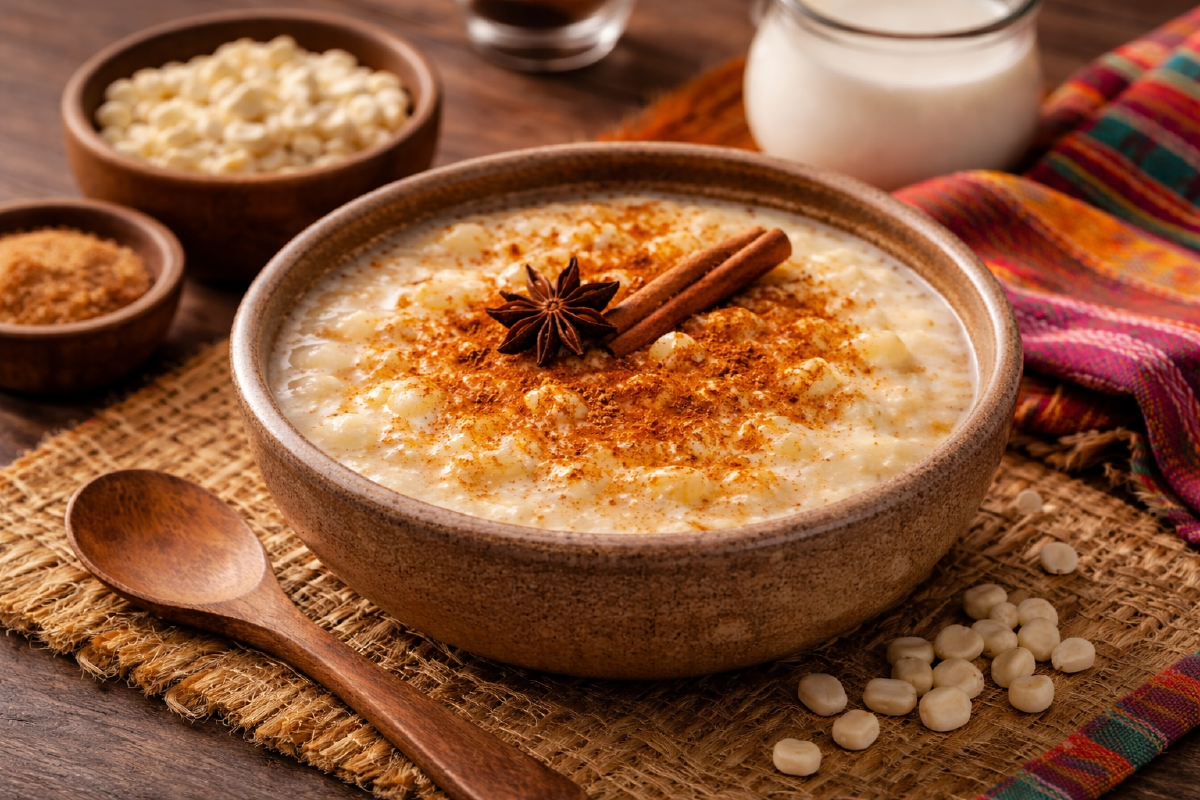
Welcome to Paraguay’s sweet side! Mazamorra (or in Guaraní: Kaguyjy) is a traditional Paraguayan dessert made from cooked white corn (Locro).
It’s a thick corn porridge that-depending on the region-is enjoyed sweet (with milk and sugar or, traditionally, with honey/sugarcane syrup Miel de Caña) or slightly neutral. What makes it special is its creamy texture, created by simmering it for a long time.
I still remember the first time our worker offered me Mazamorra on a long, warm summer day. I thought, “Oh-rice pudding, just with corn.” The spices made it a bit different from what we’re used to, but it was still aromatic, simple, and exactly right for a break after work. 🌽
Do you want to try the recipe right away? Go straight to the recipe!
🇵🇾 The cultural tradition behind Mazamorra#
Historical origins#
Mazamorra is one of Paraguay’s oldest recipes and is deeply rooted in the indigenous Guaraní culture. During the War of the Triple Alliance, it was a vital staple food because it was nutritious, affordable, and kept people full for a long time.
Its role in regional cuisine#
To this day, Mazamorra is a typical everyday dish-eaten as a dessert or as a filling snack between meals. Especially in rural areas, it’s simply part of home cooking, and many locals associate the smell of simmering corn with afternoons spent at their grandmothers’ homes in the countryside.
In many families, Mazamorra is cooked “by feel” - fixed measurements are the exception rather than the rule.
Taking a closer look at the main ingredients#
Corn – the foundation of the recipe#
Corn is at the heart of Paraguayan cuisine.
The base for real Mazamorra is Locro: dried white corn with the hull removed. It’s cooked until soft and creamy. It provides complex carbohydrates, fiber, and keeps you full for a long time.
Typical regional specialty: Miel de Caña#
Besides corn, milk and mostly sugar are commonly used today; depending on the region, a little vanilla or cinnamon is added as well. Traditionalists, however, swear by Miel de Caña (sugarcane syrup) instead of sugar. This thick, dark syrup gives Mazamorra a deep, almost caramel-like note and pairs perfectly with the fairly neutral corn.
In rural areas, Mazamorra is often eaten without any sugar and instead combined with cheese.
Mazamorra recipe – step by step#
- Difficulty: Easy
- Prep time: about 2 hours (plus soaking time)
- Servings: 4–6 people
📝 Main ingredients#
- 500g g dried corn (white, hulled)
- 1.5 liters water
- 1 tsp baking soda (Bicarbonato – helps soften the corn)
- 500 ml milk
- Sugar or Miel de Caña (sugarcane syrup) (to taste)
- 1 pinch of salt
Optional ingredients#
- Add a cinnamon stick while cooking.
- A splash of vanilla extract after cooking, or vanilla bean (zest/scraped seeds) for a modern note.
- Lemon zest for extra freshness.
- Sweetened condensed milk (for extra creaminess)
Substitutions#
Natural properties:
- naturally gluten-free
- naturally vegetarian
- With plant-based milk, it can easily be made vegan.
Corn alternatives (if Locro – hulled white corn – isn’t available):
- Hominy (pre-cooked canned corn)
- Alternatively coarse cornmeal (polenta)
→ This usually reduces cooking time to about 20 minutes. Color and texture may turn out slightly lighter and smoother.
Sweetener alternatives (lower sugar / flexible):
- Dark beet syrup or maple syrup: similar sweetness and “depth”
- Honey: more aromatic, adds its own distinct note
Milk alternatives (vegan / lactose-free):
- Coconut milk: especially creamy, slightly exotic note
- Oat or almond milk: milder, a bit less “full” than cow’s milk
Kitchen tools you’ll need#
- Large pot
- Wooden spoon
- Sieve/colander
- Knife & cutting board (if using whole dried corn)
👩🍳 Step-by-step instructions#
Preparation#
Wash the corn thoroughly and soak it in plenty of water for at least 12 hours (ideally overnight). This is crucial so the kernels cook evenly.
Time-saving tip: If you’re in a hurry, soak the corn in boiling water - this shortens the time to about 3–4 hours. Or use canned corn (hominy). Then rinse well.
The next day, drain and rinse thoroughly.
Cooking / simmering#
- Put the soaked corn into the pot with fresh water.
- Add the baking soda (it helps create the typical darker color and soft texture).
- Simmer over medium heat until the corn is almost soft and the water has nearly been absorbed. In a regular pot this takes about 1.5 to 2 hours. Then add the milk to make it creamier.
- Stir occasionally so nothing sticks to the bottom.
- Once the mixture is creamy, remove it from the heat.
- Add a pinch of salt, spices, and sugar or honey (to taste) at the end.
Important: Add the sugar or honey only at the very end-otherwise the corn won’t soften properly while cooking!
- Mazamorra tastes best freshly cooked, but it’s also great cold-perfect for hot days.
🔄 Recipe variations#
With meat or fish#
Unusual, but regionally known: In some rural areas, the cooked corn (without sugar and milk) is also served as a side dish with hearty stews like Puchero, or combined with cheese.
Vegetarian / vegan version#
The base recipe is naturally vegan. For serving, simply use coconut milk or almond milk instead of cow’s milk-both work wonderfully.
Modern or creative twists#
- With fruit compote (mango, guava, papaya)
- Served in dessert glasses with cinnamon crumble (optional: layered with fruit compote)
What goes well with Mazamorra?#
To round out your meal perfectly, here are a few ideas for sides and drinks that pair well with it.
- Traditionally on its own – Mazamorra is often served without any side.
- Fresh Paraguayan cheese (Queso Paraguay) – the slightly salty note is a great contrast to the sweet version.
- Seasonal fruit – e.g., mango, papaya, or guava pair especially well with the creamy texture.
- Classic: A glass of cold milk.
- Typically Paraguayan: Cocido (mate tea with caramelized sugar) - ideally before or after.
- Alternative: Herbal tea or black coffee for a harmonious finish.
Nutrition overview (per serving, approx. 250 g)#
- Calories: approx. 280 kcal
- Carbohydrates: approx. 50 g
- Protein: approx. 8 g
- Fat: approx. 4 g
- Fiber: approx. 4 g
One serving is roughly the size of a dessert bowl (200–250 g). As a savory side, it’s usually served a bit smaller; as a filling snack between meals, it can be up to 300 g.
Nutrition values are averages and can vary depending on the amount of sweetener (sugar or Miel de Caña) and the type of milk used.
❓ Frequently asked questions (FAQ)#
Can I make Mazamorra in a pressure cooker?
Why is my corn still hard?
Which type of corn is ideal?
Do you eat Mazamorra warm or cold?
How long does the dessert keep?
Can I freeze Mazamorra?
Where can I find Locro in Europe?
Is Mazamorra gluten-free?
Is Mazamorra vegetarian / vegan?
Is Mazamorra sweet or savory?
Conclusion#
Mazamorra is more than just a dessert-it’s a piece of everyday Paraguayan culture. Simple ingredients, but rich in history and flavor. If you want to feel a bit closer to Paraguay, this recipe is a perfect place to start.
Enjoy cooking-and buen provecho!
Did this traditional Mazamorra recipe inspire you and spark your curiosity about Paraguay? Then please give the post a like and share it with other South America enthusiasts-helping to make Paraguay’s culinary diversity more visible.