Quick Facts#
Quick facts at a glance
- Date: movable, falls on the last Saturday in February
- Status: cultural awareness day, usually not a day off work
- Who celebrates: pretty much everyone, from families to offices, often also schools and communities
- Why: tereré is seen as part of national identity and is officially recognized as cultural heritage
- Peak: often late morning and afternoon, when it is warm and people gather
- In short: daily life stays mostly normal, but tereré feels even more present and is consciously “celebrated”
🧭 What is Día Nacional del Tereré?#
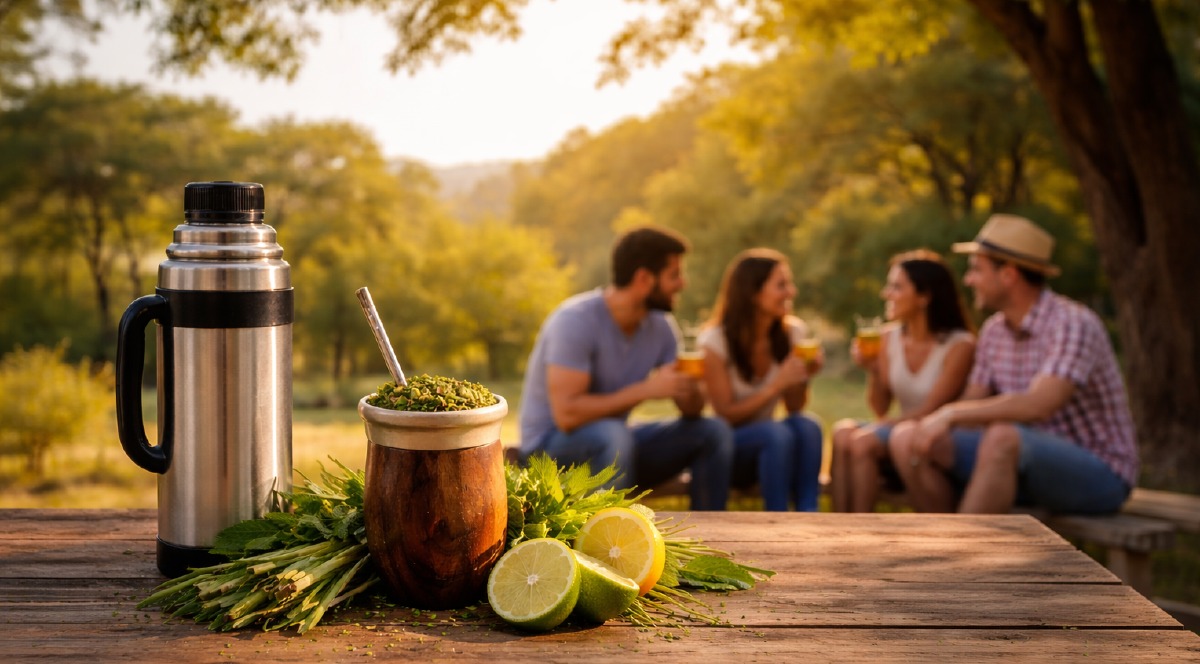
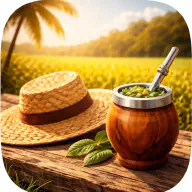
Día Nacional del Tereré is the day Paraguay puts its national drink front and center: tereré. It is yerba mate that is not brewed hot, but infused with (often ice) cold water. Most of the time, herbs from Pohã Ñana are added too, meaning fresh aromatic and medicinal plants that are crushed or “worked” beforehand.
In everyday life, tereré is much more than a thirst quencher. The guampa moves from hand to hand, you stop for a moment, talk for two minutes, and it quickly turns into a real round. That is exactly what Tereré Day makes visible: it is about community, small breaks, and that easy “come join us” feeling.
If you prefer it warm, you will quickly get to know cocido in Paraguay too. It is basically the hot mate version, often simple, sometimes with milk or sweetened, and for many it is just as naturally part of the day.
In many circles, tereré is the friendliest invitation there is. You sit down, say a quick hello, and suddenly you are right in the conversation.
Historical background#
Officially, tereré was protected in Paraguay as cultural heritage and a national drink, and Tereré Day was introduced as a fixed day of remembrance and awareness. There is also a second layer that often matters even more than any law: the knowledge around tereré belongs to living culture and has been recognized internationally as intangible cultural heritage. The focus is not only the drink itself, but the practice behind it, meaning preparing it together, sharing it, passing it on, and the herb knowledge around Pohã Ñana.
What is fascinating is how “small” this heritage feels in daily life. It does not happen on a stage, but at the kitchen table, in the patio, in an office hallway, at the roadside in the shade. A lot is passed on within families: which herbs you choose, how finely you crush them, how strong the mix should be, and when you prefer something milder. In that sense, every tereré round is its own little cultural universe, with rules, preferences, and a very personal signature.
And then there is what surprises many visitors at first: tereré can taste completely different depending on the mix. There are refreshing, light versions, often with mint, citrus notes, or lemongrass, and there are mixes that feel noticeably more bitter and a bit like a home remedy, because stronger herbs like boldo can be included. That is not a contradiction, it is part of the tradition: tereré is enjoyment and practical home knowledge at the same time.
Typical for Paraguay is also that you do not find these herbs only in supermarkets. Many people buy them fresh at the roadside from a yuyera (seller of medicinal herbs) or in one of the many herb shops. There you are often asked right away what the mix is for. Refreshing for hot days, energy in the morning, or something “for the stomach.” There is a suitable combination for many situations. And if you are unsure, ask for something mild or refreshing. Those are usually uncomplicated mixes that work well as a first step.
🪅 How society sees it and traditions#
Tereré matters emotionally because it expresses belonging. For many, it is a symbol of “this is how we are here.” The tone is usually relaxed and warm, often with humor. People discuss yerba varieties, herbs, the right level of cold, and of course who is carrying the thermos today.
Typical traditions you will often see:
- Tereré round in the shade, in the patio, in the office, or at the roadside
- Pohã Ñana freshly crushed, depending on taste either mild or really strong
- Guampa and bombilla as a “set” that goes from person to person
- Tereré jere, meaning the guampa goes around in a fixed order
Typical food and drinks on this day#
In everyday life, tereré is often not a “snack drink,” but its own ritual. In many families, people do not eat at the same time. Because breakfast in Paraguay is often very early, there is often a small base before the morning tereré: tereré rupa. These are usually simple things that can be put on the table quickly, for example chipa, sopa paraguaya, or empanadas. Only after that does the tereré round begin.
On Día Nacional del Tereré, it can feel a bit different because more people get together. If there are visitors or if you sit for longer, small bites are sometimes still on the table, simply because sharing is part of it. But even then, it often stays the same: first something “to line the stomach,” then tereré.
If you are invited:
- A safe bring along is almost always ice, cold water (or ice water), lemon, or something small to share.
- A good opening question besides “¿Cómo estás?” is “¿Ya comieron?” It often becomes clear right away whether tereré rupa comes first or whether the guampa starts making its round immediately.
🧩 What does it mean in daily life?#
Opening hours and services#
In many areas, the day feels like a normal Saturday. Depending on the place, the atmosphere can be noticeably more “festive,” especially where communities, schools, or local groups organize something.
What you can roughly expect, without relying on rigid rules:
- Supermarkets and malls: often normal, sometimes with promos around yerba and herbs
- Despensa and mercado: often normal, but depends on the owner, the place, and sometimes the time of day
- Banks and public offices: usually follow the usual weekly rhythm, depending on city and weekday
- Pharmacies and gas stations: generally reliable, often as usual in weekend mode
- Restaurants: often normal, sometimes more family focused during the day
Most of the time, it is overall a pretty normal day. Still, plan a bit of buffer in case an extra tereré break happens or you get spontaneously invited somewhere.
Traffic and travel#
Tereré Day usually does not mean that “everyone is on the move” all at once. Still, it can be a bit busier locally around parks, plazas, or small activities, especially where many people meet for tereré or something is organized. If you are out and about on the weekend anyway, the usual Paraguay rule applies: plan relaxed and do not schedule everything down to the minute.
- In the city: taxis and ride services usually run normally. Around events, traffic can slow down briefly or you may wait a bit longer for the next taxi.
- Outside the city: trips are generally easy to do. Delays depend more on weekend traffic and time of day than on Tereré Day itself.
Schools, work, public offices#
Since it is usually not a classic day off work, a lot depends on the normal calendar. Schools sometimes use the day to pick up cultural topics, especially if there are already activities around late February.
- Work: often normal, unless companies do something internally
- Schools: depending on the school, small activities, cultural focus, or discussion in class
- Public offices: usually regular, especially if it is a normal weekday
Where in Paraguay is it especially relevant?#
Tereré is present nationwide, but it feels especially “noticeable” where people naturally gather anyway: in parks, by the river, on plazas, and in places with active community life. The “Día national del Tereré” is not especially highlighted with events. Everything goes on as usual. If something is organized, it often has a folklore feel, music from Paraguay, and a strong family vibe.
Typical differences:
- City: tereré as an office and daily ritual, more visible in parks and on weekends
- Countryside: tereré as a natural part of the daily routine, often with fresh herbs from the garden
- Hotspots: anywhere with shade, a place to sit, and people who have time
🤝 Joining in as a visitor: do’s and don’ts#
✅ Do’s:#
- Accept the invitation if you feel comfortable. Joining in briefly creates closeness fast.
- Ask about the yerba or the herbs. It is an easy way into conversation and feels appreciative.
- Keep the order when the guampa goes around. That is part of the ritual.
- Do not forget sun protection, even if rounds usually happen in the shade.
⛔ Don’ts:#
- Do not “reposition” or stir the bombilla unless you are explicitly asked. If you are unsure, watch for a moment, then you will do it right automatically.
- Do not react “too clinically.” If you do not want to share, say it kindly and simply.
Hygiene without drama
If you do not want to drink from the same bombilla, a sentence like this works: „Hoy estoy con cuidado, gracias.“ (English: Today I’m being careful, thanks.) It is often accepted without discussion, especially if you stay friendly.
Small etiquette:#
- Photos are usually fine, but ask briefly if you are clearly photographing people.
- Alcohol is not the focus. Tereré is the center.
- Heat is real: do not forget shade and sun protection.
💬 Cheat sheet: useful phrases on the go#
Spanish 🇪🇸#
„¡Feliz Día Nacional del Tereré!“
English: “Happy National Tereré Day!”„¿Tomamos tereré?“
English: “Shall we have tereré?”
Guaraní 🇵🇾#
- „Ja’u la tereré.“
English: “Let’s drink tereré.”
🗓️ Tips and planning#
- Shopping: If you need tereré gear, get it beforehand. Ice, lemon, and yerba are the things most likely to suddenly “be missing.”
- Out and about: Bring a water bottle even if you drink tereré. Tereré does not automatically replace everything your body needs in the heat.
- Invitation: If it is your first time, bring something practical. Ice or a small snack almost always fits.
- Start your own round: A shady spot, cold water, yerba, and a few herbs are enough. The rest grows out of conversation.
❓ Frequently asked questions (FAQ)#
Is Día Nacional del Tereré an official day off work?
What exactly is tereré, and what is the difference to mate?
Which herbs are typical in tereré?
What do I do if I do not want to share for hygiene reasons?
What mistakes do beginners make in a tereré round?
Can I drink tereré without herbs?
Are there also “modern” versions?
What works well as a snack with it?
Conclusion#
Día Nacional del Tereré is not a day when Paraguay suddenly works differently. It is more a day that makes visible what happens every day anyway: people share time, shade, and a conversation while the guampa makes its rounds. If you want to understand Paraguay, tereré is a surprisingly direct entry point. Sit down, ask about the herbs, and simply listen. The rest comes on its own.
📖 Further reading#
Share and support
“Did you already know this meaning of the holiday? Do you know someone who wants to understand Paraguay better?” Then feel free to give the post a like and share it with other South America fans and help spread the meaning of Paraguayan holidays.