
Valentine’s Day, celebrated in Paraguay as “Día de los Enamorados” on February 14, is a blend of deeply rooted traditions, colonial heritage (Guaraní culture and Spanish influences), and modern gastronomic trends.
As the heat of the Paraguayan summer peaks in February, the food scene shifts from rustic comfort to festive refinement. Because digestion slows down in high temperatures, experts recommend light dishes for the perfect date, moderate amounts of garlic and onions, and avoiding extreme spiciness-so the date doesn’t fail because of “too much seasoning.”
In Paraguay, food is understood not only as nourishment, but as a social act. On Valentine’s Day, the focus moves away from the big family asado toward more intimate menus for two: a day for affection, appreciation-and good food.
Now you’ll find out what a typical Paraguayan Valentine’s Day tastes like-from the first kiss in the morning to a festive dinner.
🥞 Breakfast tradition: Mbejú or “Desayuno Sorpresa”#
For many couples, a Valentine’s Day in Paraguay begins with Mbejú for breakfast or as a late-afternoon snack for merienda. Mbejú is a flat cake made from cassava starch and cheese, and its name in Guaraní means “cake” or “flat cake.” Making it is a tactile process: the ingredients are rubbed between the hands into a sandy mixture that only comes together in the hot pan as fat and cheese melt into a single mass.
For Valentine’s Day, “Mbejú Relleno” is often preferred: an extra layer of ham and cheese is placed between two layers of the starch mixture. The result-crispy edges, a soft center-is pure comfort food. Traditionally served with it: Cocido Quemado, a yerba mate drink in which caramelized sugar (with charcoal) and mate are topped up with hot water.
The express idea when you’re short on time: “Desayuno Sorpresa”#
If there’s no time for a shared breakfast for whatever reason, “Desayuno Sorpresa” is a true classic in Paraguay. Your partner is surprised with a large breakfast basket-often even delivered straight to the workplace or to the home.
Typical contents: sandwiches, fresh fruit, chipa, something sweet, and not rarely a small teddy bear or a picture frame with a shared photo. Add a rose-and the Paraguayan “express romance” is complete.
Many bakeries and small shops offer these baskets ready to go. Then you just have to place the order.
The Valentine’s menu: a feast for the (romantic) senses#
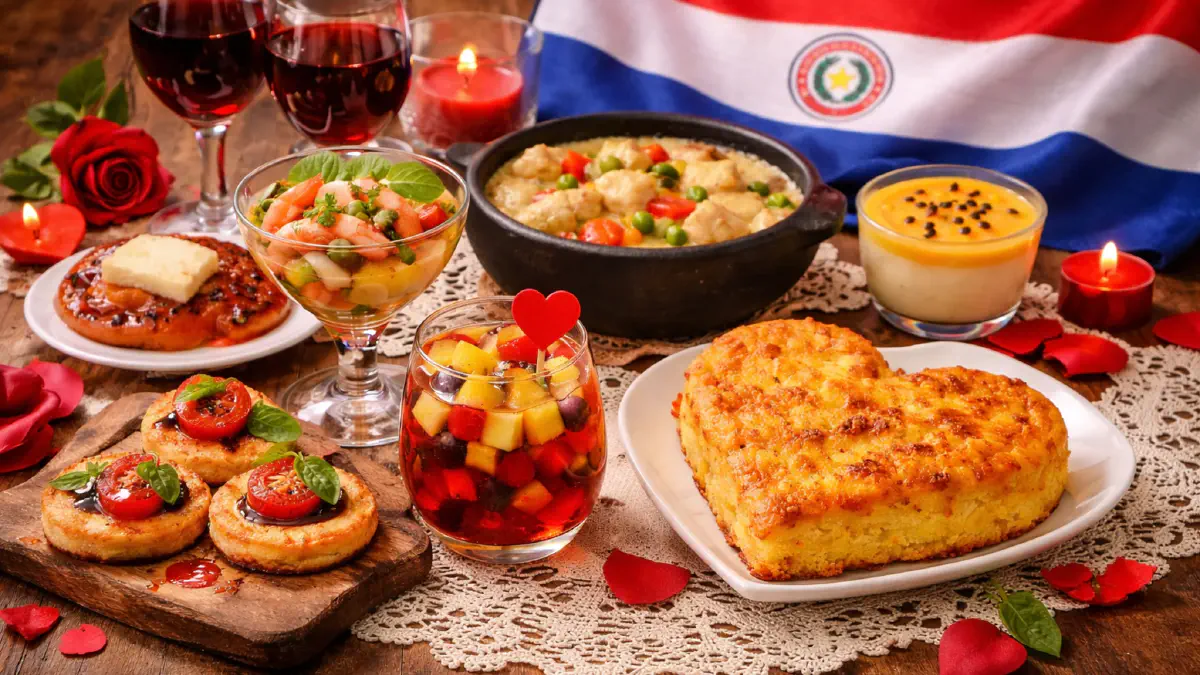
If you want to celebrate the “Día de los Enamorados” the Paraguayan way, this menu works especially well in the heat:
💕 Valentine’s menu (summer-friendly)#
- Starter:
- Mbejú bites “Caprese-style” (tomato, basil, mild cheese) or
- Ceviche Tropical (served ice-cold)
- Main course:
- Surubí (creamy casserole or chupín) or
- Solomillo de Cerdo or
- Crepes de Verdura
- With: Sopa Paraguaya or mashed potatoes (+ optional: fresh salad)
- Dessert:
- Mousse de Maracuyá or
- Dulce de Mamón with Queso Paraguay
- Drink: Clericó (summer classic, fruity & light – optionally alcohol-free)
Time-saving tip: Chop fruit/veg the evening before, prep sides, and chill everything well - so Valentine’s night stays relaxed.
If you want to know what’s typical in Paraguay on Valentine’s Day, keep reading - up next you’ll find background info, menu variations, and practical tips. If you’d like to jump straight to the recipe links, you’ll find them collected here:
Go to the recipe overview🥗 Starters: modern, fresh, heat-friendly#
When the sun is blazing, light “entradas (de lujo)” are called for:
Mbejú bites “Caprese-style”#
If there’s no time in the morning, use Mbejú as a starter and reinterpret the starch cake in a modern way. Instead of one large flatbread, small, bite-sized rounds are baked.
Finish them Caprese-style: top the warm Mbejú with half a cherry tomato, a drop of balsamic reduction, and fresh basil.
- Alternative: a small quenelle of avocado cream (e.g., with lime and salt) makes it even more summery.
Ceviche Tropical#
“Ceviche Tropical” is a perfect Valentine’s starter: colorful, tangy-fresh, visually striking, and a small luxury dish (entrada de lujo). Colorful peppers (locotes), coriander (kuratũ), and sometimes fruits like pineapple or mango are often added. In Paraguay, local fish such as tilapia or surubí are commonly used-if you like, add shrimp. The marinade (“leche de tigre”)-the citrus marinade made from lime juice and spices like chili-is not rarely served with ice cubes so everything stays pleasantly cool.
More alternatives: salads or Crepes de Verdura#
Another light and harmonious choice is light summer salads or Crepes de Verdura. Especially popular fillings for the crêpes are:** bell pepper (locote), tomato, zucchini, carrot, corn, hearts of palm (palmito), cucumber, red onion (use sparingly in the heat).
🍽 Main course: refined mains with fish, meat, or vegetables#
Surubí – maritime elegance#
Because Paraguay lies along the Paraná and Paraguay rivers, freshwater fish is a central element for upscale occasions. The surubí (large predatory catfish, firm white flesh) is especially popular for a Valentine’s dinner.
In hot February weather, fish is often preferred over heavy beef: lighter, more elegant-and “date-friendly.”
A popular preparation is Cazuela de Surubí or Surubí a la Crema. For two people, presentation matters too: the fish is cut into even cubes, dark parts removed-creating a bright, refined result. It’s briefly sautéed in olive oil, then finished in a sauce made with cream, colorful locotes (bell peppers), and peas.
Also fantastic: Chupín de Surubí-a kind of layered dish. Potato slices form the base, then fish, plus tomatoes, onions, wine, and often Queso Paraguay for baking on top. Slow oven cooking makes everything deeply aromatic.
Vegetarian alternative: vegetables in the spotlight#
Want it vegetarian but still festive? Then you have two really good options:
Crepes de Verdura: light and summery#
If you’re not already using Crepes de Verdura as a starter, they work perfectly as a light main course. A filling of spinach, zucchini, bell pepper (locotes), tomato, carrot, corn, hearts of palm (palmito), cucumber, red onion and herbs feels fresh and “date-friendly.” It’s especially lovely with a mushroom sauce or a gentle mustard sauce-echoing the elegant sauce ideas from the meat dishes, just vegetarian.
Surubí-style vegetarian#
The typical preparations can also be made vegetarian:
- “A la crema”: instead of fish, use mushrooms (or other mushrooms) plus peas, bell pepper, zucchini in the creamy sauce.
- “Chupín”-style from the oven: potatoes, tomatoes, onions as a base-plus vegetables of your choice. If you like, add Queso Paraguay (or a mild cheese) for baking on top.
This keeps the core idea of the dish: creamy or oven-baked, aromatic, perfect for a special evening-just vegetarian.
Meat dishes: tender instead of rustic#
Although meat is a cornerstone in Paraguay, Valentine’s Day often shifts away from the classic parrillada-toward finer cuts and sauces.
Solomillo de Cerdo: elegance on the plate#
Pork tenderloin is ideal: it cooks quickly and stays tender. A classic recipe uses a marinade of rosemary, thyme, garlic, and mustard (often overnight).
The combination of savory meat and a gently sweet sauce (e.g., raisins, white wine, broth) reflects Paraguay’s love of contrasts. Alternatively, a mustard or mushroom sauce works wonderfully.
Cordon Bleu: poultry with international influence#
For those who want something lighter: cordon bleu in mushroom sauce is very popular in Paraguay. Often it’s not deep-fried, but cooked in a covered pan-juicy, less fatty, better in summer heat. Ham, cheese, plus a creamy sauce made from onions, garlic, and mushrooms-and you’ve got an uncomplicated classic.
Sides: what goes with fish, meat, and more#
In Paraguay, sides aren’t just “decoration”-they complete the menu, and you can combine them flexibly with any main-course option:
- Sopa Paraguaya: hearty, filling, ideal if you like it traditional.
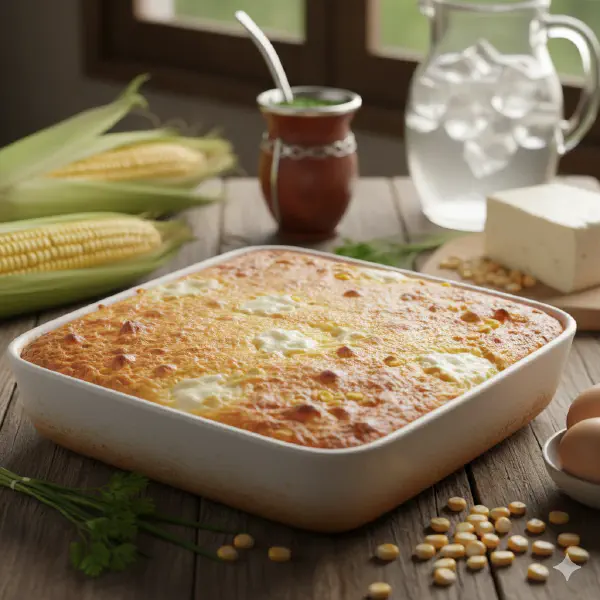
- Chipa Guasu: the juicier, soufflé-like version-feels festive and is usually a hit with guests.
- Mashed potatoes: creamy and elegant (with cream and nutmeg)-especially good with sauces like crema, mushroom, or mustard sauce.
- Manioc (boiled, plain): the classic on Paraguayan plates-simple and just belongs there.
- Fresh salad: a lifesaver in February-adds lightness and balance, whether you serve fish, meat, or vegetables.
Two little extras:
- Did you know: Sopa Paraguaya is considered Paraguay’s national dish and is known as the “solid soup.” According to a popular legend, it began as a corn soup that became too thick-and was then simply baked in the oven.
- Valentine’s tip: Bake Chipa Guasu in a heart shape. A silicone mold is enough-it instantly feels loving and looks great in photos.
🍮 The sweet finale: desserts and baking traditions#
No Valentine’s Day in Paraguay without something sweet-but at 35°C in the shade, chocolate is often too heavy. That’s when fresh, fruity desserts shine.
Desserts: something fresh for the heat#
Traditional fruit preserves: Dulce de Mamón#
A very typical dessert is Dulce de Mamón (papaya in syrup), often served with a slice of Queso Paraguay. The papaya is often soaked in limewater or with baking soda so it stays firm on the outside and soft inside. Slowly cooked, the sugar caramelizes-the fruit turns glossy, dark, and honey-like. The combination of intense sweetness and the mildness of fresh cheese is a culinary hallmark of Paraguay and for many evokes memories of grandmothers’ kitchens, creating a strong emotional component.
Mousse de Maracuyá (passion fruit)#
Maracuyá grows in many Paraguayan gardens and is considered the “fruit of passion”-perfect for Valentine’s Day.
Maracuyá purée (or juice) is whipped with sweetened condensed milk and cream (or yogurt for a lighter version) until creamy, then well chilled.
Serving idea: Fill the mousse into a hollowed-out maracuyá shell or into small glasses with fruit topping for a visual wow effect.
More elegant alternatives also include Bavaroise de Frutos Rojos or a semifreddo-cool, light, festive.
Baked goods: perfect for gifting#
Pasta Frola de Guayaba: a statement in color#
In Paraguay, pasta frola with dulce de guayaba (guava jam) is the favorite. The deep red of guava symbolizes passion and is made for Valentine’s Day. A crumbly tart crust with lemon zest and vanilla meets a dense, sweet guava filling. Preparing it and laying the characteristic lattice pattern (“enrejado”) takes patience-and baking this cake for your partner is a gesture of devotion, because it requires skill and time.
In neighboring countries, pasta frola is often filled with quince.
Alfajores and small gestures#
Alfajores de Maicena are delicate cornstarch cookies filled with dulce de leche and finished with coconut around the edges. For Valentine’s Day, they’re often cut into heart shapes, beautifully packaged as gifts-or served with afternoon coffee.
Muffins and cupcakes with small hearts or love notes are also popular, especially as a surprise at the workplace.
🍷 Drinks: refreshing instead of heavy#
In summer heat, hydration is key.
Besides water, fruit juices made from mango, pineapple, or melon are everywhere.
A festive drink is Clericó: wine (often red, some use white) meets lots of small seasonal fruit pieces-typically melon, grapes, pineapple-and is sweetened to taste. Well chilled, clericó is the ideal companion for a romantic evening: fruity, light, sociable.
For more formal occasions, some choose a dry white wine or sparkling wine-matched to fish or light meat.
The aesthetics of the table: Ñandutí and décor#
Valentine’s Day in Paraguay is also a visual event. A central role is played by ñandutí, the traditional Paraguayan lace (“spider web”).
Local craftsmanship on the table#
For a festive dinner, table runners or coasters made of white or colorful ñandutí are often used. These delicate handicrafts, often featuring floral motifs, give the table an authentic, elegant note deeply rooted in Paraguayan culture.
This style is often combined with:
Red roses and local flowers: Floristry plays a major role, with red accents symbolizing passion.
Candlelight and red napkins: To create an intimate atmosphere, classic romantic symbols are mixed with Paraguayan textiles.
Personalized details: Small cards with quotes or photos are often integrated into the table setting to emphasize the personal bond.
Summary#
Valentine’s Day in Paraguay is a celebration of the senses. Whether it’s traditional Mbejú, a refined surubí dish, Sopa Paraguaya, or the sweet temptation of a pasta frola: food here is a universal language of love. The blend of indigenous heritage, colonial influences, and modern fusion cuisine makes “Día de los Enamorados” a culinary experience that radiates warmth and joie de vivre.
¡Feliz Día de los Enamorados y “buen provecho”!
❓ Frequently asked questions (FAQ)#
What’s the difference between Valentine’s Day and “Día de los Enamorados” in Paraguay?
Which dishes work best for a date menu in intense heat?
When it’s hot, a menu works best if it’s light, fresh, and not too fatty:
- Ceviche (or similar citrus fish dishes): refreshing, quick, perfect as a starter
- Salads & fruity components (e.g., mango/pineapple, lime, fresh herbs)
- Grilled dishes instead of heavy braises (short cooking time, less “kitchen heat”)
- Dessert in glasses (easy to chill, portionable, looks chic)
- Clericó (also possible alcohol-free): ideal for a summer toast Tip: Plan so you spend max. 20–30 minutes actively at the stove-the rest is prepped or chilling in the fridge.
Can I make Clericó alcohol-free?
Yes-this works great. For an alcohol-free version you just need a base that’s fruity and not too sweet:
- Grape juice + sparkling water (or tonic/ginger ale depending on taste)
- Alcohol-free white “wine-style” (if available) + sparkling
- Cold hibiscus/fruit tea (brewed strong, cooled) + sparkling Important: add fruit shortly before serving so it stays fresh. Balance with lime/lemon-that’s what makes it feel “grown-up.”
What alternatives work if I can’t get certain ingredients?
That’s completely normal in Europe/outside Paraguay-here are some substitutions that work well:
- Fish (e.g., surubí) → mild white fillet: catfish, cod, pollock, pangasius (if you like it), pike-perch
- Queso Paraguay → a young, mild cheese that melts well: mozzarella (firmer), young gouda, mild fresh cheese; for a “squeaky” texture: halloumi (sparingly)
- Dulce de Mamón (sweet papaya) → papaya jam, mild mango chutney, or apricot/peach jam; then perhaps serve a small cheese plate alongside
- Cassava starch / almidón de mandioca → tapioca starch (very close), or potato starch (texture slightly different)
- Dulce de leche / milk caramel → caramel cream / toffee spread
- Locote / mild pepper-chiles → pointed sweet pepper + optionally a hint of chili
Can I prep anything the night before?
A lot-and that’s exactly what makes a menu relaxed. Here are the best “prep-ahead” building blocks:
Starters / fresh dishes
- Ceviche & co.: prep the marinade (lime/lemon, onion, spices). Marinate and finish the fish shortly before serving-otherwise it becomes too “cooked.”
Doughs / mixtures
- For mbejú/sopa paraguaya/chipa guasu: weigh dry ingredients, grate cheese, pre-chop onions. For many batters it even works to prep the full mixture, cover, chill, and bake/fry the next day.
Desserts
- Dessert in glasses: make completely the day before and keep in the fridge (often looks even better the next day).
- Fruity components: chop, chill, and if needed, use lime to prevent browning.
Drinks
- Clericó: wash/chop fruit and chill; chill the base (juice/wine/alcohol-free). Mix and add sparkling right before serving.
General
- Set the table/décor the day before, get serving plates ready, and make the fridge “service-ready.” Then on Valentine’s night you only need to: finish + plate + enjoy.
Which dishes are naturally vegetarian, vegan, gluten-free or lactose-free-and how can I adapt them?
Here’s a quick guide to the dishes in this menu-without claiming medical guarantees, but practical for the kitchen. For details (e.g., ingredient lists, suitable alternatives), it’s best to check the individual recipes.
Often naturally gluten-free (with classic ingredients)#
Many Paraguayan dishes are based on corn and cassava rather than wheat. In this menu, the following are therefore often gluten-free (or easy to keep gluten-free):
- Mbejú / Mbejú Relleno (cassava starch)
- Chipa Guasu (corn)
- Sopa Paraguaya (corn)
- Alfajores de Maicena (cornstarch)
Watch-outs (gluten traps): mixed flours, breadcrumbs, ready-made spice mixes, baking powder/binders, and some cheese products can contain additives. When in doubt, quickly check the ingredient list.
Vegetarian: what works “as is,” and what’s easy to adapt?#
Naturally vegetarian (classic versions):
- Chipa Guasu
- Sopa Paraguaya
- Pasta Frola de Guayaba (classically vegetarian)
- Alfajores de Maicena
- Mousse de Maracuyá (usually vegetarian)
Vegetarian, easy to do:
- Mbejú Relleno: choose a vegetarian filling (e.g., cheese, vegetables)
- Crepes de Verdura: already the vegetarian option in the menu
Vegan: rarely “as is,” but doable#
For many classics, eggs, milk, or cheese are part of the standard recipe. If you want to cook vegan:
- Milk/cream → plant milk / plant cream
- Butter/lard → vegetable oil
- Cheese → vegan shredded cheese (texture differs) or build flavor with nutritional yeast + salt + a bit of acidity Result: not 1:1 traditional, but often very tasty.
Easiest vegan option in this menu: a salad or a vegan vegetable version (e.g., “chupín-style” without fish, with potatoes/tomatoes/vegetables).
Lactose-free: usually quite doable#
Many components can be made lactose-free quite well:
- Cream/milk → lactose-free versions
- Cheese → lactose-free cheese or (with aged cheeses) often naturally very low in lactose-though not always guaranteed
Note: Dishes like Surubí a la Crema, chupín (with cheese), and Dulce de Mamón with Queso Paraguay are clearly dairy-heavy in the standard version, but can be adapted easily with lactose-free products.
What is a “Desayuno Sorpresa”-and how do I put one together quickly?
A “Desayuno Sorpresa” is a surprise breakfast (often as a basket/box)-perfect if you can’t manage a big dinner, or as an add-on the next morning. Quick setup:
- 1–2 sweet components (fruit, pastries, jam/honey)
- 1 savory component (sandwich, cheese, savory pastry)
- drink (coffee/tea/juice-or a mini alcohol-free clericó)
- a small card/note + possibly a flower / cuddly toy or picture frame Tip: With a Paraguayan touch (e.g., tereré vibes, local fruit, ñandutí décor) it feels extra special.
What décor feels Paraguayan without being kitschy?
Subtle is best here:
- Ñandutí as a small accent (coaster, ribbon, detail in the napkin fold)
- natural materials: wooden board, ceramics, linen napkins
- one or two colors, e.g., warm white + an accent (red/coral/green)
- local flowers or a “garden bouquet” look instead of rose overload That way it feels authentic and still romantic.
📖 Recipe overview: all dishes mentioned in this article (with links)#
Want to cook one of the dishes? Here you’ll find our detailed guides:
- Golden-brown Mbejú – variations (classic / relleno)
- Traditional Cocido Quemado
- Sensual, fresh Ceviche Tropical
- Creamy Cazuela de Surubí or Surubí a la Crema
- Aromatic Chupín de Surubí
- Buttery-tender Solomillo de Cerdo (with mustard/mushroom sauce)
- Hearty, juicy Chipa Guasu
- Legendary Sopa Paraguaya – the famous “solid soup”
- Creamy Cordon Bleu in mushroom sauce
- Honey-sweet Dulce de Mamón
- Airy, delicate Mousse de Maracuyá
- Lovingly baked Pasta Frola de Guayaba
- Melt-in-your-mouth Alfajores de Maicena
- Refreshing Clericó
Share & support
Did this traditional Valentine’s menu 🇵🇾❤️ inspire you and spark your curiosity about Paraguay? Then feel free to give the post a like and share it with other South America enthusiasts-helping make Paraguay’s culinary diversity more visible.