
Quick Facts#
Quick Facts at a glance
- Date: fixed, 24 February (every year)
- Status: official day of remembrance, usually not a nationwide public holiday
- Who celebrates: nationwide, often visible in schools, institutions, families and at work
- Why: remembrance of the women’s assembly in 1867 in Asunción
- Peak: often during the day in schools and public institutions
- Short conclusion: mainly greetings and small gestures, rarely major closures
🧭 What is Día de la Mujer Paraguaya?#
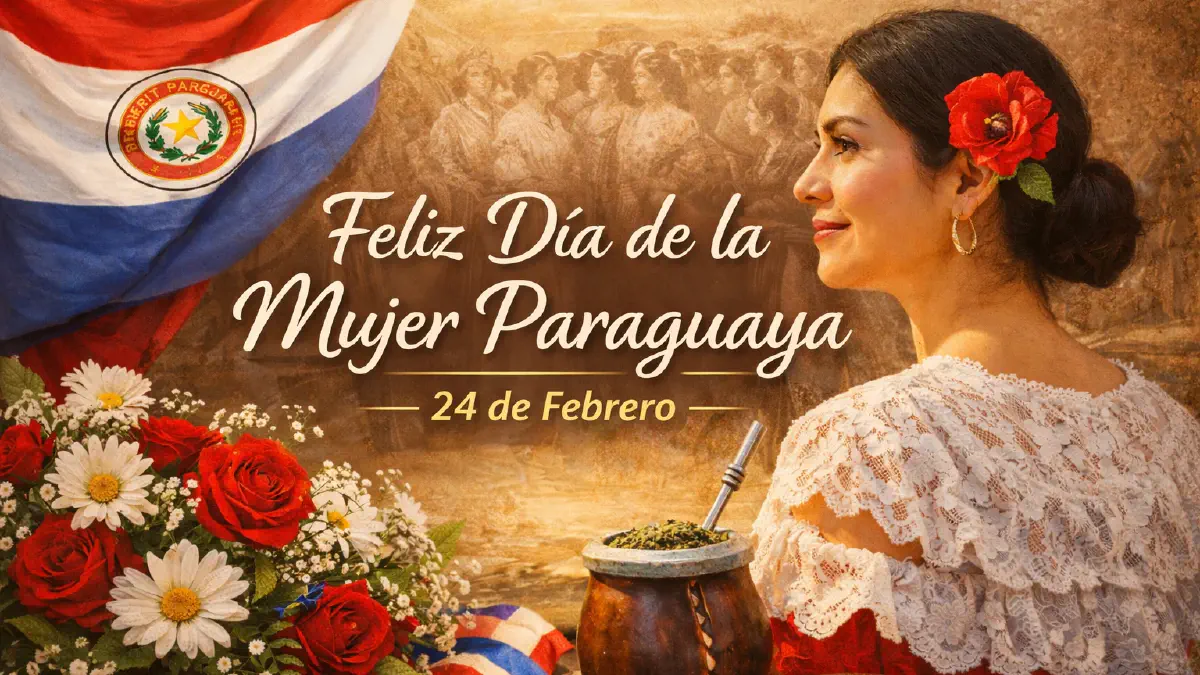
Día de la Mujer Paraguaya is Paraguay’s “Women’s Day” with its own historical background. It is observed every year on 24 February and commemorates an event from the 19th century.
Not to be confused with International Women’s Day on 8 March: 24 February is the specifically Paraguayan women’s day, linked to the year 1867. Both days exist side by side and are perceived differently in everyday life.
In daily life, the day feels more like a mix of remembrance and appreciation. Many people congratulate women in the family, among friends or at work, without the whole country switching into full holiday mode.
A small insider note from everyday life: around this date, I hear a simple “Feliz Día” surprisingly often right from the first interaction - with the worker on the property, at the supermarket, at school or in the office. Depending on the place, it can feel rather quiet or unexpectedly present.
Historical Background#
24 February refers to the “Primera Asamblea de Mujeres Americanas”, which is said to have taken place in Asunción in 1867. Many accounts emphasize that women donated jewelry and valuables as a contribution to the defense of the country during the War of the Triple Alliance.
Later, the date was officially established as “Día de la Mujer Paraguaya” by decree law on 6 December 1974.
For expats: Historically, the day carries strong associations with perseverance, solidarity and sacrifice. If you congratulate someone, a respectful and appreciative tone usually works better than anything too casual.
🪅 Perception in Society, Traditions and Customs#
For whom is this day emotionally important?#
For many Paraguayan women, this day is more than just a date on the calendar because it touches on a deeply Paraguayan narrative: strength, family, responsibility, and often the idea that women are the “pillars” of everyday life. In speeches and posts, the day is often described in a patriotic and grateful tone.
How do locals talk about it?#
A warm, direct tone is typical: short greetings, sometimes with a phrase about courage or “lucha”. In more formal contexts such as schools or institutions, there are often speeches, small tributes or programs.
Traditions, symbols, music, colors#
- Symbols: flowers, small gifts, cards or WhatsApp greetings are common.
- Decorations/colors: many use the national colors or simply a “festive” look, depending on the institution.
- Music: Paraguayan folk pieces often appear in school programs or cultural evenings. Which ones exactly depends greatly on the place.
Typical Food and Drinks on This Day#
There is no single “must-have dish” for this day. In practice, it is often about spending time together: merienda (afternoon coffee), a shared meal or a small invitation.
What you might be offered if you are invited:#
- classics such as Chipa, Sopa Paraguaya, Mbejú or something from the grill, depending on how the family usually likes to get together.
- as for drinks, Tereré is very typical, or something warm like Cocido.
Tip: If you want to bring something Something sweet to share, fruit, juice or a small bouquet of flowers is usually simple and fitting. If you are unsure, just ask briefly: “¿Querés que lleve algo?” - “Should I bring something?”
🧩 What Does It Mean in Everyday Life?#
Opening Hours and Services#
Since the day is generally not a classic nationwide public holiday, much of everyday life continues as usual. In some areas, there can still be small differences, for example due to internal activities or school programs.
- Supermarkets, despensas, shopping centers: often normal, depending on the place and operator
- Banks, post offices, public authorities: often regular, sometimes with internal events or a slightly different atmosphere
- Pharmacies, gas stations, restaurants: mostly as usual, especially in cities
Traffic and Travel#
In cities, there may be slightly more traffic in some places if schools or institutions hold small events.
Long-distance buses and taxis generally run normally, but on days with programs it is worth allowing a little extra time, especially around schools and administrative buildings.
Schools, Work, Authorities#
- Schools: often the most visible place. There are frequently small performances, poems, songs or words of thanks, sometimes especially for female teachers or mothers.
- Workplaces: greetings, small gestures in the team, sometimes a shared break or merienda.
- Public authorities: mostly normal operations, occasionally internal recognition activities.
Where in Paraguay is it especially relevant?#
In general, the day is mentioned nationwide. However, it is more of a day of appreciation and remembrance than an event day. You notice it most where schools, institutions and media are present.
Asunción and larger cities: often more official tributes, press coverage and institutional programs
Smaller towns: more within the family or school setting, less publicly visible
Large street festivals or nationwide events are rather unusual on this day. It is more about appreciation in everyday life than a public spectacle.
Good rule of thumb: If something is happening after all, it is often posted at short notice through local channels. So it is still worth checking local “what’s happening in town today” groups rather than large event portals, or simply asking around in the neighborhood. They usually know best anyway.
🤝 Joining in as a Visitor: Do’s and Don’ts#
✅ Do#
- Offer friendly and simple congratulations.
- If you are invited, bring a small gift.
- Show interest in the historical background, but stay respectful.
⛔ Don’ts#
- Do not make comments that reduce the day to clichés.
- In school settings, it is better to first check whether photos are welcome.
- Do not automatically assume that everyone has the day off.
Small Etiquette Guide#
- Clothing: at school or in public offices, it is better to dress neatly and discreetly. In church as well, of course.
- Photos: ask first, especially when children are involved.
- Heat: at the end of February, it can be very hot. Think about water, shade and sun protection.
💬 Cheat Sheet: Useful Phrases for On the Go#
Spanish 🇪🇸#
“Feliz Día de la Mujer Paraguaya.”
English: “Happy Day of the Paraguayan Woman."“Te deseo un día hermoso y lleno de reconocimiento.”
English: “I wish you a beautiful day full of appreciation."
Guaraní 🇵🇾#
- “Vy’apavẽ Kuña Paraguáipe.”
English: “Warm congratulations on the Day of the Paraguayan Woman."
🗓️ Tips and Planning#
- Shopping: buy flowers or small gifts a little early, especially in cities.
- Invitation: often informal. A short message, a short visit, shared tereré.
- Communication: a simple greeting via WhatsApp or another messenger is usually very well received.
📝 For a short message:
“Feliz Día de la Mujer Paraguaya. Gracias por todo lo que hacés cada día.”
English: Happy Day of the Paraguayan Woman. Thank you for everything you do every day.
❓ Frequently Asked Questions (FAQ)#
Is Día de la Mujer Paraguaya a public holiday with the day off?
Why is the day on 24 February?
What is the difference compared to 8 March?
How do you congratulate someone without sounding kitschy?
Are there typical gifts?
Do schools do something for the occasion?
I'm new in Paraguay. Do I need to congratulate all my female colleagues?
Can I bring up the historical background?
Are there regional hotspots or big parades?
Conclusion#
Día de la Mujer Paraguaya is a day full of symbolism and Paraguayan history. In everyday life, it is usually not a “everything is closed” holiday, but you notice it through greetings, small gestures and often also through programs in schools and institutions. If you are new in the country, a respectful greeting is completely enough and can be a nice bridge into everyday life on the ground.
📖 Further Reading#
Share and support
“Did you already know this meaning behind the holiday? Do you know someone who would like to understand Paraguay better?” Then feel free to give the post a Like and share it with other South America enthusiasts, helping to spread awareness of Paraguayan holidays and their meaning.